Boondocking, explained: free camping done legally
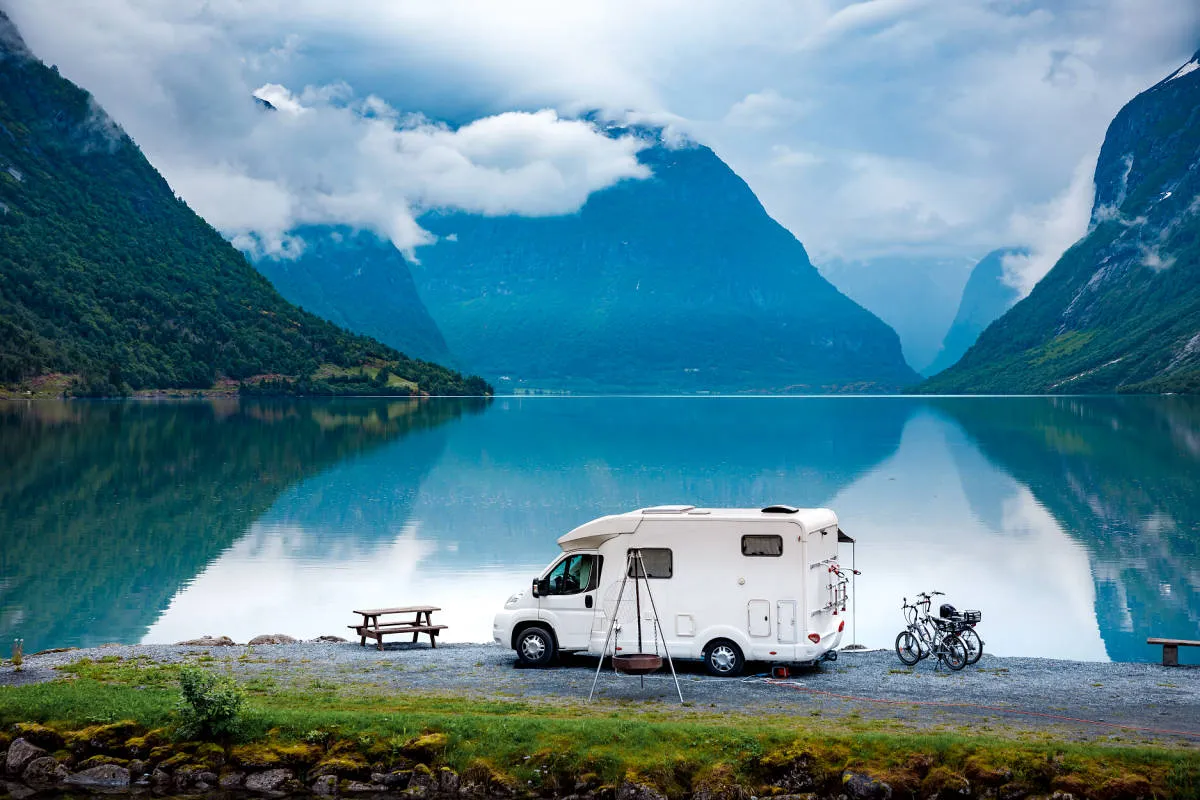
Boondocking is camping in your RV or vehicle with no hookups: no shore power, no water connection, no sewer. Done on public land it is called dispersed camping, and on most Bureau of Land Management (BLM) and national forest land it is legal and free, generally for up to 14 days in one spot.
The trade is simple: you give up services and get solitude, scenery and no nightly fee; your batteries, tanks and planning do the work hookups normally do.
Every rule on this page comes from the agency that writes it (BLM, the US Forest Service, Walmart's corporate FAQ), named in the text. BLM and Walmart were re-checked on September 25, 2026; the Forest Service pages date from our July 18, 2026 check. Local exceptions always win: posted signs and the local field office outrank any general rule, including ours. How we research and source these guides: our method.
One idea, four names
The vocabulary confuses everyone once, and the boondocking meaning people are usually reaching for is the plain one. Boondocking is the umbrella: camping self-contained, without hookups. If you want the boondocking definition in a single line, that is it.
Dispersed camping is the land agencies' term for doing it on public land away from developed campgrounds. Wallydocking is camper slang for the courtesy overnight in a Walmart parking lot, which is a rest stop with permission, not really camping. Same skills, very different places and rules.
What is dry camping, then, and how is it different? Dry camping means any no-hookups stay, including a services-free site inside a paid campground. So all boondocking is dry camping, but not all dry camping is boondocking: park in a commercial campground on a site with no pedestal and you are dry camping while paying a nightly fee, which is the one combination the other three words never cover.
Why is it called boondocking? The word is built on boondocks. Merriam-Webster traces boondocks to the Tagalog word bundok, meaning mountain, and dates its first known use to around 1909, chiefly in military use for rough country filled with dense brush. The everyday sense it lists is a remote, thinly settled rural area, which is exactly where boondockers park: out past the services.
Where it is legal, and the actual rules
| Where | Cost | Typical stay limit | The source rule |
|---|---|---|---|
| BLM public lands | Free in most areas | 14 days within any 28-day period | BLM: after the limit, move on, often at least 25 to 30 miles; specifics vary by state and field office |
| National forests | Free | Usually about 14 days, varies by forest | Forest Service regional pages: no services, no fees; some forests cap harder (for example 14 days per 30- or 60-day window) |
| Parking lots (Walmart and similar) | Free with permission | Set by each store; plan on one night | Walmart's corporate FAQ: permission comes from the individual store manager and local law; ask first |
| Private land | Set by the owner | Whatever you agree | Explicit owner permission, always |
BLM's camping page separates core rules from recommendations. The rules: the stay limit above, vehicles on designated roads and trails, dispersed camping as short-term recreation rather than a place to live, and no personal property left unattended for more than 10 days (some states, such as Idaho and Alaska, set different limits).
Its recommended practices are just as specific: camp on already-disturbed spots, within 150 feet of designated routes, at least 200 feet from lakes, rivers and streams, and not within a mile of campgrounds, trailheads or picnic areas.
BLM Utah's dispersed camping guidance adds that there are no fees, permits or passes, bans trenching or leveling your site, and requires packing out all trash. Fire rules change with conditions; check current restrictions before striking a match, use existing fire rings, and put fires dead out.
Taken together, those rules and recommendations read like the Leave No Trace principles: choose a durable camping spot that someone has already used rather than making a new one, keep your distance from water, pack out everything you brought in, and leave the site looking like nobody stopped there.
Follow them because they are the law on public land, and because dispersed camping stays free only as long as the places people use are still worth keeping open.
The parking-lot version has one rule that decides everything, and we wrote a full guide on it: can you park overnight at Walmart? Short version: often yes, but only the store manager's yes counts.
Free public land, or a paid host network?
Short answer: public land is free and a host network is not, so a membership only earns its price where the free map runs out.
West of the Rockies you are usually a short drive from BLM or Forest Service ground. East of it you are mostly driving past private land, and that is the gap Boondockers Welcome sells into: private driveways, farms and small properties whose owners invite self-contained RVs to stay overnight without a camping fee.
The membership is annual and comes in three tiers. The prices and location counts below are from the operator's own plans page.
| Plan | Per year | Locations | What the step adds |
|---|---|---|---|
| Boondockers Welcome | $79 | 3675+ | Community hosts: private driveways, farms and land |
| Harvest Hosts + Boondockers Welcome | $169 | 8923+ | Adds 897 wineries, 2008 farms, 1668 attractions, 675 breweries and distilleries |
| All Access | $179 | 9321+ | Adds 398 golf courses |
The "what the step adds" column is our reading, not their claim. Their plans page publishes six host categories: 3675 community hosts, 897 wineries, 2008 farms, 1668 attractions, 675 breweries and distilleries, 398 golf courses.
The community hosts alone match the entry tier's 3675, adding the next four reaches 8923, and the golf courses complete the 9321 of the top tier. So the tiers are categories being switched on, not a vague promise of more pins.
When it pays, and when it does not
The case for it is simple arithmetic that the operator makes itself: it describes the $79 plan as typically paid for by the cost of two nights at a campground, and the stays carry no camping fee with a stated 100% money-back guarantee. If you travel east or through the plains, a handful of nights covers the year.
Three reasons it can be the wrong buy, and they are not small:
- If you camp mostly in the West, you are buying what you already have. The 14-day dispersed camping rules above are free and cover far more ground than 3675 driveways.
- Self-contained rigs only, and it is a hard rule, not a preference. Their guest requirements ask for an interior toilet and built-in waste tanks, and state that tents, minivans, cars and pick-up trucks are not allowed to join as guests. If that is what you travel in, the membership buys you nothing.
- An invitation is not a drive-up spot. Their own wording is an invitation to stay overnight, arranged with a host, which is a different thing from pulling into a lot at 11pm when the day runs long. It does not replace knowing where you can park overnight for free.
One thing worth knowing before you compare shops: Boondockers Welcome is owned by Harvest Hosts, and the two upper tiers bundle Harvest Hosts in. Weighing "Boondockers or Harvest Hosts" is therefore the wrong question. They are three price steps from one company, and the only real decision is how many host categories you want.
If you are weighing the tiers in detail, our Boondockers Welcome review covers the stay rules, the vehicle requirements and what each price step actually buys.
We may earn a commission if you buy or book through the links on this page. How we make money
What replaces the hookups
A hookup pedestal does three jobs: power, water, sewer. Boondocking means bringing all three with you, and honestly budgeting a fourth, connectivity, if the trip is longer than a weekend.
-
Power is the make-or-break system. Sum your real loads (fridge, furnace blower, lights, devices) in watt hours per day, then size the battery and solar input to refill it. On cold nights the furnace blower is part of that load; our guide to keeping a gas furnace running on a portable power station works it through.
A 2kWh-class power station covers a typical weekend rig; our solar generator verdicts rank the options and the worth-it guide shows the five-minute math.
If the question in your head is the battery itself, start with the best RV battery for boondocking, which settles the fork that decides everything else: whether you are feeding the RV's own 12 volt systems or your 120 volt devices.
- Water outlasts nothing. Arrive with the fresh tank full and treat it as the trip clock: conservative campers stretch 30 to 40 gallons across several days; dishes and showers are where it vanishes.
- Tanks fill up on schedule. Leave with grey and black empty, know where the next dump station is, and never dump on the ground: that is the fastest way areas get closed to everyone.
- Generators have manners. A quiet battery station runs silently at 2am; a gas generator does not. If you carry one, run it at civilized hours; the power station vs generator guide settles which belongs in your rig.
-
Connectivity is the fourth system, and it splits on one question: bars or no bars. Most dispersed sites within reach of a highway still have usable cell signal, and there a contract-free cellular hotspot is the cheap answer; our Home Fi review prices that route and is honest about where it stops working.
Push deeper into public land and the bars go, at which point only satellite reaches, at a very different cost: satellite internet for an RV does that math. If you have not decided yet, the four options compared is the place to start.
Want to try it before you buy the rig?
Boondocking skills transfer perfectly from a rented RV, and a first trip teaches more than any guide. If you are pricing that experiment, start with what an RV rental really costs; a delivered travel trailer at a no-hookups site is the gentlest first taste, and renting one weekend costs a fraction of buying gear you have not tested.
Common questions
What does boondocking mean?
Boondocking is camping in an RV or vehicle without any hookups: no electricity, no water connection, no sewer.
The term covers free overnighting in the "boondocks" on public land (also called dispersed camping) and courtesy stops in parking lots (sometimes called wallydocking when it happens at a Walmart).
Dry camping is the same no-hookups idea, including inside paid campgrounds without services.
Why is it called boondocking?
Because it means camping out in the boondocks. Merriam-Webster traces boondocks to the Tagalog word bundok, meaning mountain, with a first known use around 1909, and lists its everyday sense as a remote, thinly settled rural area.
Is boondocking legal?
Yes, in the right places.
Dispersed camping is broadly allowed on Bureau of Land Management public lands and in most national forests except where posted otherwise, and BLM Utah, for example, states there are no fees, permits or passes for it.
Parking-lot overnights are legal only with the property owner’s permission and where local ordinances allow. What is never legal: camping on posted land, blocking access roads, or overstaying posted limits.
How long can you boondock in one spot?
On BLM land the general rule is 14 days within any 28-day period, after which you must move on, often at least 25 to 30 miles per BLM guidance; exact limits vary by state and field office.
National forests run similar caps, usually around 14 days but stricter in some forests.
Your gear sets the practical limit sooner: fresh water and battery capacity run out long before 14 days for most rigs.
What do you need to boondock comfortably?
Four systems replace the hookups: power (a battery power station or solar setup sized to your daily watt hours), water (full fresh tank plus a reserve), waste capacity (empty grey and black tanks to start), and connectivity if you work on the road.
Power is the one most people undersize; our solar generator guide walks the sizing math from your actual appliance list.