Best RV battery for boondocking: start with usable amp-hours, not the label
We may earn a commission if you buy or book through the links on this page. How we make money
Short answer: the best RV battery for boondocking is whichever one delivers the most usable amp-hours inside your weight budget and your coldest expected night. The label number is not that figure.
Trojan, which makes flooded lead acid batteries, recommends discharging only 20 to 50 percent of rated capacity for optimum life, so a 100Ah lead acid battery is roughly 50Ah of actual boondocking.
Battle Born rates its 100Ah LiFePO4 at 100 percent usable depth of discharge, and its spec table carries a row labelled "Ah PbEq" with the value "200Ah", its own lead acid equivalence.
Before the chemistry argument, though, settle a fork that most battery guides skip entirely: are you trying to run the RV's own 12 volt systems, or your 120 volt devices?
Those are two different purchases, and buying the wrong one is a more expensive mistake than picking the wrong chemistry. Every specification below was read off the manufacturers' own pages on August 2, 2026, and named in the text. Method: how we evaluate.
The fork: two different purchases
"Battery" means two incompatible things in a boondocking conversation, and the search results blur them together constantly.
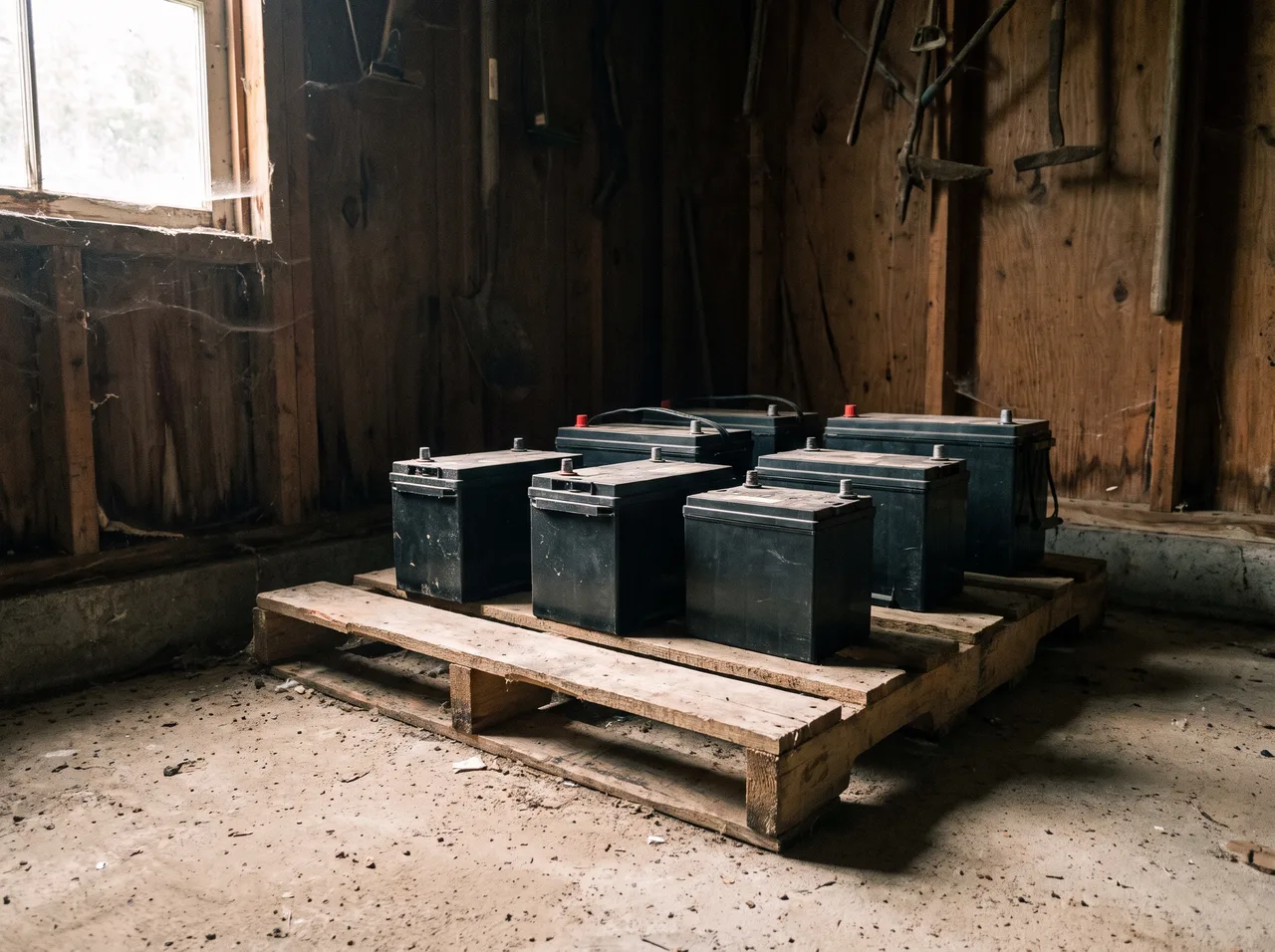
A house battery bank is wired into the RV. It feeds the systems the coach was built with: the interior lights, the water pump, the furnace fan, the control boards on the fridge and the water heater. It speaks 12 volts. It will not run anything with a household plug until an inverter is added between it and the outlet.
A portable power station is a sealed box that already contains the battery, the inverter and the charger. It has household outlets on the front, needs no wiring and no installer, and can be carried outside to a table.
What it does not do, unless you deliberately rewire for it, is power the RV's built-in 12 volt systems. The furnace fan does not care that there is a power station on the dinette.
So the honest first question is not lead acid or lithium. It is: what is actually running out of power at 2am? If the answer is the furnace and the water pump, you are shopping for a house bank.
If the answer is laptops, a CPAP, camera batteries and a coffee maker, you are shopping for a power station, and the chemistry debate below matters much less than the watt-hour number on the box.
Usable amp-hours, the number that matters
Two batteries labelled 100Ah do not hold the same amount of boondocking. What differs is how much of the rating you are allowed to actually use before you damage the battery or stop the trip. Here is what the manufacturers themselves publish, read on August 2, 2026:
| Question | Flooded lead acid | LiFePO4 (lithium iron phosphate) |
|---|---|---|
| How much of the rating is usable | Trojan recommends discharging 20 to 50 percent of rated capacity for optimum life, noting the battery is capable of being cycled to 80 percent | Battle Born publishes 100 percent usable depth of discharge on its BB10012 spec sheet |
| What 100Ah on the label means in practice | Closer to 50Ah of comfortable use | Battle Born's spec table carries a row labelled "Ah PbEq" with the value "200Ah", its own lead acid equivalence for a 100Ah cell |
| Cycle life | Trojan ties life directly to how deeply you cycle it, hence the 20 to 50 percent guidance | Battle Born publishes 3,000 to 5,000 cycles for the BB10012 |
| Weight for that capacity | Heavier, and the weight is the reason lead acid banks get skipped on payload-tight rigs | 31 lb for the 100Ah BB10012; Battle Born advertises up to 75 percent less weight than lead acid |
| Cold charging | Not the limiting factor | Needs a heated version or a warm bay, see below |
| Purchase price | The cheap option, and honestly so | $799 on sale against a $949 regular price for the BB10012 on September 24, 2026 |
Read the top row twice, because it reorders everything below it. Victron puts the same point in a single clause on its own lithium page, describing full usable capacity as being "unlike lead acid's 50 percent".
Note who is talking: Battle Born and Victron sell lithium, so their framing is not neutral. What makes the 50 percent figure credible is that it also comes from the direction with no incentive to say it.
Trojan sells flooded lead acid batteries, and Trojan is the one recommending you stay inside 20 to 50 percent.
If it is the chemistry itself you want rather than the buying decision, our LiFePO4 explained guide covers cell voltage, round-trip efficiency, why partial charging is fine and what a BMS is actually for, and what is an AGM battery does the same for the sealed lead acid option, including the published cycle life at each depth of discharge.
How many amp-hours you actually need
There is no honest universal number here, because the answer is your rig's overnight load, not an average. The arithmetic itself is simple.
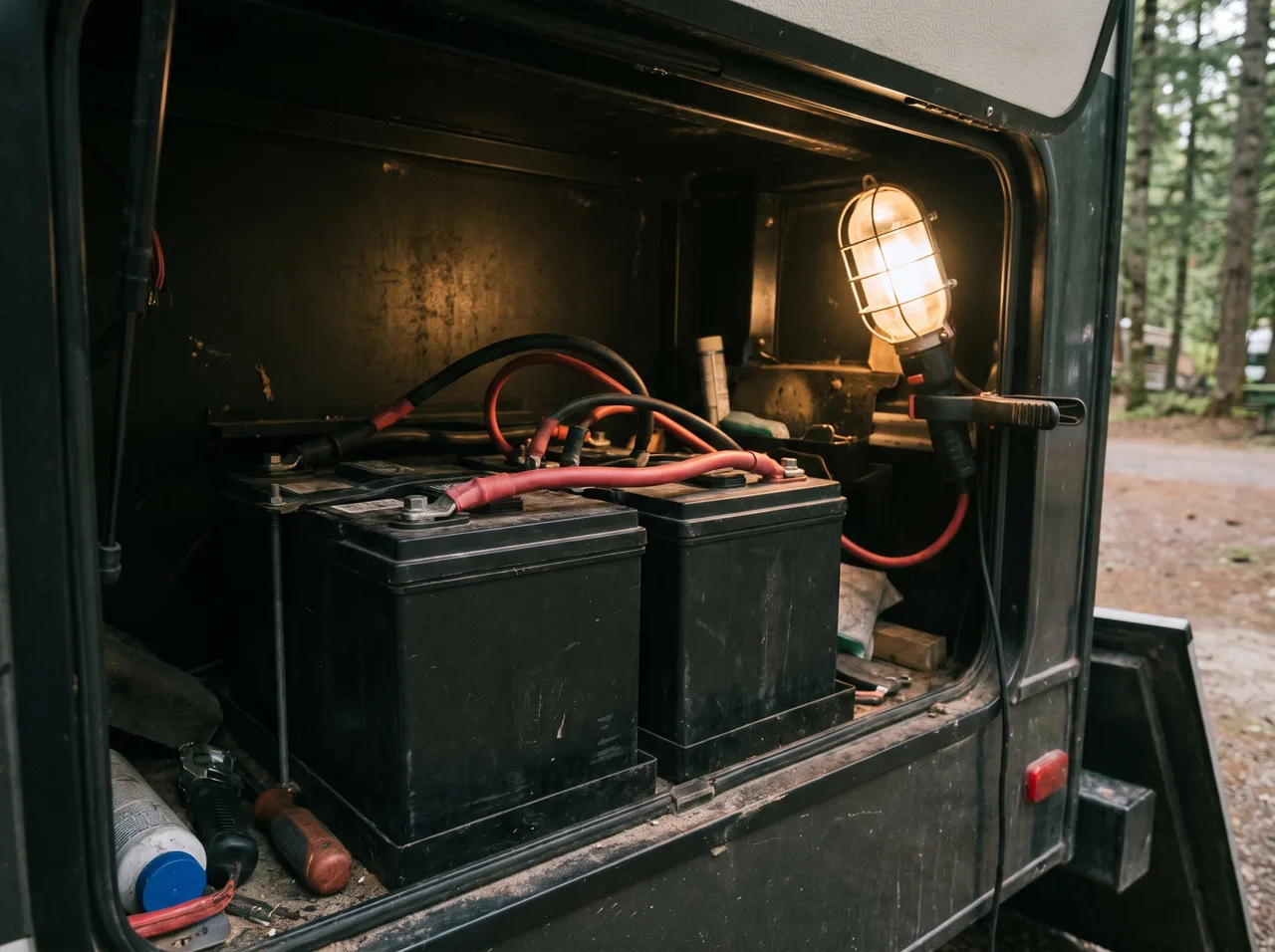
At 12 volts, amps are watts divided by 12, and amp-hours are that figure multiplied by the hours you run the thing. Our watts to amps converter runs that sum for you, including the extra the battery gives up when the load goes through an inverter.
Add up the loads that are genuinely on overnight, then size the bank so that total sits inside the usable fraction from the table above rather than inside the label number.
Two practical notes that change most people's answer. First, in cold weather the furnace fan is usually the largest overnight draw in the coach, which is why winter boondocking budgets look nothing like summer ones.
Second, if what you are sizing is a sealed power station rather than a house bank, the box is rated in watt-hours instead of amp-hours and you can skip the conversion entirely.
Our what will it run calculator does that arithmetic against real appliance draws, and our guide to running a solar generator for refrigerator duty cycles works the same problem for the load people most often get wrong.
The winter catch nobody mentions
Lithium's weak spot is charging in the cold, and the clearest evidence is that the manufacturers sell a separate product to solve it.
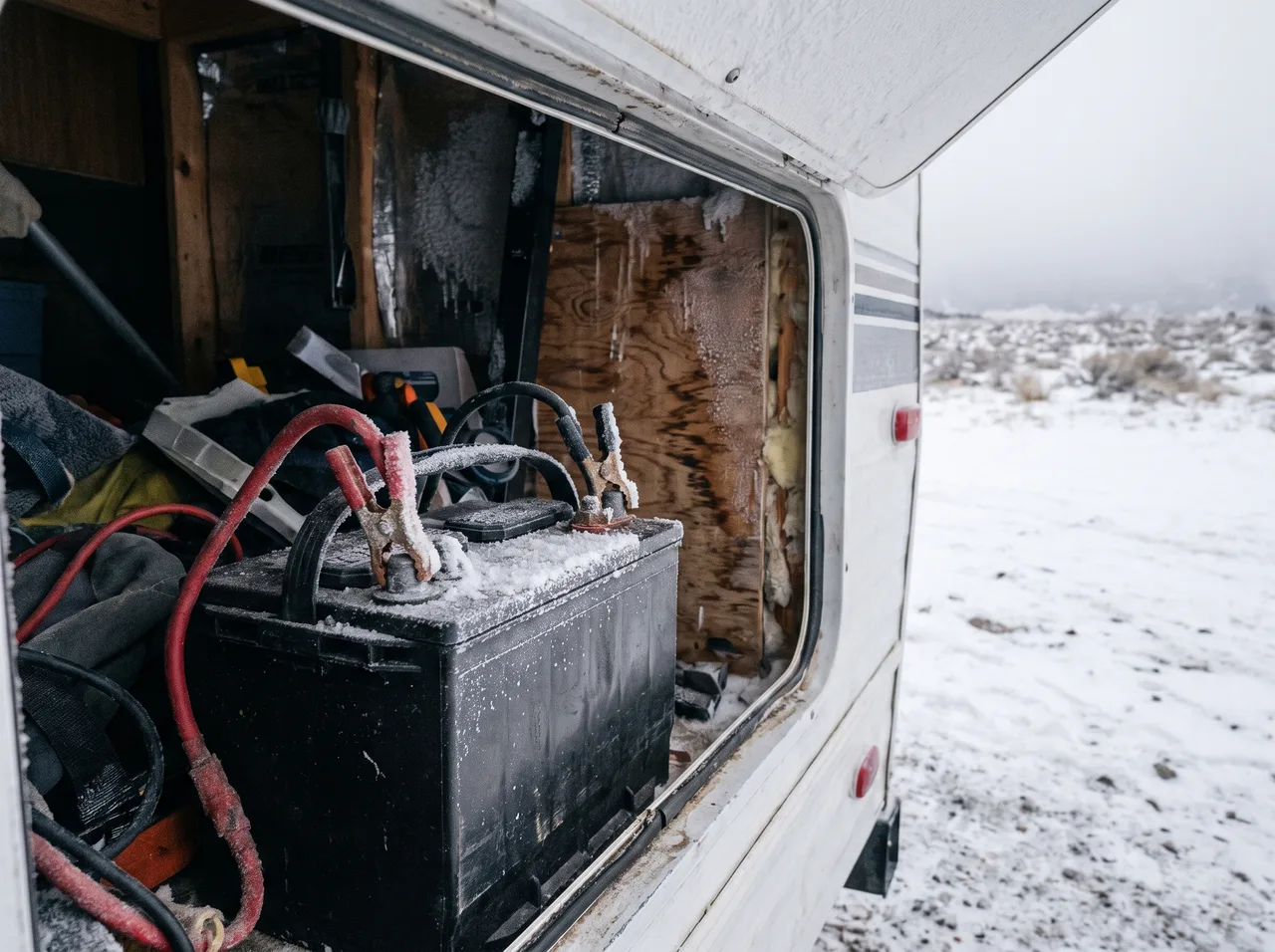
Battle Born lists a heated version of the same 100Ah battery, described as enabling safe charging in cold temperatures, at $999 on sale against $1,149 regular, versus $799 for the standard cell on September 24, 2026.
Victron makes the same admission from the other side by advertising integrated self-heating on its Lithium SuperPack NG and stating that the self-heating "enables charging down to minus 30 Celsius", which is only a selling point because a standard lithium battery cannot do it.
We are not going to print a specific cutoff temperature, because neither manufacturer publishes one on the pages we read, and inventing a threshold for a decision this expensive would be worse than leaving it open.
The practical version is simpler anyway: if you boondock below freezing, decide about heating at purchase time. Retrofitting warmth into a battery bay in February is not a good evening. Lead acid does not have this particular problem, which is one of the few places it still wins outright.
Weight, and why it is not a side note
RVs run out of payload long before they run out of space, and batteries are dense. The BB10012 is 31 lb for 100Ah of usable capacity, in a Group 27 or Group 31 footprint at 12.76 by 6.86 by 8.95 inches.
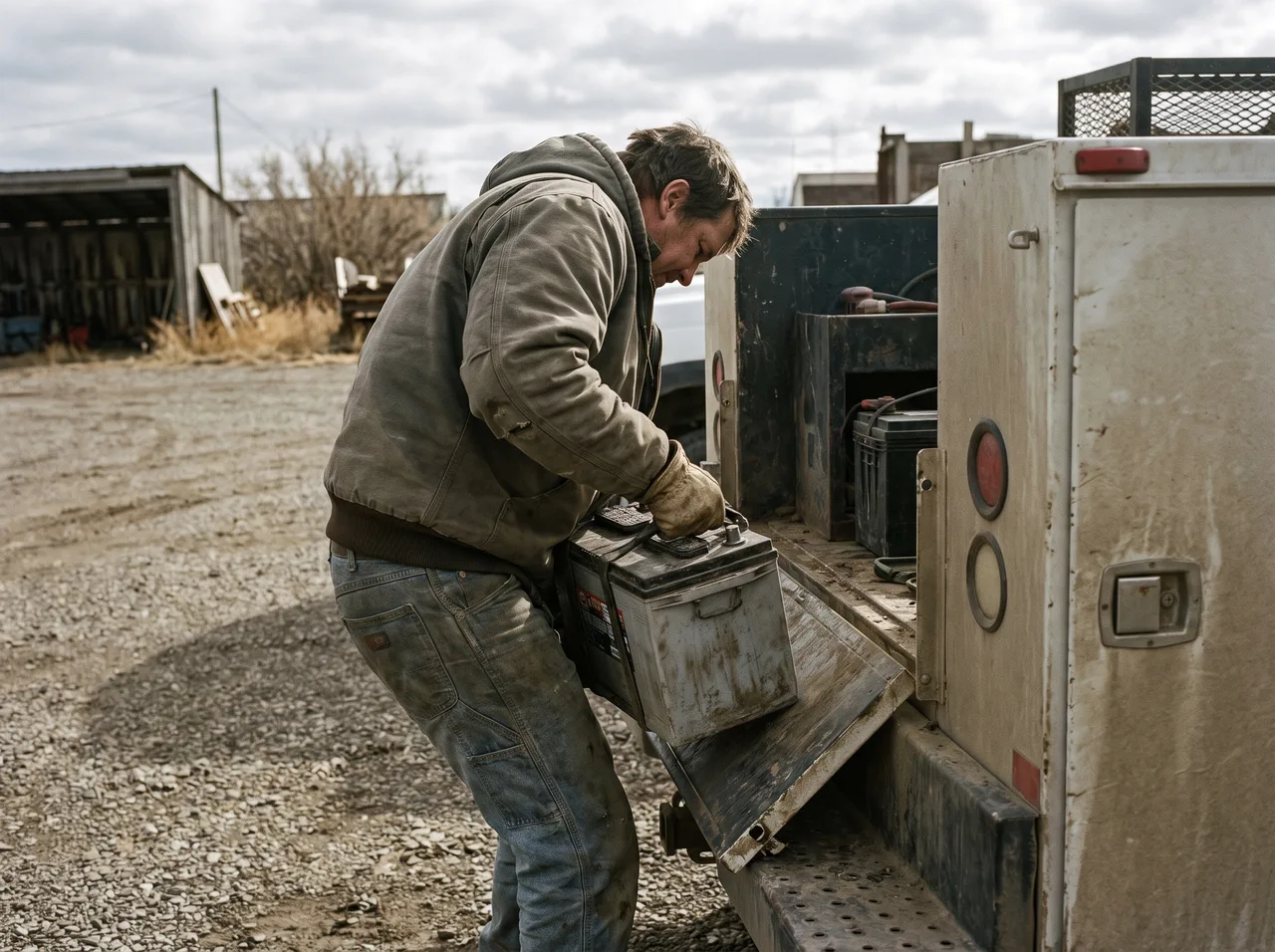
Battle Born advertises up to 75 percent less weight than lead acid for equivalent usable energy, which is the same claim as the "Ah PbEq" row viewed from the scale rather than the spec sheet.
On a travel trailer that is already close to its cargo rating, this is frequently the argument that decides the purchase, ahead of both cycle life and price.
What it costs, honestly
Lithium is expensive, and a page that skipped that would not be worth reading.
One dated reference point, quoted as a scale check and not as a recommendation: Battle Born listed the 100Ah BB10012 at $799 on sale against a $949 regular price on September 24, 2026, with the heated equivalent at $999 on sale against $1,149, and it backs those with a 10-year warranty and assembly in Reno, Nevada.
Flooded lead acid sits far below that per battery. The counter-argument is the one Trojan and Battle Born make between them: if half of a lead acid battery is off limits and its life shortens the deeper you cycle it, then the honest comparison is not price per battery but price per usable amp-hour across the years you keep the rig.
Whether that maths works for you depends entirely on how many nights a year you actually boondock.
How we would choose
A house bank upgrade earns its keep if
- What runs out overnight is the RV's own kit: furnace fan, water pump, lights
- You boondock often enough that usable amp-hours per pound beats purchase price
- Payload is tight and the weight saving is worth real money to you
- You are willing to check whether your existing converter suits the chemistry you buy
Think twice, or buy a power station instead, if
- Your actual complaint is laptops and a coffee maker, which a house bank cannot serve without an added inverter
- You boondock a handful of nights a year, where lead acid's lower price is hard to beat
- You camp below freezing and have not budgeted for a heated battery
- You do not want an installation project, since a power station needs no wiring at all
For most of the readers who arrive at this question from our boondocking guide, the honest answer is the second column: the thing that ran out was a laptop, not the furnace. That is a sealed box with outlets on the front, and it is a different shopping trip.
Our solar generator verdicts cover that side, including what a solar generator actually is and whether they are worth the money. If you also need to keep the nights legal and free, our guide to overnight parking at Walmart is the other half of a cheap week out.
See the solar generator we benchmark against
Common questions
What is the best RV battery for boondocking?
The one that gives you the most usable amp-hours inside your weight budget and your coldest expected night, which is rarely the one with the biggest number on the label.
A lead acid battery is generally worked across only part of its rating: Trojan, which makes flooded lead acid batteries, recommends discharging 20 to 50 percent of rated capacity for optimum life.
LiFePO4 is rated for far more of its capacity, so it wins on usable amp-hours per pound at a much higher purchase price.
How many amp hours do I need for boondocking?
Work it out from your own loads rather than a rule of thumb.
Amp-hours at 12 volts are watts divided by 12, multiplied by the hours you run something, and then you need enough headroom that you never reach the bottom of the bank.
Add the 12 volt loads your RV actually uses overnight, such as lights, the water pump and the furnace fan, since the furnace fan is usually the largest overnight draw in cold weather.
Can you charge a lithium RV battery in freezing weather?
Not safely without help, which is why the manufacturers sell heated versions.
Battle Born offers a heated 100Ah LiFePO4 kit it describes as enabling safe charging in cold temperatures, and Victron states its self-heating Lithium SuperPack NG can charge down to minus 30 Celsius.
If you boondock in winter, the heating question belongs in the purchase decision rather than being discovered on the first cold morning.
Is a portable power station better than an RV house battery?
They solve different problems, so neither replaces the other by default.
A house battery bank feeds the RV’s own 12 volt systems, the lights, water pump and furnace fan, and needs an inverter before it runs anything with a household plug.
A portable power station arrives with the inverter and the household outlets already inside it and needs no wiring, but it does not power the RV’s built-in systems unless you rewire for that.
How much does an RV lithium battery cost?
More than lead acid, by a wide margin, and that is the honest trade-off.
As one dated reference point, Battle Born listed its 100Ah 12V LiFePO4 battery at $799 on sale against a $949 regular price on September 24, 2026, with the heated version of the same capacity listed at $999 on sale against $1,149 regular.
Those are one manufacturer’s figures on one day, quoted as a scale check rather than a recommendation.