The real cost of renting an RV, before the checkout screen
Renting an RV costs about $95 to $300+ per night on RVezy's published 2026 averages, from micro trailers at the low end to newer Class A motorhomes at the top. The number that surprises people is the checkout total: after the platform service fee, the required protection plan, taxes and host-set fees, RVezy's own guidance is to budget roughly 30 percent above the nightly rate.
Every figure on this page comes from RVezy's own published rate data and fee pages, all checked on August 19, 2026, and the arithmetic we add is shown as ours. We partner with RVezy and say so plainly; the honest math below is the same either way. For one-way trips we cover Cruise America further down, a company we have no affiliate partnership with. How we work: our method.
We may earn a commission if you buy or book through the links on this page. How we make money
Our pick for most tripsAverage RV rental cost in 2026, by type
How much to rent an RV comes down to class before anything else: a towable trailer, a camper van and a motorhome are three different budgets. Motorhome rental cost sits at the top of the table below for the simple reason that you are renting the vehicle and the accommodation together, and daily rates fall as the unit ages.
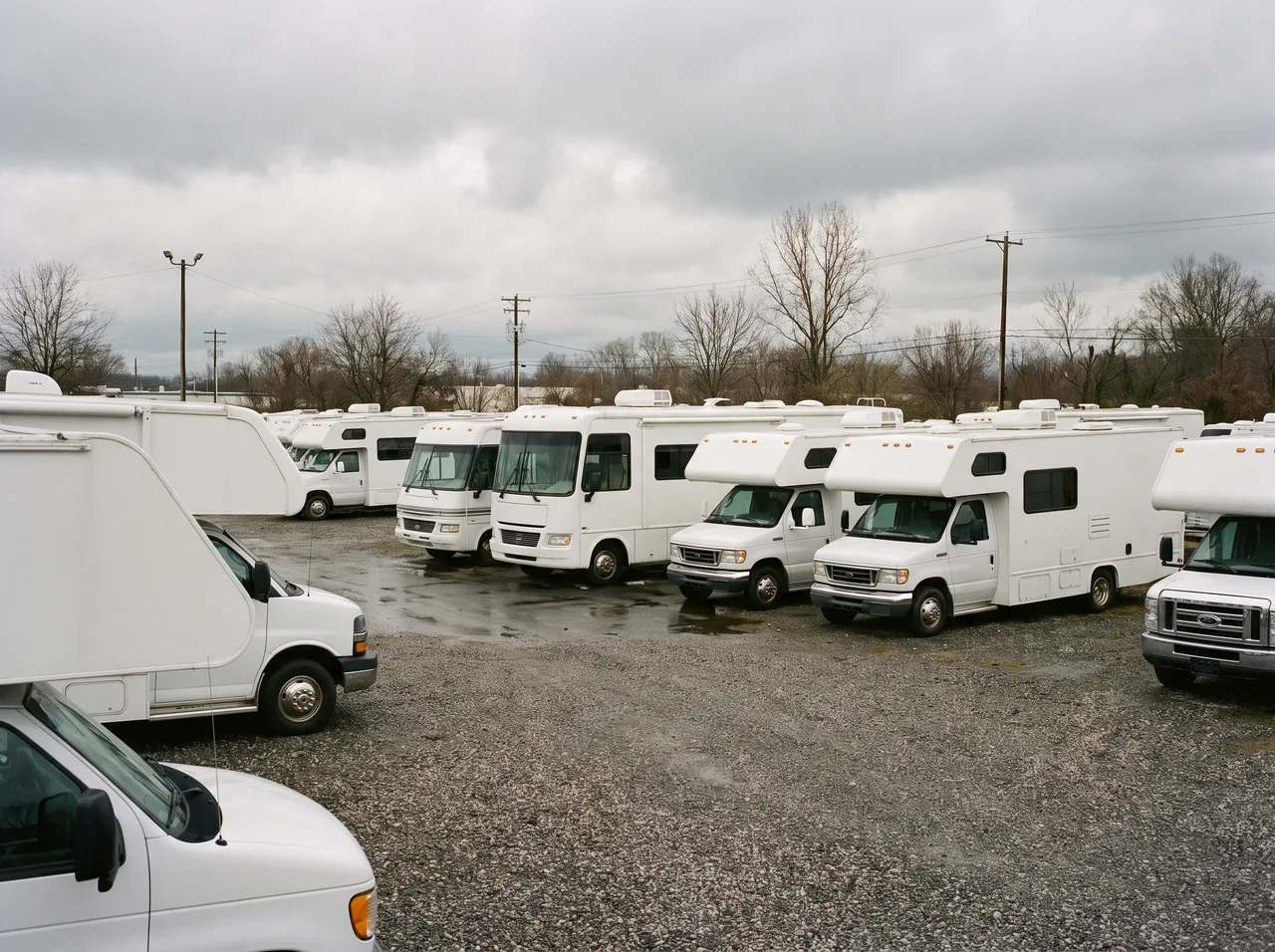
These are RVezy's published averages for units under 10 years old (checked August 19, 2026). Older rigs rent for meaningfully less: RVezy's same data set puts a 10-plus-year Class A at $255 a night and a 10-plus-year Class B at $190, which is the easiest single saving in this category.
Not sure what separates the classes? Our Class B RV guide explains why the letter is a build spec, not a size.
| RV type | Sleeps | Avg per night | Avg per week | Avg per month |
|---|---|---|---|---|
| Class A motorhome | 6-10 | $300 | $1,890 | $6,720 |
| Class B campervan | 1-4 | $240 | $1,510 | $5,375 |
| Class C motorhome | 4-7 | $230 | $1,325 | $4,705 |
| Fifth wheel | 4-8 | $170 | $1,070 | $3,810 |
| Toy hauler | 4-7 | $150 | $850 | $3,360 |
| Travel trailer | 4-7 | $130 | $820 | $2,910 |
| Pop-up camper | 4-7 | $115 | $725 | $2,575 |
| Micro trailer | 2-3 | $95 | $600 | $2,130 |

What actually lands on the bill
The nightly rate is one line of six. Here is the full anatomy of an RV rental checkout, from RVezy's fee and protection pages (checked August 19, 2026):
- Nightly rate. Set by the host; the averages above. Peak summer weeks price higher, and RVezy notes weekly bookings typically run about 15 percent below nightly pricing.
- Platform service fee. A flat-rate charge on the rental amount, with a floor of $15 per night for motorhomes and $10 per night for trailers. Insurance and the security deposit are exempt from it.
-
Protection plan. Required, chosen at checkout: Basic (deductible from $1,500), Standard (from $750), Premium (from $500), or Stationary (from $1,000) for delivered RVs you will not drive. RVezy's cost guide puts the typical premium at $20 to $40 per day.
The tier you pick matters more than the price: on Basic, roof, windshield and awning damage are entirely yours to pay. What that plan actually is, and whose policy pays first when something happens, is covered in RV rental insurance.
- Security deposit. Host-set; held as a card authorization three days before departure and released after a clean return. Not a charge, but real credit-limit pressure.
- Host fees and add-ons. Preparation or cleaning fees, delivery and setup, generator hours, pet fees, propane: all host-set, all listed on the listing page before you book.
- After the trip. Mileage beyond the allowance (RVezy notes charges usually begin after about 100 free miles per day), extra generator hours or extra cleaning are billed post-trip, plus a 5 percent transaction charge on those items.
A worked example, honestly labeled
Our arithmetic, RVezy's published inputs: take a newer travel trailer at the $130 average for a 3-night weekend. The rental subtotal is $390.
The trailer service-fee floor adds at least $10 per night ($30). A mid-tier protection plan at RVezy's $20 to $40 per day range adds $60 to $120.
Before taxes and any host-set cleaning or preparation fee, you are already at roughly $480 to $540, about 25 to 40 percent over the advertised subtotal, with the security deposit held on top. That is a normal, honest outcome, not a scam; it is simply what the advertised nightly rate does not show you.
The cancellation math, before you commit
RVezy runs one platform-wide cancellation policy (re-verified September 24, 2026). Start with the part that works in your favour: add-ons, the preparation fee, the delivery fee and the protection plan come back in full with their tax whenever you cancel.
The rental amount and RVezy's service fee are what you can lose. Cancel more than 30 days out and you forfeit the service fee and its tax. Between 30 and 8 days you also forfeit 50 percent of the rental amount, and at 7 days or less, 100 percent of it.
A complete refund exists only inside the 24-hour grace period, which runs from the moment the host accepted and you paid, and which applies only if you are still more than 24 hours from the trip start date.
Book like the calendar is a contract, because financially it is one. The full matrix, including what the host receives at each step, is in our RVezy review.
Six levers that actually lower the price
- Rent a 10-plus-year unit: RVezy's own averages price them up to $50 a night below newer rigs.
- Book by the week: hosts typically discount about 15 percent versus nightly, per RVezy's data.
- Travel shoulder season: the same rig prices lower outside peak season, when summer demand and the school calendar set the daily rates.
- Book early for peak dates: booking early is what gets you the well-reviewed rig at the ordinary price, because the cheapest listings near popular state parks go first in summer.
- Match the protection tier to the trip: Stationary coverage for a delivered, parked RV starts cheaper than driving tiers, and short easy trips may not need Premium.
- Read the mileage and generator allowances first: mileage fees for overages are billed post-trip with a 5 percent transaction charge, so the cheapest listing with a tight allowance can cost more than the pricier one with a generous allowance.
A note on what we deliberately do not do: we do not chase promo codes or coupon pages, and this site never will. The durable savings are structural, in the six levers above.

When a corporate fleet beats a marketplace
For most trips the peer-to-peer math above wins. Two situations invert it, and both come down to something a marketplace cannot promise: a one-way trip across the country, and a trip on dates that cannot move.
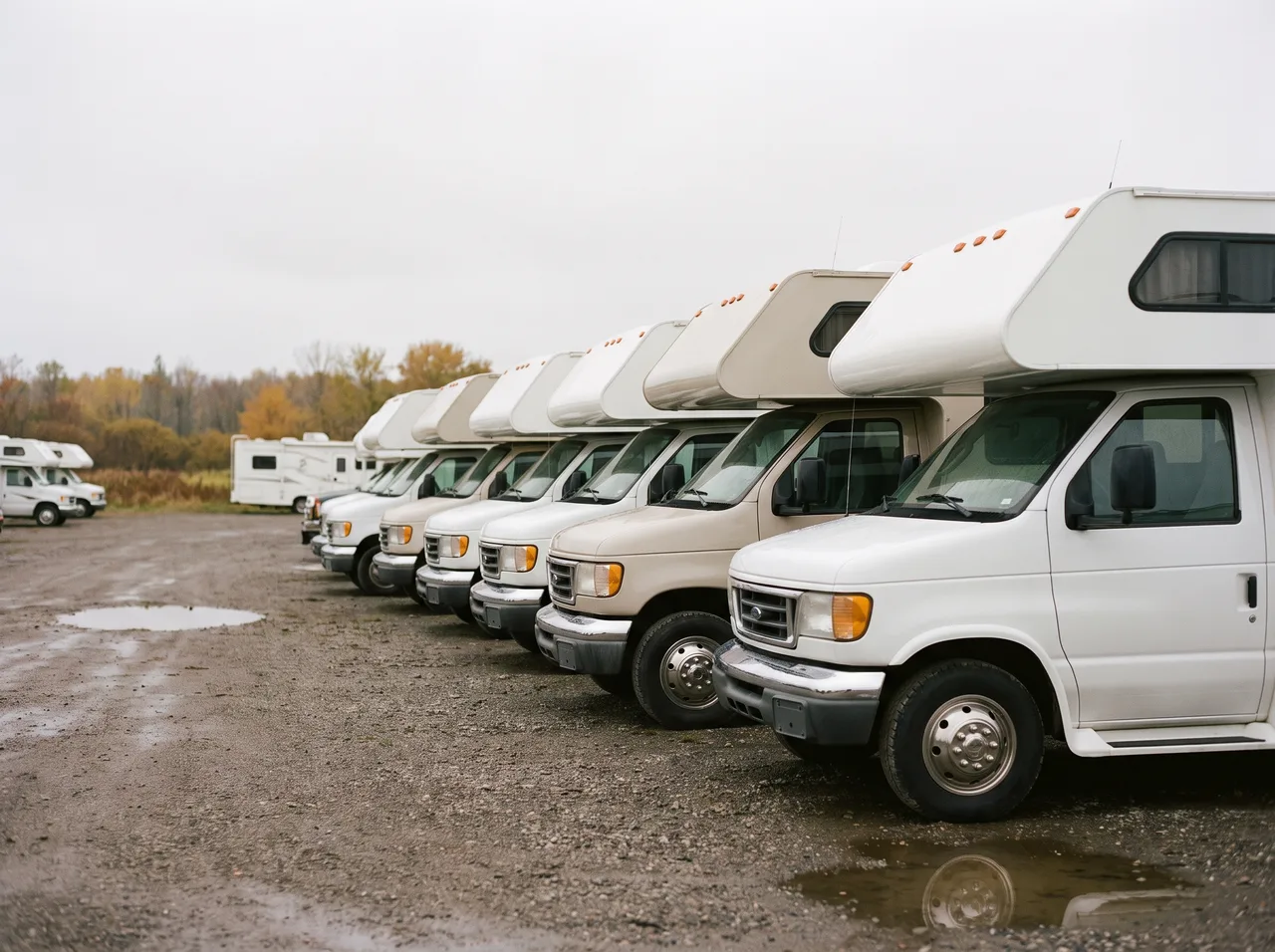
Private owners rent their own single RV, so a one-way drop-off in another state is rarely on offer, and an owner who has a change of plans can cancel on you.
A corporate fleet solves both by being a fleet. Cruise America runs standardized Class C motorhomes out of well over a hundred North American locations, which is why it dominates one-way road trips and why event campers with fixed dates keep recommending it.
The trade is real and worth stating plainly. These are deliberately basic rigs: no slide-outs, no automatic awnings, no off-grid solar, wrapped in company branding.
Cruise America publishes no fuel economy figure for any model in its fleet, and the numbers renters pass around are their own estimates rather than measurements, so we quote none.
Cruise America's own published charges (checked August 19, 2026) are 39 cents per mile, billed against a pre-estimated allowance of 100 miles per night on a local rental and 250 on a one-way, $3.50 per hour of generator use on the installed meter, $125 for the vehicle provisioning kit and $75 per person for personal kits. The base rate is a vehicle, not a camp kitchen.
Reputation is split in a way worth knowing before you book: Trustpilot shows 4.1 out of 5 across roughly 7,900 reviews, but Trustpilot also flags that the company invites its customers to review, while the Better Business Bureau, where people arrive on their own after a problem, averages 1.16 out of 5 across 37 reviews.
Read those two numbers together, not separately. The recurring complaints there are appliance and air-conditioning failures mid-trip, slow roadside resolution, and disputed charges taken from the deposit after drop-off.
Two things to get right before you turn up. First, the person named on the reservation has to collect the RV in person, with a driver's licence and a credit card in the same name; prepaid and virtual cards are not accepted and debit is heavily restricted. Sending a spouse instead is the single most common way a booking is lost at the counter.
Second, budget for the money held rather than spent: Cruise America requires a refundable security deposit of at least $500 before departure, which it can raise at its discretion for high-demand events, plus a $300 reservation down payment that is applied to your rental.
That down payment is refundable if you cancel more than 7 days out, forfeited inside 7 days, forfeited 45 days out for special-event areas, and on a one-way booking it is forfeited on any cancellation at all.
All five models compared side by side, every published charge, and what renters actually report are in our full Cruise America review.
Where we would book
For most trips we point readers to RVezy, the peer-to-peer marketplace this page's rate data comes from, and keep Cruise America for the two jobs described above, a one-way route or dates that cannot move.
Our full RVezy review covers the platform with the same honesty as the math above: the booking experience and insurance breadth are real strengths, the rigid cancellation matrix and the Basic tier's exclusions are real weaknesses.
If you are weighing renting against owning power gear for a rig you already have, start with our solar generator verdicts instead.
And if you are reading this from the other side, as an owner wondering whether your rig should be earning between trips, we cover how to rent out your RV as its own process: the checks that come before the listing form, the six steps, and when the payout lands.
Weighing the other marketplaces first is reasonable too, and our Outdoorsy vs RVshare comparison judges those two on what each publishes before you commit, which is not the same thing on both sites.
If the question in your head is the blunter one, is Outdoorsy legit answers it with the actual reputation data, including why the same company scores 4.8 in one place and 1.06 in another.
And if the rig you are eyeing is a travel trailer you would have to pull yourself, read how to tow a trailer safely first: the four numbers that decide whether your vehicle can legally pull it are all findable before you book.
Common questions
How much does it cost to rent an RV for a week?
Using RVezy’s published 2026 averages, a one-week rental runs from about $600 for a micro trailer to $1,890 for a newer Class A motorhome, before fees.
RVezy also states that weekly bookings are typically discounted around 15 percent against the nightly rate, and monthly bookings more.
Add roughly 30 percent on top of the rental subtotal for service fees, the protection plan and taxes to reach a realistic checkout figure.
How much does it cost to rent an RV for a month?
Using RVezy’s published 2026 averages, a one-month rental runs from about $2,130 for a micro trailer to $6,720 for a newer Class A motorhome, before fees.
Measured against 30 nights at the same table’s nightly average, seven of the eight classes land about 25 percent below their own nightly run rate, which is our arithmetic from the figures above and not a discount RVezy publishes as a number.
The Class C motorhome is the one exception and the deepest monthly saving in the table, about 32 percent below its nightly rate, which is worth knowing because the Class C is also the class most first-time renters end up in.
Budget the same way as any other length: add roughly 30 percent to the rental subtotal for service fees, the protection plan and taxes.
Why is the final price so much higher than the nightly rate?
Because the nightly rate is only the base. The checkout total adds a platform service fee (on RVezy, a flat-rate charge with a floor of $15 per night for motorhomes and $10 for trailers), a mandatory protection plan, host-set preparation or cleaning fees, taxes, and any add-ons like delivery.
Mileage and generator hours above the listing’s allowance are billed after the trip with a 5 percent transaction charge. That is why a realistic budget starts at the nightly rate plus about 30 percent.
Does an RV rental include insurance?
On RVezy you select a protection plan at checkout rather than bringing your own policy. Plans range from Basic (deductible from $1,500, and you carry all roof, windshield and awning costs yourself) to Premium (deductible from $500 with those items covered beyond it).
RVezy’s own cost guide puts typical insurance cost at $20 to $40 per day. Read the tier table before picking the cheapest option: roof and awning damage are among the most common RV claims.
Who is allowed to drive a rented RV, and is there a minimum age?
On RVezy every driver has to be approved first, and the bar is set by their insurance provider rather than by the owner.
Per RVezy’s own help centre, checked August 11, 2026, an approved driver must be at least 25 years old and hold a full unrestricted licence, with temporary and paper licences not accepted and an extra endorsement possible for things like air brakes.
The driving record also has to clear three limits: no more than one at-fault accident in the past six years, no more than two minor convictions in the past three, and no criminal code driving offences in the past three.
Licences from Canada, the United States, Mexico, the United Kingdom, the European Union, Australia and New Zealand are accepted, and other licences may qualify alongside an international driving permit.
Two details catch people out. An approved driver is required on every booking even when the RV is delivered and you never drive it yourself, and if someone who is not approved takes the wheel, the insurance coverage is void.
Corporate fleets set their own rules: on a Cruise America booking the person named on the reservation has to collect the RV in person with a matching licence and credit card.
Can you rent an RV one way and drop it off in another state?
Rarely on a peer-to-peer marketplace, because a private owner rents one RV and needs it back.
A corporate fleet is the practical answer: Cruise America runs standardized Class C motorhomes out of well over a hundred North American locations and prices one-way rentals against a larger mileage allowance, 250 miles per night rather than the 100 on a local rental, at 39 cents per mile.
Two conditions matter before you commit. The person named on the reservation must collect the RV in person with a matching driver’s licence and credit card, and on a one-way booking the $300 reservation down payment is forfeited on any cancellation, not just a late one.
How does the security deposit work?
The host sets the deposit amount for their RV. RVezy places it as a temporary authorization hold on your credit card three days before the trip starts, and releases the hold after the RV is returned and closed out.
It is not a charge, but it does consume that much of your card’s available credit during the trip, so budget for it alongside the rental itself.