The best solar generators for RV life, judged on evidence
Our top pick for RV and off-grid use is the Grid Doctor 3300 System ($2,997 with two 200W panels, up from $2,500 in July): a 3,300W pure sine inverter, LiFePO4 cells and a native 30A RV outlet in a 2kWh chassis. The Grid Doctor 300 ($397, down from $497) is the honest budget entry, and the Grid Doctor 3300 Power Tower ($11,499.99) the whole-home step-up.
Those three are our best solar generator for RV 2026 shortlist, and the reason it is short is that we only put a buy button on products from the store we partner with.
Every pick below is in stock at the time of checking, priced from the store page, and scored by us from verified specs, the manual and owner reviews; on-site star ratings are quoted with their source and are not our score.
Where a rival brand does something better, we say so by name. How we work: our method.
We may earn a commission if you buy or book through the links on this page. How we make money
Our top picks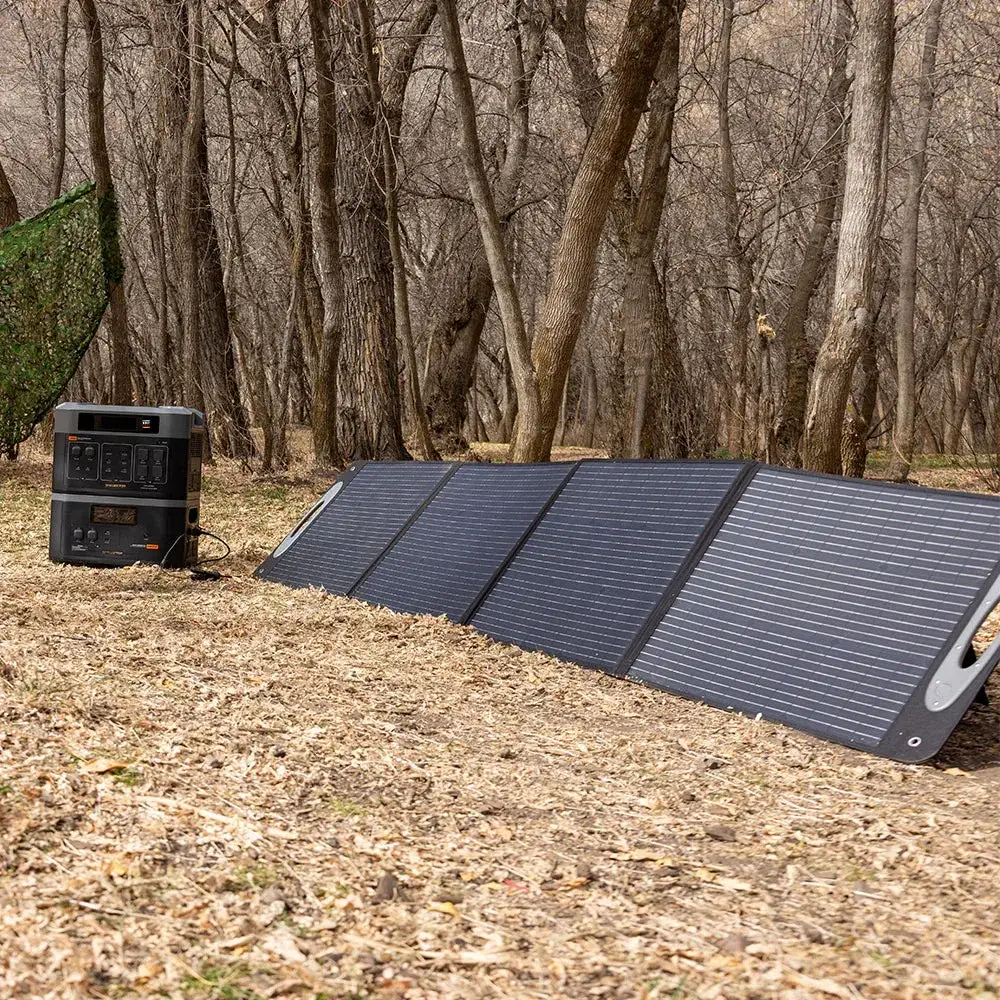
| Pick | Role | Quick spec | Price |
|---|---|---|---|
| Grid Doctor 3300 | Top pick for RV | 2,048Wh · 3,300W · 57.2 lb | $2,997.00 |
| Grid Doctor 300 | Budget entry | 320Wh · small loads · light | $397.00 |
| Grid Doctor 3300 Power Tower | Whole-home step-up | 16,384Wh · maxed system | $11,499.99 |
Top pick for RV
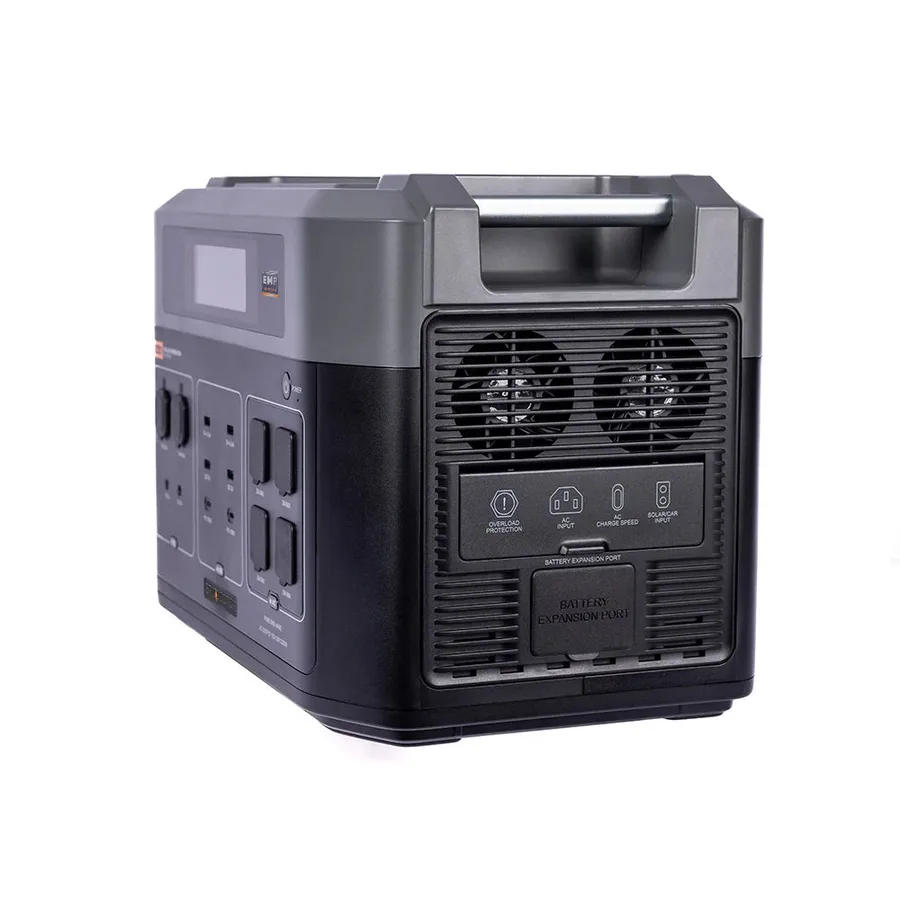
Grid Doctor 3300 Solar Generator System
2,048Wh LiFePO4 · 3,300W pure sine inverter · two 200W waterproof panels included
$2,997.00
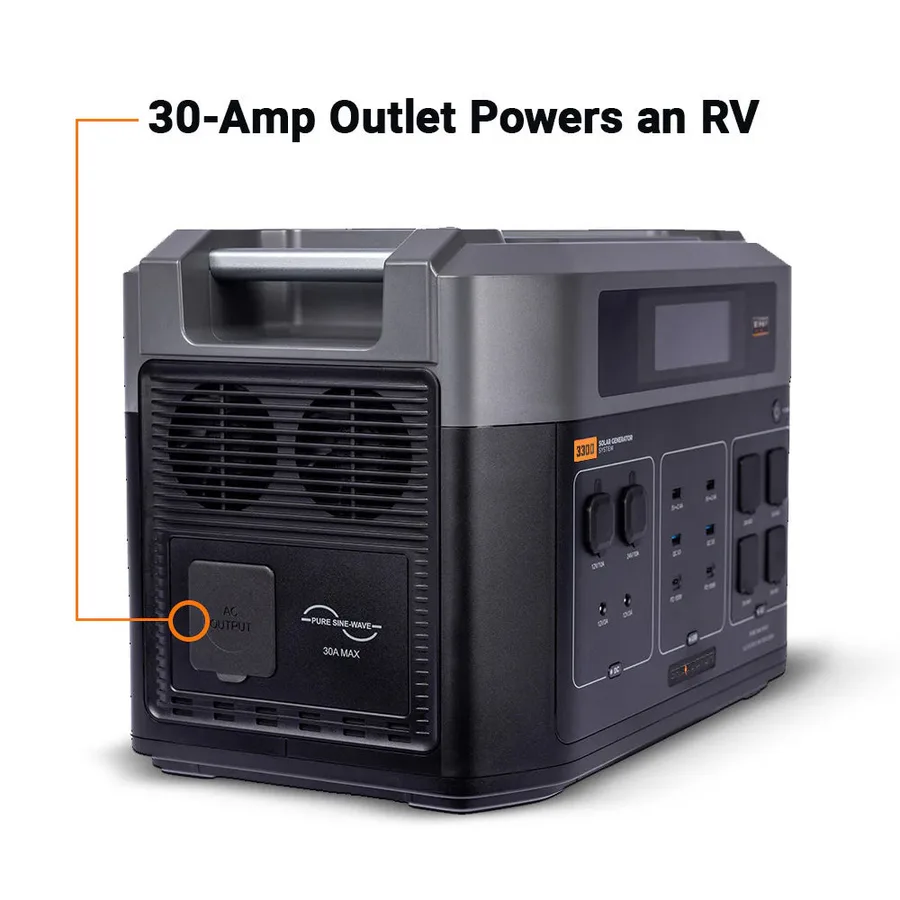
The spec that decides it for RV use: a built-in 120V/30A RV outlet (NEMA TT-30R), so a travel trailer plugs in directly with no adapter, something independent field testers have verified off-grid.
Around it sits an unusually strong 3,300W continuous inverter for a 2kWh-class unit (most rivals in this tier stop at 2,000 to 2,400W), with 6,600W of surge headroom. The LiFePO4 cells are manufacturer-rated at 3,500+ cycles to 80 percent, and the pack expands to 16,384Wh with up to seven 3300XP batteries.
The UPS pass-through switches to battery in under 15ms, quick enough to keep a CPAP running through a cut.
Two things it does not do: there is no app, Wi-Fi or Bluetooth monitoring at all, and solar input is capped at 1,000W, which is slow once the expansion batteries are attached.
Keep in mind: The factory warranty runs one year, where leading rivals in this class publish 5 years.
Best for: RV travelers and essentials-first home backup. Skip it if you need app monitoring, 240V appliances or a long factory warranty.
Key specifications
| Capacity | 2,048Wh (51.2V LiFePO4) |
|---|---|
| Inverter | 3,300W continuous, 6,600W surge, pure sine |
| AC outlets | 4x 120V/20A + 1x 120V/30A RV (TT-30R) |
| USB | 2x USB-A 12W, 2x QC 3.0 18W, 2x USB-C PD 100W |
| Recharge | AC up to 1,800W; solar up to 1,000W MPPT |
| Expansion | Up to 7x 3300XP batteries (16,384Wh total) |
| Weight | 57.2 lb |
| Warranty | 1-year limited |
“The generator arrived very quickly. It is a high-quality build and brings peace of mind to my family. The generator is very easy to use which is important, because when the lights go out you want an easy solution.”
Thomas, verified buyer on My Patriot Supply’s site (July 2026)
Budget entry
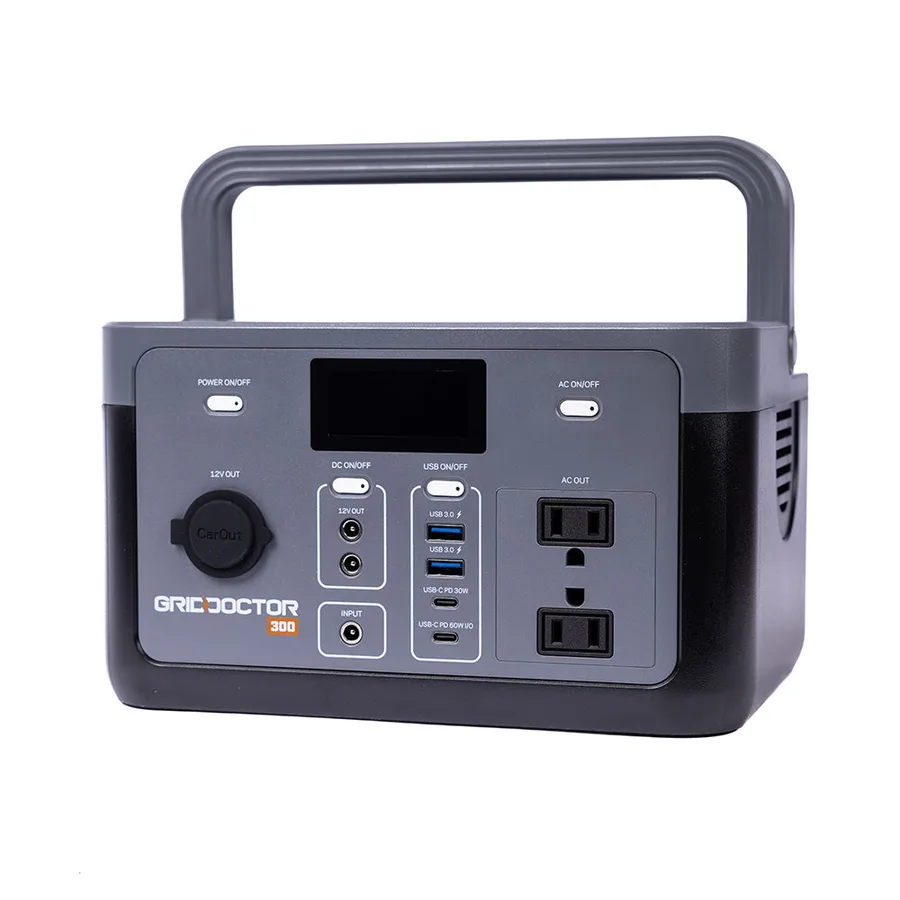
Grid Doctor 300 Solar Generator System
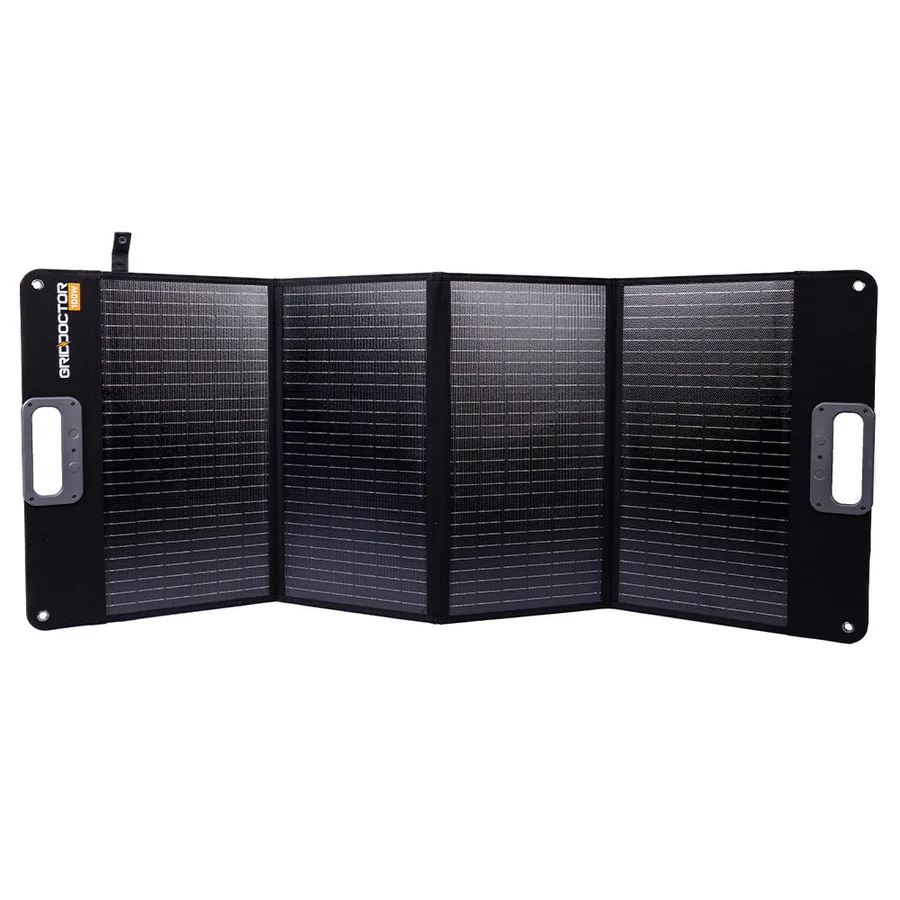
320Wh portable unit · 100W solar panel included
$397.00 $497.00 Save 20%
The honest way to start under $500: a 320Wh unit with the 100W panel already in the box, so the solar loop works on day one. Owners repeatedly praise exactly that bundled panel, and report it is light and easy to move around.
It comes from the same store and the same LiFePO4-family lineup as the 3300.
Be clear about what 320Wh is for: phones, lights, a router, a CPAP, a 12V fridge for a stretch. It will not carry a residential fridge through a long outage, and we would rather tell you that here than let the name "generator" oversell it.
Keep in mind: The warranty is one year, the same limitation as the rest of this line.
Best for: First-time buyers, tent campers and CPAP/electronics backup. Skip it if your plan involves a full-size refrigerator.
“A very nice portable unit. I will probably buy a couple more as they are easy to move around. I recommend this for smaller items like cpap and router.”
Robert C., verified buyer on My Patriot Supply’s site (July 2026)
Whole-home step-up
Grid Doctor 3300 Power Tower
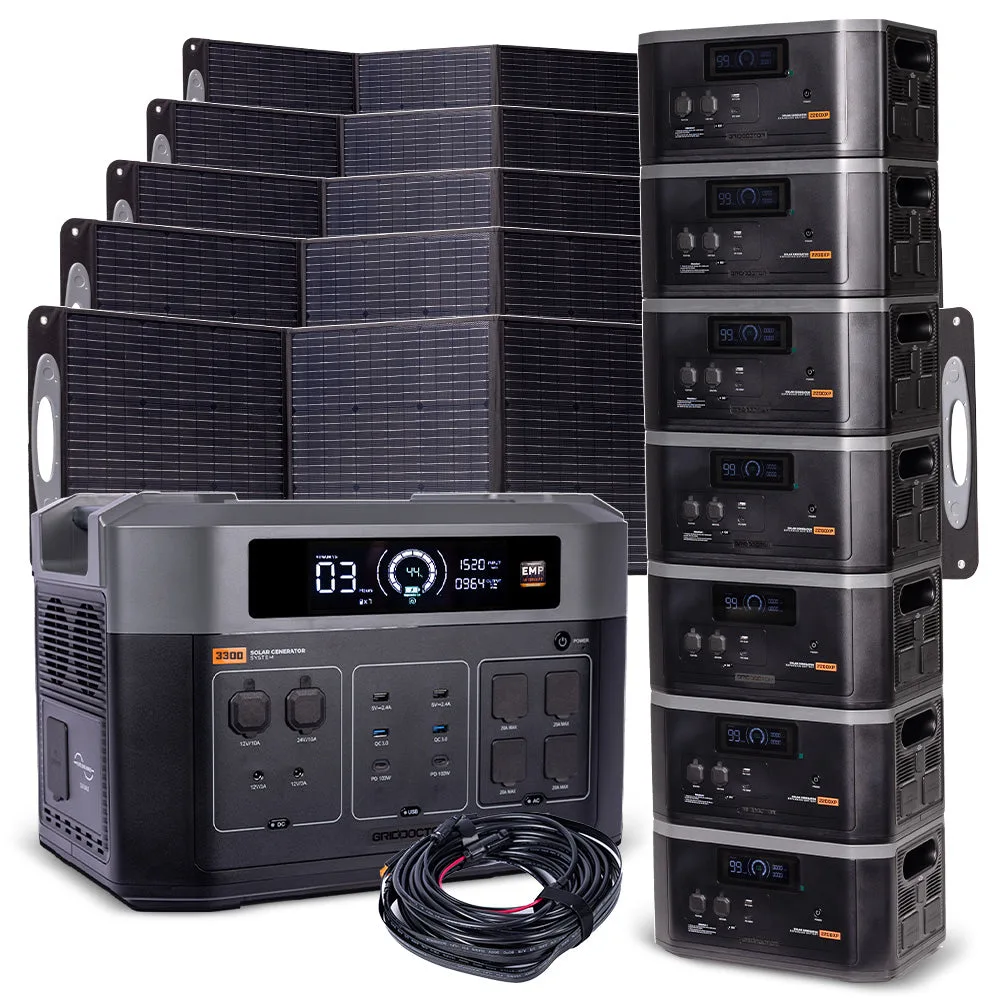
Base 3300 + seven 3300XP batteries + five 200W panels · 16,384Wh total
$11,499.99 $13,953.99 Save 18%
The maxed-out configuration of the same platform: the 3300 base unit, all seven expansion batteries and five 200W panels, delivered as one $11,499.99 system. That capacity runs essentials for days, not hours.
It carries the same strong 3,300W pure sine inverter and RV outlet as the base unit, and its expansion ceiling of seven batteries sits above the 2 to 4 unit limits most rivals publish.
Two honest cautions at this price: output stays 120V (no 240V appliances like central HVAC), and the 1,000W solar input ceiling means refilling 16.4kWh from the sun alone takes multiple good solar days.
Buyers wanting faster solar recovery at this budget should also weigh the high-input rivals we name below.
Keep in mind: This is a large upfront spend carrying the same one-year warranty as the rest of the line.
Best for: Preppers and rural homeowners who want maximum storage in one order. Skip it if you need 240V power or fast solar recharging.
One line item in the small band is worth pricing separately. The router that shows up in every one of these bands draws almost nothing, so power is never what stops you getting online off grid; the monthly data plan is.
Our Home Fi review lays out what a contract-free cellular hotspot actually costs per month, and the wider RV internet comparison covers the alternatives when there is no cell signal to use.
The 30-amp question, answered honestly
Most travel trailers and smaller motorhomes end in a 30-amp TT-30P shore plug, and the question people actually type is whether a solar generator can take it. Two separate things have to be true, and roundups usually check only the first.
- The socket has to fit. A 30-amp RV cord needs a TT-30R outlet. Most portable power stations do not have one, so you are buying a dogbone adapter down to a standard household socket. The Grid Doctor 3300 is unusual in this class for carrying a native 120V/30A TT-30R alongside its four 20A outlets, which is why it appears at the top of this page.
- The inverter has to sustain the draw, and this is the part that gets skipped. A 30-amp RV service at 120V is 3,600W at full load. Our arithmetic, from the specs above: the Grid Doctor 3300's inverter is rated 3,300W continuous, so the socket accepts your cord but the unit still cannot deliver a fully loaded 30-amp service. A TT-30R outlet is a convenience, not a promise of 30 amps.
In practice that gap rarely bites, because almost nothing in a trailer draws a full 3,600W at once. It bites in one predictable place: the rooftop air conditioner, whose startup surge is the single largest load most RVs ever ask for, and which is covered in its own question below.
The rule worth remembering is to size against your largest simultaneous load rather than against the plug shape. A unit with the right socket and a weak inverter will still trip.
How the named rivals compare
We only place a buy button on products from the store we partner with, and we say that openly. But an honest roundup names the alternatives.
EcoFlow Delta Pro (3,600Wh/3,600W) counters with a 5-year warranty, app control and EV-station fast charging; it is the pick if remote monitoring matters more than weight.
Bluetti's AC300/AC500 class accepts up to 3,000W of solar input, far beyond the Grid Doctor's 1,000W ceiling, which matters for full-time off-grid living. Jackery Explorer 3000 Pro is a strong outdoor brand, but its NMC chemistry is rated for roughly 500 to 1,000 cycles against LiFePO4's 3,500+.
Anker Solix F3800 natively outputs 120/240V split-phase, the one thing this entire Grid Doctor line cannot do. Those brands also publish independent UL/ETL lab certifications; My Patriot Supply's EMP claim, by contrast, has no published third-party test, which we unpack in the full 3300 review.
Size before you spend
The wrong-size unit is the most common regret in this category. The math takes five minutes: watts times hours equals watt hours, summed over a day, plus reserve.
Our worth-it guide walks the arithmetic, and the power station vs generator comparison settles whether a battery fits your trip at all. If it does not, our dual fuel inverter generator guide covers the gasoline-or-propane choice. If your question is the rig's own house battery rather than a portable box, start with the best RV battery for boondocking.
Our what size solar generator do I need calculator does both sums for you, and we work two specific appliances through in detail: running a solar generator for a refrigerator, and using a portable power station for a gas furnace, which is the outage case where the heat is already paid for in gas and only the blower needs electricity.
The calculator: it totals the watt hours your appliances actually need and checks your biggest single load against the inverter rating, using the watt figures from your own labels.
One point of vocabulary, because it decides what you actually need to buy (the long version is in what is a solar generator).
These units are portable power stations with a solar input built in: the battery, the inverter and the charge controller live in one box, so the panel plugs straight in and the solar charge is regulated for you.
That is the difference from a DIY setup, where you buy the charge controller separately and wire it yourself. It also means the panel is usually sold apart from the unit, and that a larger capacity model is the answer to running longer, not to running more at once, which is what the continuous output rating decides.
The best solar generator for off-grid living is simply the one whose capacity covers your worst day and whose output covers your biggest load.
Common questions
What size solar generator do I need for an RV?
Size from your appliance labels, not from marketing tiers.
Add up watts times hours for a day off-grid: a 60W 12V fridge running half the time, lights, fans, laptops and a CPAP typically land a weekend RVer in the 1,000 to 2,000Wh range, which is why 2kWh-class units are the RV sweet spot.
Then check the biggest single load against the inverter rating, and prefer a unit with a native 30A RV outlet.
Can you plug a 30 amp RV into a solar generator?
Only if two things are true, and most buyers check only the first. The unit needs a TT-30R socket for your 30-amp cord, which most portable power stations do not have, so they require a dogbone adapter down to a household outlet.
The Grid Doctor 3300 is unusual in this class for carrying a native 120V/30A TT-30R.
The second condition is the inverter: a 30-amp service at 120V is 3,600W at full load, and by our arithmetic from the specs on this page, the 3,300W continuous inverter means the socket accepts your cord but the unit cannot deliver a fully loaded 30-amp service.
That gap rarely bites, because almost nothing in a trailer draws 3,600W at once. Size against your largest simultaneous load rather than against the plug shape.
Can a solar generator run an RV air conditioner?
Starting one is possible for a strong inverter (the 3,300W continuous / 6,600W surge class handles the startup spike of many small units), but sustaining one is the hard part: rooftop AC drawing 1,000W-plus empties a 2kWh battery in under two hours.
For all-day off-grid air conditioning you need stacked expansion batteries or a gas generator; our power station vs generator guide covers that trade honestly.
Are bundled solar panels worth it?
Usually yes for a first system, because the panel is the part first-time buyers most often undersize or forget, and a bundle means the solar loop works on day one.
The included panels here (two 200W with the 3300, one 100W with the 300) are sized sensibly for their units. Heavy users can always add more input later, up to each unit’s solar ceiling.
Grid Doctor vs EcoFlow or Jackery: which should I buy?
It depends on what you value. The Grid Doctor 3300 wins on inverter strength for its size, the built-in 30A RV outlet and a 7-battery expansion ceiling.
EcoFlow’s Delta Pro class answers with a 5-year warranty, app control and faster charging options; Bluetti’s big systems accept far more solar input; Jackery’s older NMC models trail on battery longevity.
We link no store for the rivals; compare their current spec sheets directly.