Keeping a gas furnace running on a portable power station
We may earn a commission if you buy or book through the links on this page. How we make money
In a power cut your gas furnace still has gas. What it loses is electricity, and only for the blower, the igniter and the controls. That is a much smaller job than heating a house electrically, which is why a portable power station for a gas furnace is one of the highest-value uses for a battery you may already be considering.
The whole question is therefore narrow: what does your blower draw, for how many hours will it actually run across a cold night, and can the inverter start it? Take the figure from your own furnace nameplate and put it through our sizing calculator, or read the arithmetic below first.
What in a gas furnace actually needs electricity
People are often surprised by how little of a gas furnace is electrical, and that surprise is the good news here.
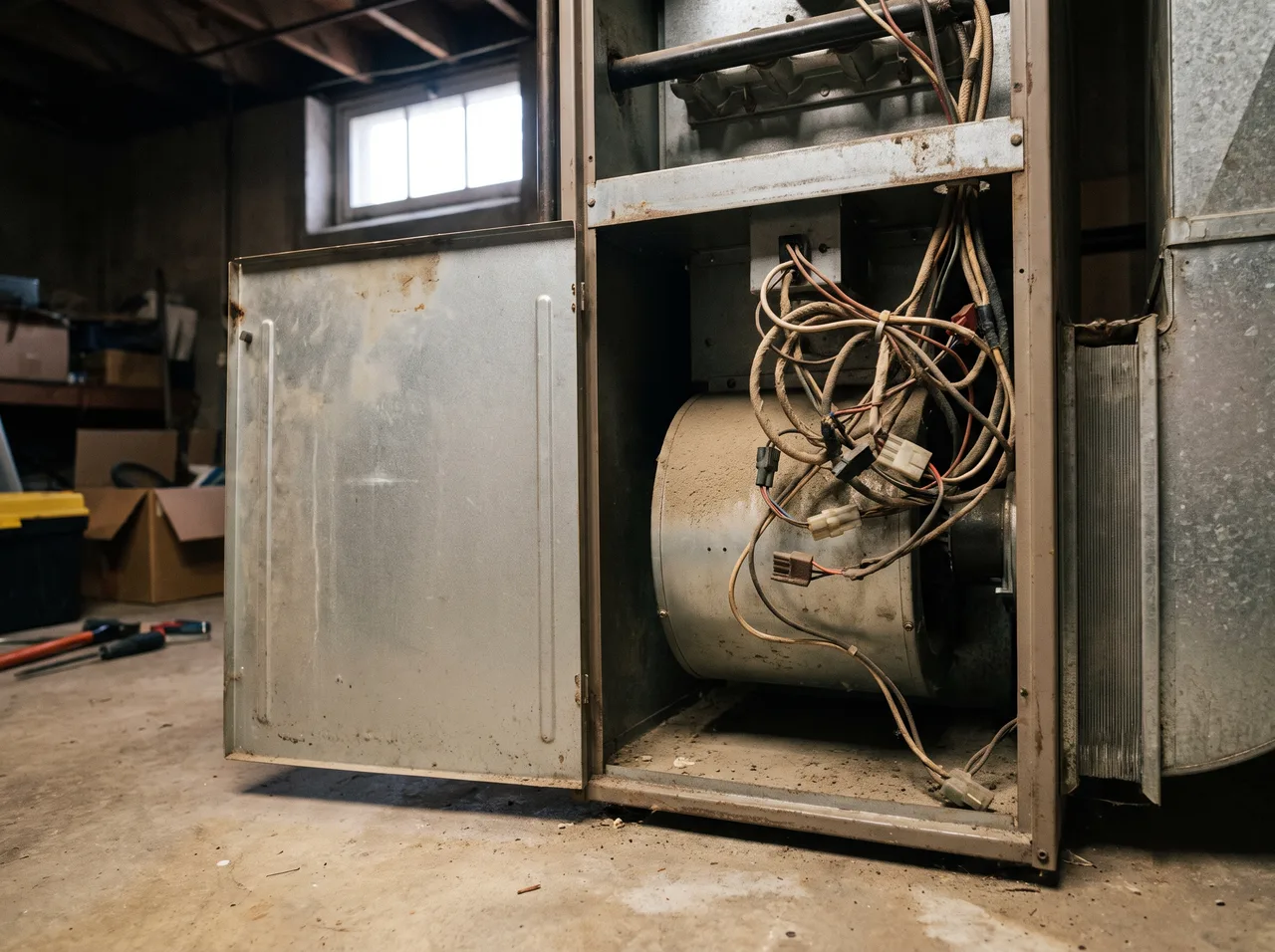
- The blower motor. The big one, and the reason the house stays cold without power. It moves heated air through the ducts.
- Ignition and controls. The igniter, the gas valve control and the circuit board, all small compared with the blower.
- The thermostat. Trivial draw, but the system does not run without it.
- Not the heat itself. The burner uses gas. No electricity is converting fuel into warmth, which is exactly why the numbers here stay modest.
Sizing a portable power station for gas furnace backup
The arithmetic is the same as everywhere else on this site: watts times the hours the blower actually runs, checked against usable capacity, with a separate look at the startup surge.
The one worked figure we publish is a 500W blower, carried from our Grid Doctor 3300 review. Against the 2,048Wh capacity we cover, that is roughly 3.5 hours of actual blower running time; against the 16,384Wh configuration it is around 27 hours. Both are capacity estimates rather than measurements.
| Capacity | Usable at 85 percent | A 500W blower, running time |
|---|---|---|
| 320Wh | 272Wh | Not a furnace unit. Small loads only. |
| 2,048Wh | 1,740Wh | About 3.5 hours of blower time |
| 16,384Wh | 13,926Wh | About 27 hours of blower time |
Read those hours correctly, because this is where the category surprises people in a good way. A furnace cycles: it runs until the house reaches temperature, stops, and waits. Three and a half hours of blower time is therefore not three and a half hours of outage survived; in a reasonably insulated house it can cover a considerably longer stretch.
How much longer depends on your insulation, the outside temperature and your thermostat setting, which is why we give you the blower hours and let you apply your own house to them.
One thing not to assume: your blower is not necessarily 500W. That is our published example, not your furnace. Older motors and newer variable-speed ones differ substantially, and the nameplate on the unit is the only number that describes yours.
The startup surge, again
A blower is a motor, so it pulls a brief spike well above its running draw at the moment it starts. Capacity does not help you here; the inverter rating does.
The Grid Doctor 3300 pairs its 2kWh-class battery with a 3,300W continuous, 6,600W surge pure sine inverter, which is a large inverter for that battery size and comfortably in the range where furnace blower startups are absorbed rather than tripping the unit.
If you are comparing units elsewhere, that surge headroom is the specification to check, not the watt hours. Our sizing calculator flags your largest single load against the inverter rating for exactly this reason, and the same logic applies to the compressor case we cover in solar generator for a refrigerator.
How to connect it, and the shortcut never to take
This is where an otherwise simple plan meets your house wiring, so it is worth being precise. There are two legitimate routes.
- If your furnace plugs into a standard outlet. Some do. In that case an appropriately rated extension cord from the power station to that outlet is the straightforward answer, and no wiring work is involved.
- If your furnace is hardwired. Many are, and this is an electrician's job. A transfer switch or interlock, properly installed, is the device that exists to connect an alternative power source to a circuit safely.
Never feed power backwards into a wall outlet to energise the circuit. It energises wiring that other people assume is dead, including lines outside your home, and it bypasses the protection your panel provides. It is dangerous to you and to anyone working on the system. If the choice is between that and a cold night, the answer is the cold night and an electrician in the morning.
We are not electricians and this is not wiring guidance. Anything beyond plugging into an existing outlet should be specified by someone licensed who can see your installation.
The honest summary
A gas furnace is one of the few genuinely high-value outage loads for a battery, because you are only paying to move heat you are already making. Get your blower's nameplate figure, allow for cycling rather than continuous running, check the surge headroom rather than just the capacity, and sort out the connection method before you need it rather than during a storm.
The units and current prices are on our solar generator hub, and if you are still deciding whether the category is worth it at all, start with are solar generators worth it.
See the Grid Doctor 3300 at My Patriot Supply
Common questions
Can a portable power station run a gas furnace?
Usually yes, and it is one of the best uses for one. A gas furnace burns fuel for heat, so in an outage the part that stops is the electrical side: the blower motor that moves the warm air, plus the igniter, controls and thermostat.
Those loads are modest compared with electric heating, which is why a mid-sized power station can keep a house warm while a whole-home generator sits unused.
What size power station do I need for a furnace blower?
Take the blower figure from the furnace nameplate rather than a generic chart, because draw varies widely between older and newer motors. Then apply two checks: your battery capacity has to cover watts times the hours the blower actually runs across a cold night, and the inverter has to handle the startup surge when the motor kicks in. Our sizing calculator runs both sums from your own number.
How long will a power station run a furnace blower?
On the 2,048Wh capacity this site covers, a 500W blower works out at roughly 3.5 hours of actual blower running time, and on the 16,384Wh configuration about 27 hours. Those are capacity estimates rather than measurements. The good news is that a furnace cycles rather than running constantly, so hours of blower time usually stretches across a much longer stretch of the night.
How do I connect a power station to my furnace?
There are two legitimate routes. If your furnace is plugged into a standard outlet, which some are, an appropriately rated extension cord from the power station is straightforward. If it is hardwired, which many are, the correct answer is a transfer switch or interlock installed by a licensed electrician. Never plug a power source into a wall outlet to feed the circuit backwards.
Is it safe to backfeed a furnace through a wall outlet?
No. Feeding power backwards into a household circuit through an outlet energises wiring that people assume is dead, including the line outside your home, and it bypasses the protection the panel is there to provide. It is dangerous to you and to anyone working on the lines. If your furnace is hardwired, have an electrician fit a transfer switch instead; that is what the device exists for.