RVezy review: where it shines, where it stings
We may earn a commission if you buy or book through the links on this page. How we make money
Our verdict: 4.0/5. RVezy is a legitimate, well-rated peer-to-peer RV rental marketplace with transparent fee pages, four clearly tiered protection plans and a booking experience users consistently rate highly. The honest caveats: its liability coverage is secondary to your own insurance, the single platform-wide cancellation policy is strict, and the cheapest protection tier quietly excludes the most common RV damage.
This is a research-desk review: we verified every figure below on RVezy's own fee, insurance and policy pages and on independent rating platforms on July 18, 2026, re-checked the fee, protection and reputation figures on September 25, 2026, and we say plainly that we partner with RVezy. External star ratings are quoted with their source; the 4.0 is our editorial opinion. Method: how we evaluate.
- What RVezy is
- Renting on RVezy: what you actually pay
- Charges that can land after your trip
- The RVezy cancellation policy, in full
- RVezy insurance coverage: the caveat nobody reads
- How much does RVezy take from a booking?
- Reputation, verified
- Is RVezy worth it? Who should use it, who should not
- Common questions
What RVezy is
RVezy is a peer-to-peer RV rental platform: private owners list their motorhomes and trailers, and renters book them with platform-provided protection, the model Airbnb applied to homes.
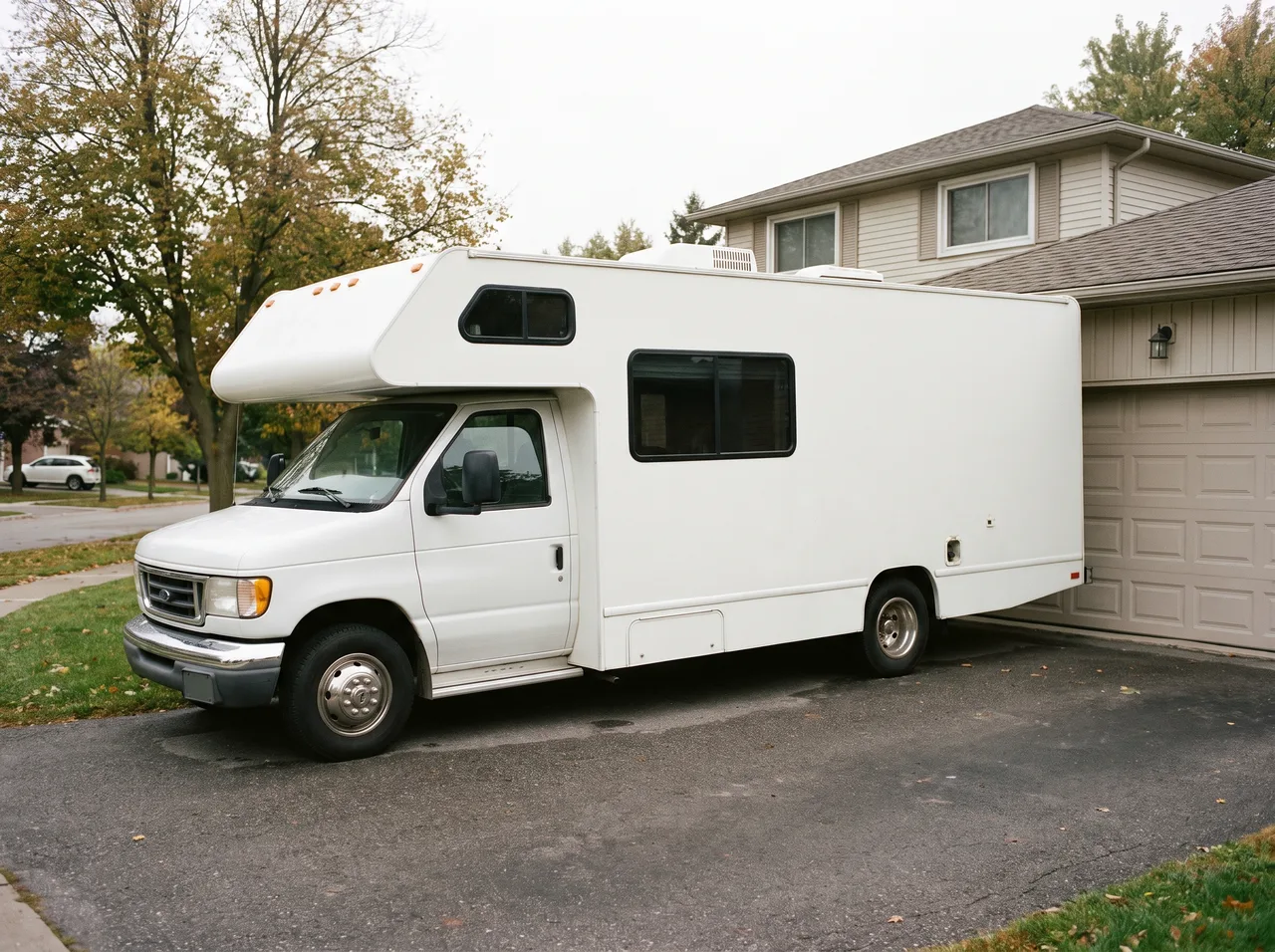
Practically, that means RVezy RV rentals come from individual owners rather than a depot fleet, so the unit, the pickup and the host's own rules vary listing by listing, and the platform's support team sits between the two of you when something goes wrong.
The company was founded in 2016 by Michael McNaught, a former Ottawa police officer, and Will Thompson, a Canadian Armed Forces veteran, and is headquartered in Ottawa; in 2024 it expanded from rentals into buying and selling RVs as well.
It operates across both the United States and Canada, which matters for one specific trip type: itineraries that cross the border, a scenario its Canadian roots serve naturally.
Renting on RVezy: what you actually pay
The full cost anatomy, with worked numbers, lives in our RV rental cost guide.
The short version from RVezy's fee pages (re-checked September 25, 2026): a flat-rate service fee with a $15 per night floor for motorhomes and $10 for trailers, a required protection plan, host-set fees, taxes, and a security deposit held as a card authorization three days before departure.
Not every charge lands at checkout. Some can arrive after you hand the keys back, and that mechanism has its own section below.
The protection plan choice is the real decision. Four tiers apply in the United States, and what separates them is not just the deductible:
| What you get | Basic | Standard | Premium | Stationary |
|---|---|---|---|---|
| Deductible | From $1,500 | From $750 | From $500 | From $1,000 |
| Roof damage | You pay all | Up to $5,000 past deductible | Covered past deductible | Not covered |
| Windshield | You pay all | Up to $750 past deductible | Covered past deductible | Covered past deductible |
| Awning | You pay all | Covered | Covered | Not covered |
| Towing distance | 100 mi | 200 mi | 400 mi | n/a (parked) |
| Emergency lodging | No | $350 | $700 | No |
| Trip interruption | No | No | Yes | No |
Source: RVezy's protection plan matrix, re-checked September 25, 2026. Read the Basic row twice: roofs, windshields and awnings are exactly what novice renters scrape on branches, rocks and wind gusts, and on Basic every dollar of that is yours. All plans include 24-hour roadside assistance, dispatched through a third-party provider, Access Roadside.
Charges that can land after your trip
Yes, RVezy hosts can bill you after the trip is over. A host can request additional charges during the trip and for up to 30 days after it ends, you get 48 hours to accept or dispute each request, and a request you ignore is processed and charged automatically when those 48 hours run out. A single request cannot exceed $5,000. Verified from RVezy’s help centre, August 13, 2026.
This is the part of the platform that surprises people, so here is the whole mechanism rather than the headline.
| How a post-trip charge works | Verified detail |
|---|---|
| When a host can ask | During the trip, and up to 30 days after it ends |
| Your window to reply | 48 hours to accept or dispute |
| If you do nothing | The request is processed and charged automatically |
| Ceiling on one request | $5,000 |
| What can be claimed | Extra mileage, generator hours, extra cleaning, propane or fuel, minor and interior damage |
| What the host must supply | A detailed explanation plus photos, receipts or repair quotes |
| Where the numbers come from | Inspection records: generator hours and the odometer are logged at pickup and at return |
| When mileage or generator can be billed | Only on listings that do not offer unlimited use, and only against the allowance set at the time of booking |
| If you dispute | RVezy contacts the host within 1 to 3 business days |
| Damage above your deductible | Handled as an insurance claim instead of a charge request |
The line that matters is not the amount, it is the silence. Not replying counts as agreeing. Watch your RVezy notifications for a full month after drop-off, because if the 48-hour window passes untouched the right to dispute is gone and the card is charged.
The fair reading of the same rules is that a host cannot invent a number. The claim has to arrive with photos, receipts or quotes, and mileage and generator charges are only open on listings that set a limit in the first place.
The allowance used is the one that existed when you booked, and both figures are measured against readings taken at pickup and at return. That is a real guard against arbitrary billing. It is also why the practical advice is to photograph the odometer and the generator hour meter yourself at both ends.
Budget the requested amount plus a little more. RVezy’s fee page lists a 5 percent transactional charge on post-trip payment requests under both sides of the booking: the host pays it on requests they raise, and the guest pays an additional 5 percent on requests for incidentals and damages not covered by an insurance claim.
RVezy’s own wording is that the charge covers processing costs for both hosts and guests, and it adds that tax may apply to it depending on your state. Re-read on RVezy’s service fee page, August 22, 2026.
The security deposit is a hold, not a charge
The deposit amount is set by the host, not by RVezy, so it varies listing to listing. RVezy places it as a temporary authorization on your credit card three days before the trip starts, and releases the hold after the RV is returned and the trip is closed out.
RVezy's own comparison of the two options puts a typical RVezy security deposit at $1,500 on average, and puts the release at up to seven days after the trip ends.
Two practical consequences. The money is never taken, but the amount is unavailable on that card for the length of the trip. A large deposit on a card you also plan to use for fuel and campgrounds is a budgeting problem rather than a cost.
The deposit is also a separate thing from your protection plan deductible. The deductible is what you owe on a covered damage claim, and choosing a cheaper tier raises it without changing the deposit at all.
Avoiding the RVezy security deposit: the loss damage waiver
RVezy sells an optional loss damage waiver that replaces the deposit hold entirely. You pay a flat fee at checkout instead of having a large sum frozen on your card, and the waiver covers your insurance deductible up to $1,500 on an approved claim. RVezy describes it as a deductible buy-down rather than extra coverage, and a protection plan is still required on every applicable trip.
| What differs | Loss damage waiver | Security deposit |
|---|---|---|
| Cost | $99 for trailers, $179 for motorhomes, subject to tax | $1,500 on average, set by the host |
| Funds held | None | Held for the full trip duration |
| When you are charged | At checkout | Three days before departure |
| Refundable | No, once the trip starts | Yes, in full if no damage occurs |
| What it covers | Up to $1,500 toward an approved claim | Approved claims, and valid issues at the host’s discretion |
| Release time | Not applicable | Up to seven days after the trip |
The trade-off is straightforward once you see it. On a trip with no damage the deposit costs you nothing and comes back in full, while the waiver fee is gone. What the waiver buys is cash flow and a smaller worst case, not a lower total price.
It is also narrower than the name suggests. The waiver applies only to damage the protection plan already covers, so it does nothing for post-trip charges such as late returns, excessive cleaning, emptying holding tanks, fuel or propane.
It also excludes road tolls, parking tickets, citations and fines, normal wear and tear, interior damage, and any trip to Burning Man or the other restricted areas named in the terms of service. Your host can still raise those charges after the keys are back. Read from RVezy’s help centre on August 27, 2026.
Pets and smoking: there is no platform policy
RVezy does not have a company-wide rule on either one. Both are listing rules set by each individual host, so the honest answer to "does RVezy allow pets" is that it depends on the RV you book.
Renters filter for pet friendly listings, and declaring your pet when you send the booking request is required, not optional. Smoking works the same way: some hosts permit it, some do not, and it is stated on the listing.
The detail worth knowing is where the money for these sits. A host who charges a pet fee or an odor removal fee can attach it as an add-on you select at booking, or can state it in the listing description only.
In that second case the fee is not part of the checkout total you see, so read the description as carefully as the price. Both articles were verified in RVezy’s help centre on August 13, 2026.
The RVezy cancellation policy, in full
Whenever you cancel, and no matter how close to the trip you are, RVezy refunds four things in full along with the tax applied to each: add-ons, the preparation fee, the delivery fee and the protection plan.
What is genuinely at risk is the rental amount itself plus RVezy's service fee and its tax.
The RVezy cancellation policy is a single platform-wide matrix rather than a per-host setting, so the host you book with cannot soften it, and the only route to a complete refund is the 24-hour grace period. Figures below read from RVezy's own guest and host cancellation policies, verified August 7, 2026.
| When you cancel | What you forfeit | What the host receives |
|---|---|---|
| Within 24 hours of the host accepting and your payment being made, and more than 24 hours before the trip starts | Nothing. Full refund | No payout |
| More than 30 days before the trip start date | RVezy's service fee and its tax | No payout |
| Between 30 and 8 days from the trip start date | 50 percent of the rental amount, plus the service fee and its tax | 50 percent of the rental amount, minus the service fee and its tax |
| 7 days or less from the trip start date | 100 percent of the rental amount, plus the service fee and its tax | 100 percent of the rental amount, minus the service fee and its tax |
The grace period carries a second condition that is easy to miss, and it is the one that catches late bookers: it applies only if the cancellation happens more than 24 hours before the trip start date.
RVezy also states the window "is calculated strictly from the exact time the host accepted the booking and the payment was made", so an acceptance at 3:14 pm on Monday closes at 3:14 pm on Tuesday. Book a trip that departs the day after tomorrow and the grace period never opens for you at all.
Read the third column, because it explains the shape of the policy. Inside 7 days the host is paid the full rental amount either way; the money moves to the owner rather than staying with the platform.
That is defensible for an owner who blocked a calendar and turned other bookings away, and it is also the reason no amount of arguing recovers it. If your dates are soft, the decision to make is at booking time, not later.
Two mechanics round it out. Refunds go back to the original payment method, and RVezy notes the processing time depends on your own bank or card provider, so the platform issuing a refund and the money landing are two different dates. And a cancellation is final: RVezy states that once a booking is cancelled it cannot be undone and cannot be reinstated.
If the host cancels on you, you receive a full refund including fees and taxes. Owners should know what sits behind that.
You also choose how that refund arrives. RVezy's help centre offers two options: back to your original payment method within 5 to 7 business days, or an immediate RVezy credit for the value of the booking plus a 10 percent bonus. If you choose neither within 48 hours, it goes back to the original payment method. RVezy states it cannot compensate for extra expenses the cancellation causes you.
A host who cancels a confirmed booking pays $100 on a normal booking or $250 on an instant booking, in USD or CAD, deducted from their next payout, and the non-cash penalties are heavier than the fee: an automated note on the listing saying a booking was cancelled, a possible calendar block on those dates, reduced ranking in search results for frequent cancellations, and temporary suspension for repeat ones.
RVezy will consider removing the penalties for documented extenuating circumstances or damage that makes the RV unfit for the road.
Our guide to listing your RV covers the rest of the owner side.
RVezy insurance coverage: the caveat nobody reads
Two sentences from RVezy's own policy documents change the risk picture. First: the protection plans are not insurance; RVezy describes them as contractual damage-responsibility agreements. Second: the third-party liability coverage is secondary, or excess, meaning any personal auto or other applicable policy you carry applies first and must be exhausted before RVezy's coverage steps in.
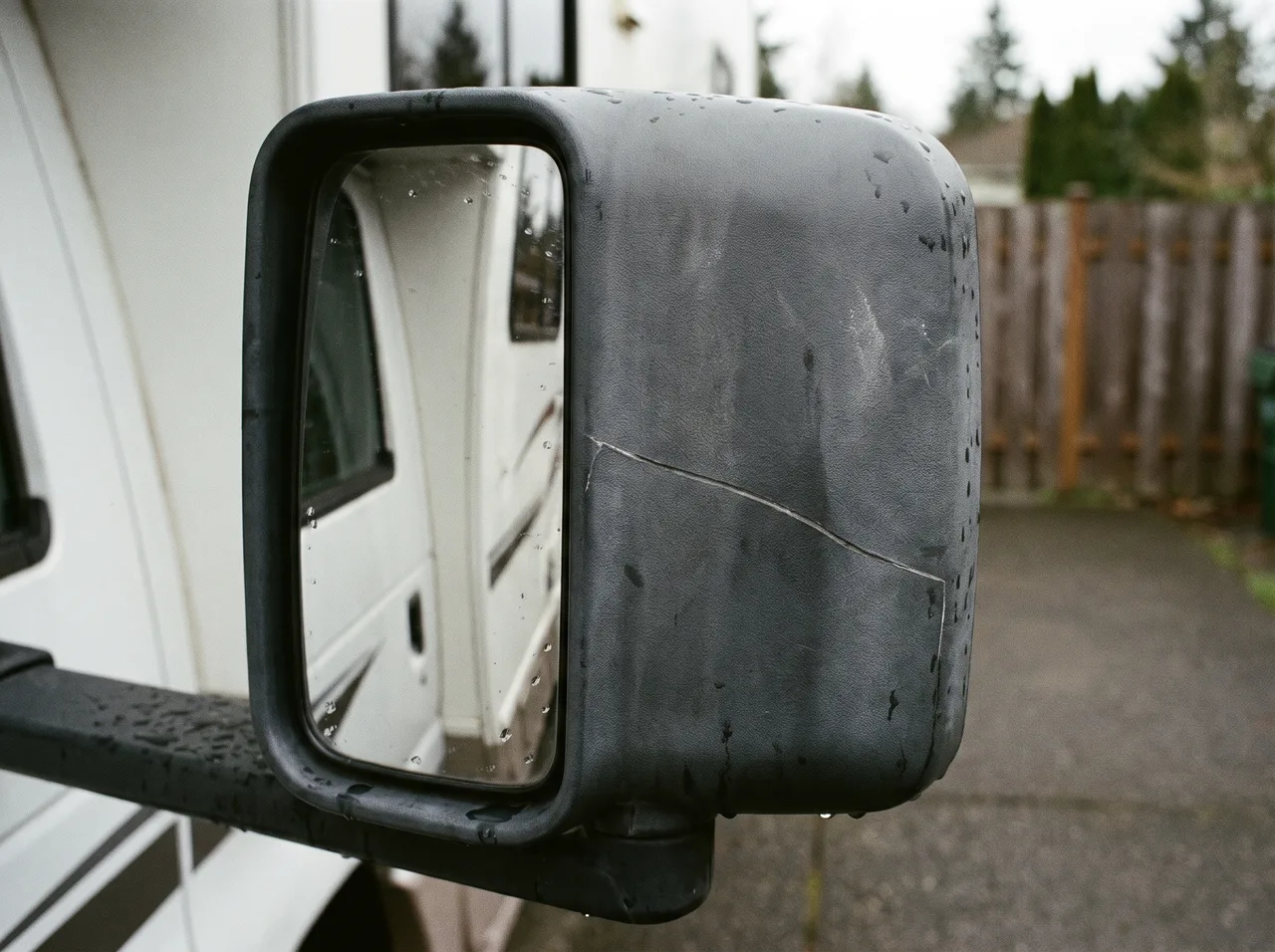
Neither makes the platform unsafe; both mean that a renter with a personal auto policy may be making a claim on their own insurance, with their own premium consequences, before platform coverage pays a dollar. Factor that into which tier you buy and how you drive.
We take the category question apart separately in RV rental insurance: what the plan actually is, the order in which coverage pays, and the questions worth putting to your own insurer before you book.
How much does RVezy take from a booking?
How much does RVezy take? It depends which side of the booking you are standing on, and the platform earns on both. From the owner it deducts a base 20 percent service charge on the nightly rate and add-ons of each paid booking, so the owner keeps 80 percent of those lines before any optional programme.
From the renter it adds a separate flat-rate service fee on top of the nightly rate, floored at $15 a night for motorhomes and $10 for trailers. Those are two different charges on the same booking, not one fee split between you.
| What RVezy takes | From the owner | From the renter |
|---|---|---|
| Base charge | 20 percent of the nightly rate and add-ons | A flat-rate service fee added at checkout |
| Per-night minimum | $15 motorhomes, $10 trailers | $15 motorhomes, $10 trailers |
| Post-trip charges | 5 percent on payment requests they raise | 5 percent on post-trip requests for uninsured incidentals and damage |
| Optional extras | Payout guarantee +10, Featured up to +9, vintage listing +5, all stacking on the base 20 | Protection plan, chosen at checkout |
| Listing or joining | Free | Free |
Read the optional row carefully, because it is where the owner answer changes shape. The extras stack on the base rather than replacing it, so an owner running the payout guarantee is at 30 percent, and one also paying for Featured placement can be near 39 percent of the nightly rate and add-ons.
Whether that is worth it is a real question with a real answer either way; what matters is knowing the 20 percent headline is a floor, not a ceiling. All figures read from RVezy's own service fee page, re-read September 25, 2026.
What is left after RVezy takes its cut: the $1,400 claim
Now the famous number. RVezy's blog states that owners "can make on average $1,400 a week" by renting out an RV they are not using; that is RVezy's advertised figure, quoted July 18, 2026 and still on its blog September 25, 2026, not our measurement.
Our arithmetic on their own published averages says the claim is plausible at full occupancy: a newer Class B at their $240 nightly average, booked all seven nights, grosses $1,680 and nets $1,344 after the 20 percent charge.
What the average does not price in: empty weeks, cleaning and handover hours between every booking, accelerated wear on a vehicle novices are driving, and the fact that interior damage sits outside the payout guarantee's scope. Renting out an RV is a real side business with real yield; it is not passive income.
The practical side of that business, the four off-platform checks that decide whether you can list at all, the six steps and documents RVezy requires, and when payouts actually land, is laid out in how to rent out your RV.
See what your RV could earn on RVezy
Reputation, verified
Every figure below was re-pulled live on September 25, 2026, and belongs to its named source, not to us:
- Trustpilot: 4.4/5 across 1,141 reviews, on a claimed profile. Praise clusters around easy booking and helpful hosts.
- Better Business Bureau: BBB-accredited with an A+ rating; 30 complaints filed in the last three years, 13 closed in the last twelve months. The most recent published complaint (August 2026) is categorized as an order issue.
- Apple App Store (US): 4.7/5 across 781 ratings.
- Google Play (US listing): 3.9/5 across 974 reviews, over 100,000 downloads; the lowest score of the platforms we checked. In July this listing showed no star rating at all.
- RVezy's own pages advertise more than 15,000 hosts and a 4.7 average across 150,000+ platform reviews, with coverage it states as up to $2 million in liability protection; those are the company's figures, shown here as claims.
- RVezy's help centre is narrower on liability than its owner page: US rentals carry third-party liability that meets state minimum requirements, and the up to $2 million, in Canadian dollars, applies to RVs registered in Canada.
The fair summary: independent front-end sentiment (booking, app, hosts) is strong on Trustpilot and the App Store and softer on Google Play, while the BBB file shows the disputes concentrate after something goes wrong: damage adjudication, post-trip charges and cancellations. That pattern matches the structural realities above, which is exactly why we spelled them out first.
Is RVezy worth it? Who should use it, who should not
Rent here if: you want a wide peer-to-peer selection with clearly tiered protection, you are willing to pay for Standard or Premium coverage on a driving trip, or you want an RV delivered and parked at a campground on the cheaper Stationary tier. It is also the natural pick for a US-Canada crossing.
Think twice if: your dates are genuinely uncertain (the cancellation matrix is unforgiving), you planned to lean on the cheapest tier for a long drive through tree country, or, as an owner, you need every booked week to hit the advertised average to justify the wear.
Two jobs peer-to-peer cannot do, whoever the host is: a one-way trip ending in a different state, and fixed dates that cannot move. A private owner needs their RV back where it started, and if that one RV breaks down there is no second one behind it.
For those two, a fleet is the structural answer. Our Cruise America review covers the trade you make for it: plainer rigs, and a pickup experience that varies by branch.
Worth checking the alternatives on the same terms: our Outdoorsy vs RVshare comparison finds RVshare publishes the more detailed coverage table of the two, which we say plainly even though neither is our partner.
For the trip budget itself, start with the full cost breakdown; for powering a rig off-grid, our solar generator verdicts pick up where the rental ends.
Keep in mind: The cancellation matrix is platform-wide, so no host can soften it, and inside 7 days the full rental amount is forfeited. The 24-hour grace period applies only more than 24 hours before the trip starts, so a last-minute booking never gets one.
Common questions
Is RVezy legit?
Yes. RVezy is a peer-to-peer RV rental marketplace founded in 2016 by Michael McNaught and Will Thompson and headquartered in Ottawa, Canada, operating across the United States and Canada. As of September 25, 2026 it holds an A+ rating as a BBB-accredited business, scores 4.4/5 across 1,141 Trustpilot reviews, and 4.7/5 across 781 ratings on the US Apple App Store.
Legit does not mean friction-free: 29 BBB complaints were filed over the last three years, and the fee and cancellation mechanics below deserve a careful read before you book or list.
Is RVezy worth it?
That depends on which side of the booking you are on and how firm your dates are, and every number you need to decide is published.
For renters it is worth it when you want peer-to-peer selection with clearly tiered protection, or an RV delivered and parked on the cheaper Stationary tier, and the costs are knowable up front: a service fee with a floor of $15 per night for motorhomes and $10 for trailers, plus a required protection plan.
It is a poor fit when your dates are genuinely uncertain, because cancelling 7 days or less before the trip forfeits 100 percent of the rental amount. For owners, listing is free and the base cut is 20 percent, but the optional programmes stack on top of that rather than replacing it.
What does RVezy charge renters?
Three main layers on top of the nightly rate: a flat-rate service fee with a floor of $15 per night for motorhomes and $10 for trailers; a required protection plan (deductibles from $500 on Premium to $1,500 on Basic, typically $20 to $40 per day per RVezy’s cost guide); and a host-set security deposit held as a card authorization three days before the trip.
A host can also request extra charges during the trip and for up to 30 days after it ends, for mileage or generator overage, extra cleaning, fuel or minor damage. You have 48 hours to accept or dispute each request, and a request you ignore is processed and charged automatically at the end of that window.
One request cannot exceed $5,000. Budget a little above the amount itself: RVezy’s fee page puts a 5 percent transactional charge on post-trip payment requests on both sides of the booking, the guest side covering incidentals and damages not covered by an insurance claim, and states that tax may apply depending on your state. Verified from RVezy’s help centre August 13, 2026 and its service fee page August 22, 2026.
How much does RVezy take from owners?
Listing is free, and RVezy deducts a base 20 percent service charge from the nightly rate and add-ons on paid bookings, so an owner keeps 80 percent of those two lines before any optional programme.
Optional features raise RVezy's cut: the payout guarantee adds 10 percent, Featured RV placement adds up to 9 percent, and a vintage RV listing adds 5 percent, which stack on top of the base 20 rather than replacing it.
A minimum service charge of $15 per night for motorhomes and $10 for trailers applies. Delivery charges, incidentals and other post-trip payment requests carry a separate 5 percent transactional charge, which RVezy applies to guests as well as hosts.
Figures verified on RVezy's own service fee page September 25, 2026.
Can you really make $1,400 a week renting out an RV?
That figure is RVezy’s own advertised average: its blog states owners "can make on average $1,400 a week" depending on the RV type.
The arithmetic can work: at RVezy’s published $240 nightly average for a newer Class B, a fully booked week grosses $1,680, which nets $1,344 after the 20 percent service charge. But that assumes 100 percent occupancy, a newer motorized rig, and zero allowance for cleaning time, wear or repairs. Treat $1,400 as a best-case marketing average, not an expected salary.
What does RVezy refund if I cancel my booking?
Whenever you cancel, RVezy refunds your add-ons, the preparation fee, the delivery fee and the protection plan in full, along with the tax applied to each.
What is at risk is the rental amount plus RVezy’s service fee and its tax: cancel more than 30 days out and you forfeit the service fee and its tax only; between 30 and 8 days you forfeit 50 percent of the rental amount as well; 7 days or less and you forfeit 100 percent of it.
A full refund is possible only inside the 24-hour grace period, which runs from the exact time the host accepted your booking and your payment was made, and which applies only if you cancel more than 24 hours before the trip start date. Verified from RVezy’s guest cancellation policy on August 7, 2026.
Can I avoid the RVezy security deposit?
Yes. RVezy offers an optional loss damage waiver at checkout that replaces the deposit hold entirely. It costs a flat $99 for trailers and $179 for motorhomes plus tax, and it covers your insurance deductible up to $1,500 on an approved claim.
RVezy puts a typical security deposit at $1,500 on average, held on your card from three days before departure until up to seven days after the trip. The waiver holds nothing, but it is non-refundable once the trip starts, so on a trip with no damage the deposit costs you nothing and the waiver fee is gone.
The waiver is narrower than it sounds. It only applies to damage the protection plan already covers, so post-trip charges, tolls and fines, wear and tear, and interior damage are all still yours, and a protection plan is still required. Read from RVezy’s help centre on August 27, 2026.
Can an RVezy host charge me after the trip is over?
Yes. A host can request additional charges during the trip and for up to 30 days after it ends, for extra mileage, generator hours, extra cleaning, propane or fuel, and minor or interior damage. You have 48 hours to accept or dispute each request, and a request you ignore is processed and charged automatically when those 48 hours run out. One request cannot exceed $5,000.
The host cannot simply name a number: the claim must arrive with a detailed explanation plus photos, receipts or repair quotes, mileage and generator charges are only possible on listings that do not offer unlimited use, the allowance used is the one set when you booked, and both are measured against readings taken at pickup and at return. Verified from RVezy’s help centre, August 13, 2026.
Does RVezy allow pets?
It depends on the RV, because RVezy has no company-wide pet policy. Pets are a listing rule set by each individual host, renters filter for pet friendly listings, and declaring your pet when you send the booking request is required. Smoking works the same way.
A host who charges a pet fee or an odor removal fee can attach it as an add-on you select at booking, or can state it in the listing description only. In that second case the fee is not part of the checkout total you see, so read the description as carefully as the price. Verified from RVezy’s help centre, August 13, 2026.
Does RVezy insurance replace my own?
No, and this is the least understood part of the platform. RVezy states its protection plans are not insurance policies, and its third-party liability coverage is secondary (excess): if you carry personal auto or other applicable coverage, yours applies first and must be exhausted before RVezy’s coverage takes effect. Renters with personal policies should factor a possible claim on their own insurance into the real risk picture.