How to rent out your RV: the six steps, and the four checks that come first
We may earn a commission if you buy or book through the links on this page. How we make money
Short answer: how to rent out your RV on a peer-to-peer marketplace is six steps and about an evening of work. You build a listing, verify your identity, set a calendar, complete an insurance profile, add a bank account and publish. Listing is free. RVezy keeps a base 20 percent service charge on paid bookings, and pays the rest by direct deposit within 24 hours of each trip's start date.
The part almost nobody writes about is what happens before the form. Whether you frame it as how to rent out your RV or how to rent out my RV, the honest answer starts off the platform: four questions, about your lender, your own policy, where the rig is stored and your own calendar, decide whether listing is even available to you.
We put those first because that is the order in which they bite. Every platform figure below was read off RVezy's own fee, owner and help pages on August 2, 2026, and we say plainly that we partner with RVezy. Method: how we evaluate.
Four checks before the listing form
None of these are platform steps, which is exactly why they get skipped. We are not telling you what your lender or insurer will say. We are telling you that these are the four places where a listing plan quietly dies, and that each one is a phone call you can make this week.
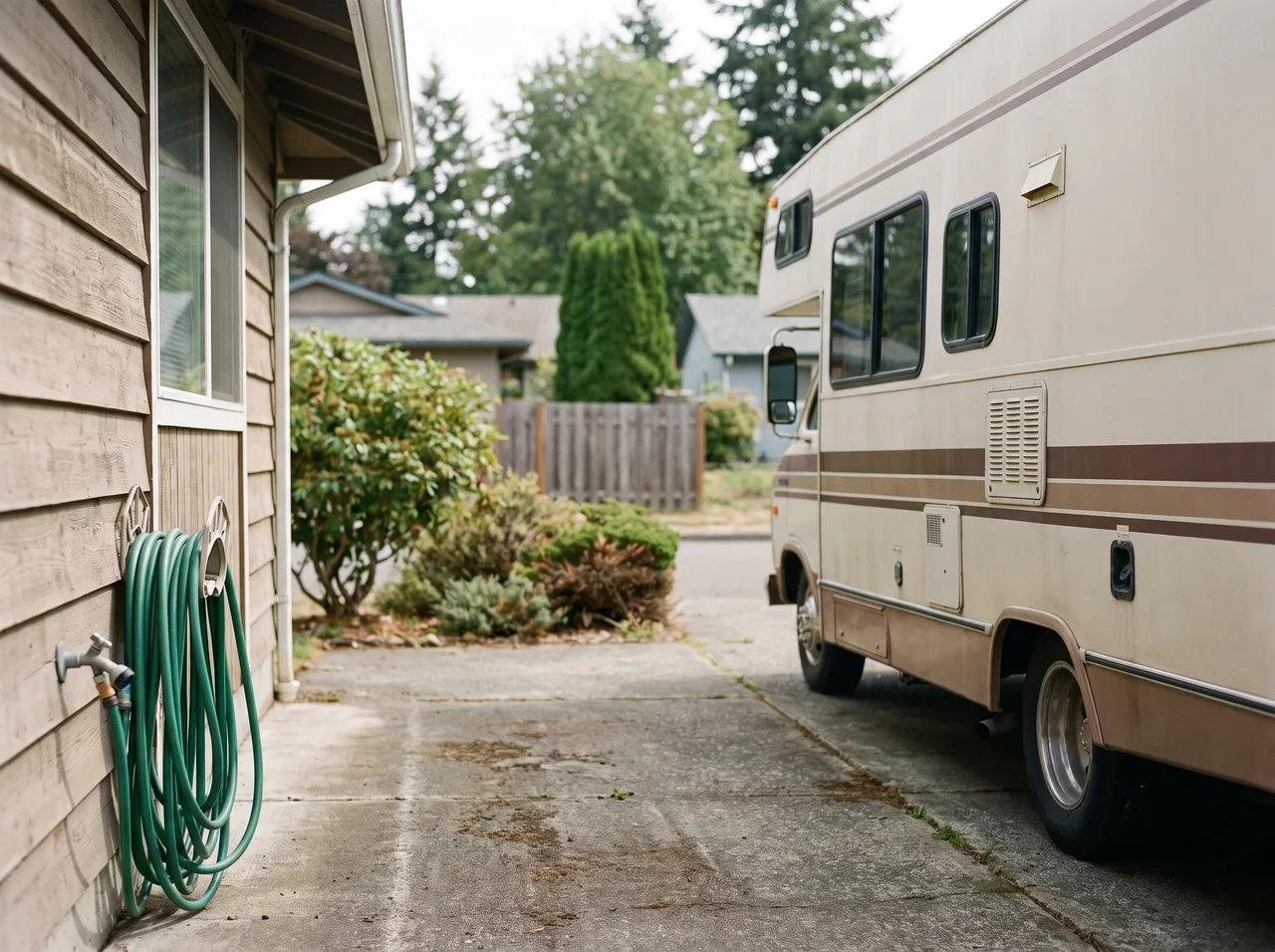
- Your lienholder, if the RV is financed. Ask the lender directly whether the loan agreement addresses renting the vehicle out. Get the answer before there is a booking calendar attached to it.
-
Your own policy, and how it defines use. Personal auto and RV policies commonly distinguish personal use from rental or commercial use, so the question to put to your insurer is what changes when the RV is rented, and what your cover does between bookings.
We take the whole category apart, including the order in which coverage pays, in RV rental insurance. We do not give advice on any individual policy.
- Where it is stored. Storage lots, homeowner associations and some municipalities have their own rules about vehicles being collected and returned by strangers. Ask the site manager or the association what is permitted, in writing.
- Your own calendar. The weeks worth the most money are the weeks you most want the RV yourself. Decide which holiday weekends you are keeping before you set pricing, not after a request lands.
The six steps to list your RV
This is RVezy's own published owner flow, summarised from its how-it-works guide on August 2, 2026. The platform is US and Canada wide, and its owner form covers all 50 states plus the District of Columbia and the Canadian provinces and territories.
- Create the listing. Name it, pick the RV type, add length, slide outs, weight and towing requirements, tick the standard amenities, upload photos, write the description, then set your nightly rate along with the security deposit, cleaning fee and delivery fee. RVezy's own guidance here is blunt and worth repeating: listings with more photos get more bookings.
- Verify your account. A smartphone camera and a valid driver's licence, passport or other government-issued ID.
- Set the calendar. Block the dates you are keeping and create custom prices for holidays and long weekends. This is where the decision you made in check four gets enforced.
- Complete the insurance profile and add a bank account. The heaviest step: photos of the front and back of your licence, questions about your driving history, the RV's licence plate and VIN, the RV's cash value, and the name of the company that insures it. Payouts go to the bank account you add here by direct deposit.
- Publish. Set booking preferences, including the driving experience you require and any restrictions around events or festivals, choose your add-on packages, review the photos and description once more, then publish.
- Take requests and manage the listing. Keep messages and transactions on the platform, and respond to enquiries and booking requests within 24 hours. RVezy ties that 24-hour window directly to your response rate and your position in its search results, so it is a ranking rule, not just etiquette.
What you need in hand
Collecting these first turns the whole setup into one sitting instead of three. Everything in this table is required by the steps above.
| What | Where it is used | Why it stalls people |
|---|---|---|
| Government-issued photo ID | Account verification (step 2) | Needs a phone camera and a licence that is not expired |
| Driver's licence, front and back | Insurance profile (step 4) | Photographed again separately from step 2 |
| Driving history answers | Insurance profile (step 4) | Asked about you, the owner, not the renter |
| Licence plate and VIN | Insurance profile (step 4) | The VIN plate is often inside a cabinet or on the frame rail |
| The RV's cash value | Insurance profile (step 4) | You have to decide on a number, and it drives your coverage |
| Name of your current RV insurer | Insurance profile (step 4) | Prompts the conversation from check two, if you skipped it |
| Bank account details | Payout setup (step 4) | Wrong digits are the most common cause of a delayed payout |
| Photos of the RV | The listing itself (step 1) | The one item that measurably changes bookings |
Source: RVezy's owner steps and help centre guidance, read August 2, 2026.
What you actually keep
RVezy does not charge to list, and takes a base 20 percent service charge on paid bookings, deducted from your payout. Read the base carefully: RVezy applies that 20 percent to the rental amount, your preparation fee and any add-ons, so the prep or cleaning fee you set for yourself is inside the 20 percent, not on top of it.
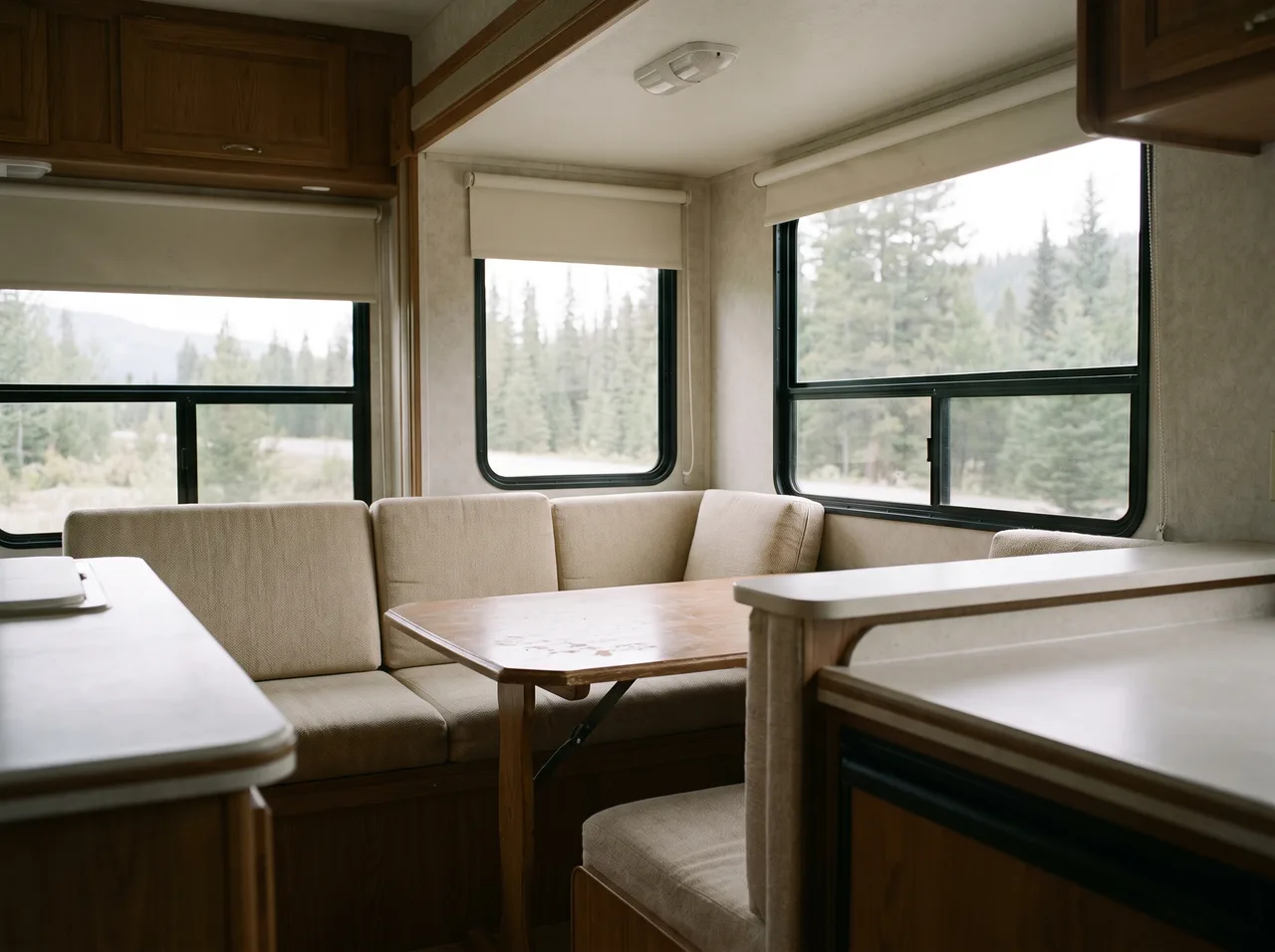
Two optional features raise the rate: a payout guarantee adds 10 percent and Featured RV placement adds 9 percent. Age matters too. RVezy says it generally accepts motorhomes under 20 years old and trailers under 25 years old; an older rig can sometimes be listed after extra verification, but it is then charged 25 percent instead of 20.
A minimum service charge of $15 per night for motorhomes and $10 for trailers applies if the percentage falls below it, delivery and post-trip requests carry a 5 percent transactional charge, and RVezy notes that taxes may apply to those charges depending on your state. Figures verified on its host service fee page, August 13, 2026.
The full fee anatomy from both sides of the transaction, plus the protection tier matrix, sits in our breakdown of how much RVezy takes from each side; we have not repeated it here.
On earnings, be careful which number you are looking at. RVezy's blog advertises that owners "can make on average $1,400 a week", and that is RVezy's claim, not our measurement.
Its current owner page does not show that figure at all: it shows a location-dependent estimate labelled as what top hosts in your area earn per year, quoted in Canadian dollars.
Those are two different marketing numbers with two different denominators, and neither is a forecast for a specific RV in a specific driveway. The number that matters is your own nightly rate multiplied by the weeks you will genuinely release, minus 20 percent, minus cleaning and wear.
Getting paid for mileage, generator hours and cleaning
The 5 percent above is only the rate. The mechanism behind it is the part that decides whether you actually recover an overage, and it runs on records rather than goodwill.
RVezy states that a host can request additional fees through the booking during the trip and for up to 30 days after it ends, up to $5,000 per request, and that the request must carry an explanation plus supporting documentation such as photos, receipts or estimates.
The guest then has 48 hours to accept or dispute. If they do nothing, the request is processed automatically and your payout is issued. If they dispute it, RVezy says a team member contacts you within 1 to 3 business days.
| What you can request | Condition RVezy states | What it is measured against |
|---|---|---|
| Extra mileage | Only on listings that do not offer unlimited mileage | Odometer readings in the start and end inspections |
| Generator hours | Only on listings with a generator amenity and no unlimited usage | Generator hour readings in the start and end inspections |
| Extra cleaning, fuel, propane, septic | Filed as other charges | Your explanation and uploaded receipts |
| Minor and interior damage | Only below the guest's deductible | Above the deductible you are prompted to file an insurance claim instead |
Two things follow from that table, and they point in opposite directions. In your favour, the charge is calculated against the allowance in your listing at the time of booking, and the readings come from the inspections, so a guest cannot argue the limit down after the fact.
Against you, none of it works if the readings were never recorded. An owner who skips the odometer and hour meter at handover has no basis for a claim later, whatever the guest actually used.
The same rules cut the other way for the renter, which is the point: the documentation requirement is what stops a host from inventing a number, and the 48 hour window is the renter's chance to challenge one. Source: RVezy help centre, read August 13, 2026.
When the money actually moves
This is the most misunderstood mechanic in peer-to-peer RV renting, and it works in the owner's favour. RVezy's help centre states that a rental payout is issued by direct deposit within 24 hours of the trip's start date, not after the RV comes back.
Once released, most hosts receive funds in 3 to 5 business days, and a first-ever payout may take up to 7 business days. Payouts for extensions added while a booking is live are issued after the trip. Verified August 2, 2026.
The hours nobody prices in
Renting out an RV is a small service business, and the labour is front-loaded onto every single booking rather than spread across the season. Four costs to put in the model before you decide the yield is worth it:

- The inspections. RVezy states the departure and return inspections should take approximately an hour, and asks both parties to allow adequate time before and after every rental. That is roughly two hours of your presence per booking, at the two moments in a weekend you are least free.
- The handover lesson. Guests renting drivable RVs complete a short road test, and towable renters need their equipment checked and a practice takedown. On a first-time renter this is not a five minute conversation, and our guide to how to tow a trailer safely is worth sending them before they arrive.
- The 24-hour response rule. Enquiries answered inside 24 hours protect your response rate and your search position, so the listing needs someone attached to it during the booking season, not only during trips.
- Turnaround and wear. Cleaning, restocking, dumping tanks and the accelerated wear of an RV being driven by people who do not own it. RVezy also says the average host gets their first booking within 7 days, which is its claim, and worth reading as a warning as much as a promise: the calendar can fill before you are ready for it.
If the rig is going out with guests who plan to camp away from hookups, the power setup is the other thing that generates messages at 9pm. Our solar generator verdicts cover what actually runs a fridge off-grid, and pairing a listing with a known power solution removes a whole category of support call.
Who should not list an RV
Listing makes sense if
- The RV sits unused for most of the season and is already insured and stored somewhere that allows handovers
- You live close enough to be present for a one-hour inspection at both ends of every booking
- You want the payout before the season ends, since the money is released at trip start
- You are comfortable answering messages inside 24 hours during booking season
- You can absorb a cancelled week without the income being missed
Think twice if
- The loan or the storage agreement has not been checked, which is the one blocker you cannot fix later
- Your best weekends are exactly the ones renters want, so the calendar competes with your own use
- You are counting on an advertised average rather than your own occupancy math
- Nobody is available locally for handovers when you travel
- The RV is old enough or worn enough that new damage will be hard to distinguish from existing damage at inspection
If you are on the other side of this and looking to book rather than list, the full cost breakdown is in our RV rental cost guide.
See what your RV could earn on RVezy
Common questions
How do I rent out my RV?
On RVezy the process is six steps: build the listing (specs, amenities, photos, nightly rate), verify your identity with a government-issued ID, set your calendar and seasonal pricing, complete the insurance profile and add a bank account, publish with your booking preferences, then accept or decline requests within 24 hours.
Listing is free; RVezy deducts its service charge only from paid bookings.
What does it cost to list your RV on RVezy?
Nothing upfront. RVezy states it charges no fee to list an RV, and instead takes a base 20 percent service charge on paid bookings, deducted from your payout.
That 20 percent is calculated on the rental amount, your preparation fee and any add-ons, so the cleaning or prep fee you set is inside the base, not outside it. Optional features cost more: a payout guarantee adds 10 percent and Featured RV placement adds 9 percent.
Older RVs are charged 25 percent instead of 20: RVezy generally accepts motorhomes under 20 years old and trailers under 25 years old, and anything outside that is listed only after extra verification. Figures from RVezy’s host service fee page, checked August 13, 2026.
When do you get paid for renting out your RV?
Sooner than most owners expect. RVezy’s help centre states that rental payouts are issued by direct deposit within 24 hours of the trip’s start date, not its end, and that once released the money usually takes 3 to 5 business days to reach the bank, with a first-ever payout possibly taking up to 7 business days.
Trip extensions are paid out after the trip.
Do you need special insurance to rent out your RV?
RVezy states it provides the coverage for the rental itself, up to $150,000 for physical damage and up to $2 million in liability, underwritten by Liberty Mutual, ICBC and Crum & Forster, with roadside assistance on every trip.
RVezy’s help centre is narrower on liability than its owner page: US rentals carry third-party liability that meets state minimum requirements, and the up to $2 million, in Canadian dollars, applies to RVs registered in Canada.
That is RVezy’s description of its own product. Whether your personal RV policy treats rental use differently from personal use is a question for your own insurer, and worth asking before your first booking.
How much can you make renting out your RV?
RVezy advertises that owners "can make on average $1,400 a week" renting out an RV. That is RVezy’s own marketing average, not our measurement, and it assumes a booked week rather than a booked season.
Its current owner page shows a location-dependent "top hosts" annual figure in Canadian dollars instead, which is a different and more selective number again. Budget from your own nightly rate and realistic occupancy.
How do you charge a guest for extra mileage or generator hours?
Through a request in the booking, not by invoicing the guest yourself. RVezy states a host can request additional fees during the trip and for up to 30 days after it ends, covering extra mileage, generator use, cleaning, fuel or propane, and minor or interior damage, with a total of no more than $5,000 per request.
You have to explain the charge and upload supporting documentation such as photos, receipts or estimates. The guest then has 48 hours to accept or dispute it, and if they do not respond within 48 hours the request is processed automatically.
Mileage and generator requests are only available on listings that do not offer unlimited use, and are calculated against the allowance set in the listing at the time of booking, using the odometer and generator hour readings recorded in the start and end inspections.
Additional charges requested after the trip carry a separate 5 percent transactional charge, which RVezy applies to the guest side of the same request as well. Checked August 13, 2026 and re-read on its service fee page August 22, 2026.