How to tow a trailer safely: the beginner's version, in the right order
We may earn a commission if you buy or book through the links on this page. How we make money
Short answer: learning how to tow a trailer safely for beginners is mostly not a driving skill. It is finding four numbers that already exist on your own vehicle, trailer and hitch, and refusing to move until they agree with each other. The driving part is real but simple: more space, more time, moderate speeds.
This page is deliberately short on generic figures. We could not read a current primary source for tongue-weight percentages or hitch class tables today, so we have not printed any, and we say where yours actually comes from instead. That is the same rule we apply everywhere on this site: the number that governs your rig is on your rig. Method: how we evaluate.
The four numbers, and where they live
Beginners tend to start with technique and end up in trouble over arithmetic. Do this first. None of it requires tools, and all four numbers already exist before you buy or rent anything.
- What your vehicle is rated to pull. The tow rating and the combined weight rating for vehicle plus trailer together are in your tow vehicle's owner's manual, usually with conditions attached about equipment and configuration.
- What your vehicle is rated to weigh. The gross vehicle weight rating is on the certification label in the driver's door opening. Every passenger, the dog, the cooler and the tongue weight of the trailer all count against it.
- What the trailer weighs loaded. Not the brochure's dry weight. Loaded weight includes water, gas, gear and everything that walked in with you, and a public scale settles the argument in five minutes.
- What the hitch itself is rated for. The rating is stamped on the hitch and printed in its instructions, and it is a separate limit from the vehicle's. The lowest number in the chain governs the whole chain.
Tongue weight, explained without a made-up percentage
Tongue weight is the share of the trailer's weight pressing down on the hitch ball rather than carried by the trailer's own axles. It matters in both directions, and the physics is intuitive once you see it.
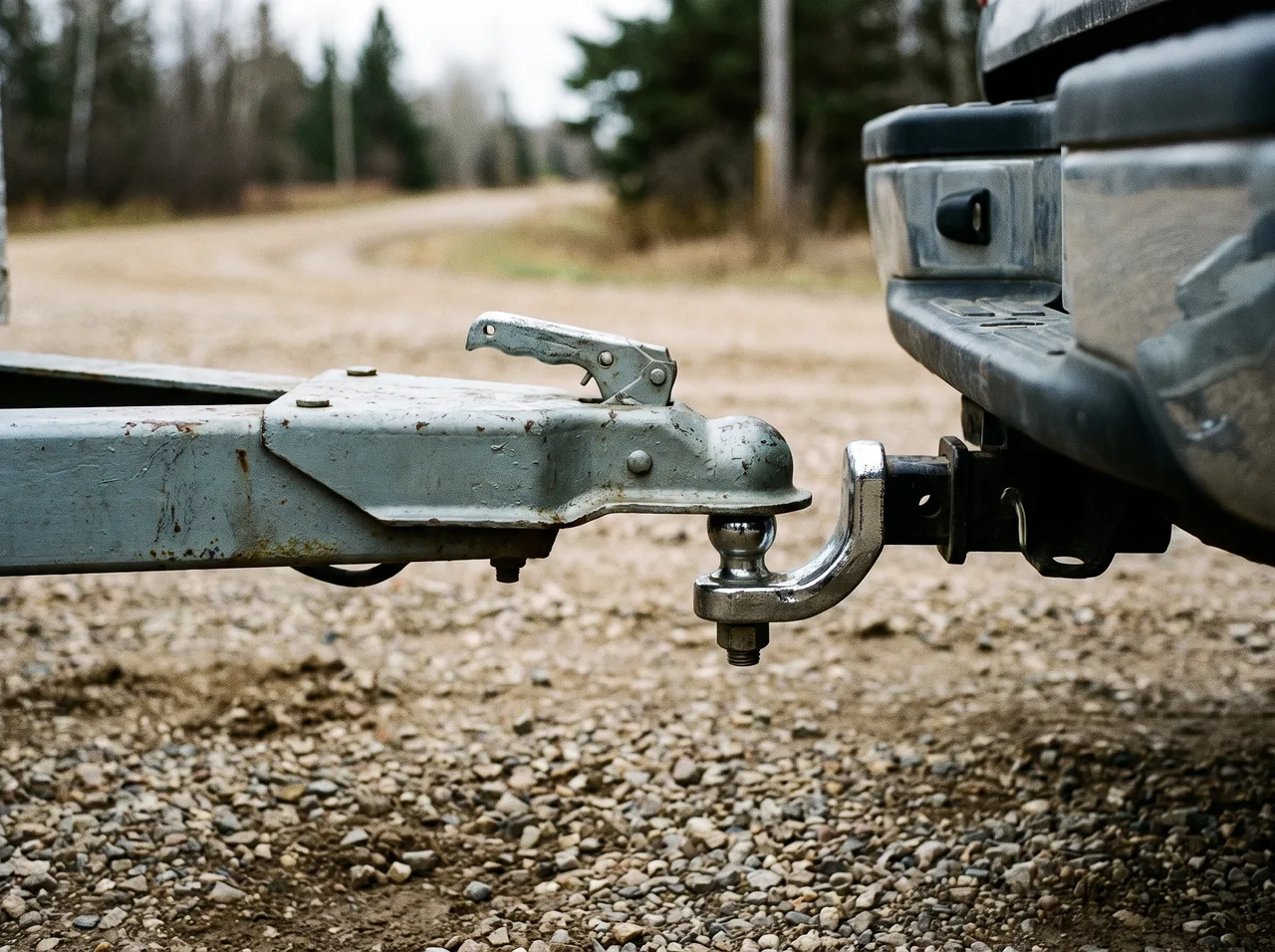
Too little and the trailer is tail-heavy. The mass behind the axle acts as a lever, and any disturbance, a gust, a passing truck, a bit of camber, starts an oscillation that feeds itself. That is sway, and it is the failure mode that frightens beginners for good reason.
Too much and you lift weight off the tow vehicle's front wheels, which is where your steering and much of your braking live. The rig feels light in the nose, vague in corners and slower to stop.
You will find a specific percentage quoted all over the internet. We are not going to add to that, because the right figure depends on the hitch type, and we could not read a current primary source for it today. What we can tell you is where yours is: your tow vehicle's owner's manual and the instructions supplied with your hitch.
If those two disagree, the lower figure wins. If you are renting, ask the owner and get the answer before the trailer is on the ball.
Tires, the part beginners skip
Tires are the least glamorous item on the list and the one most likely to end a trip.
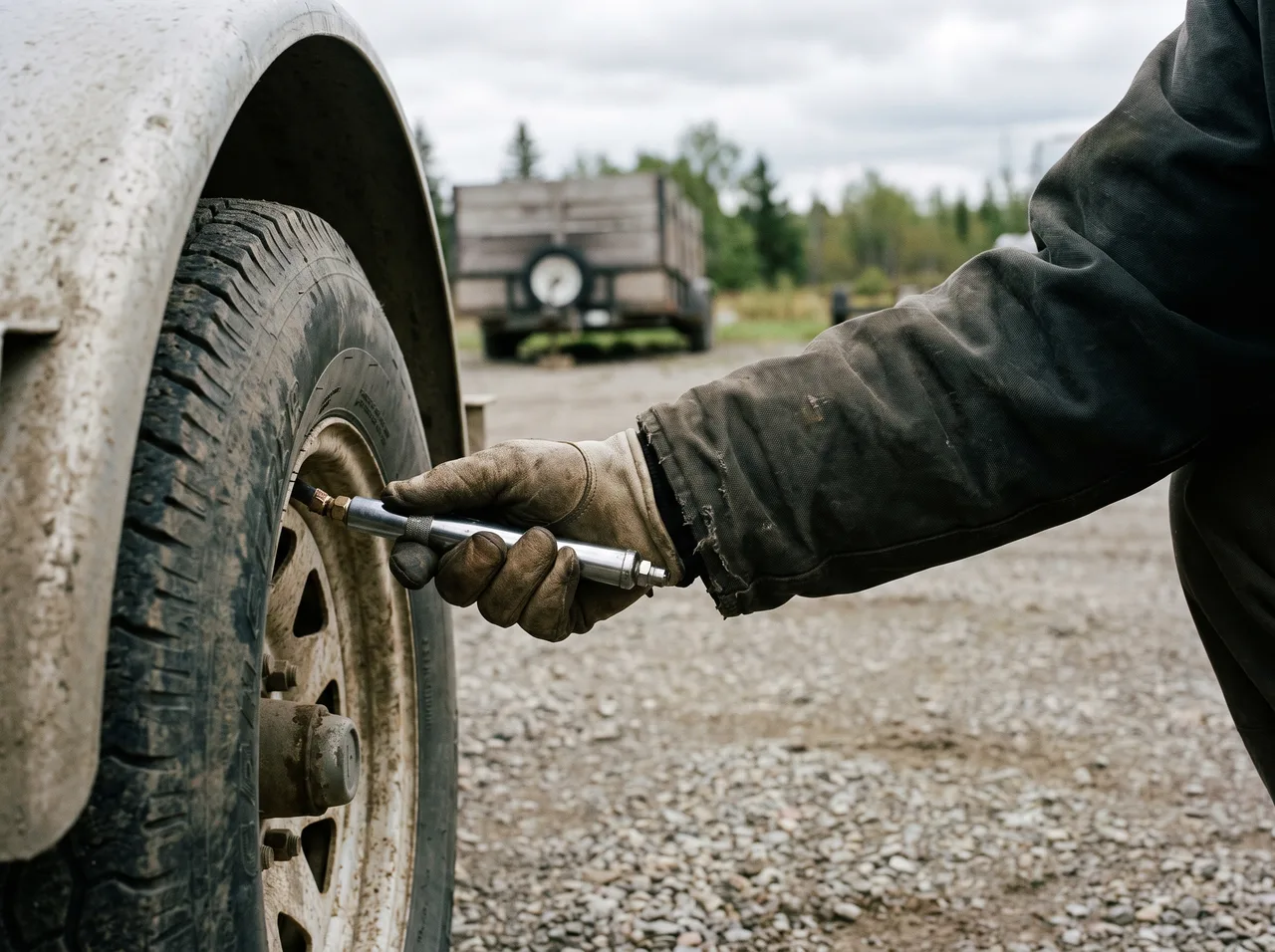
NHTSA's guidance is worth quoting directly, because it corrects a mistake almost everyone makes: locate the recommended pressure on the Tire and Loading Information label on the driver's side door edge or post, or in the owner's manual, and remember that "the correct pressure for your tire is what the vehicle manufacturer has listed, NOT what is listed on the tire itself".
The number molded into the sidewall is a maximum, not a recommendation.
Two more points from the same source, read on August 3, 2026. Pressure must be measured cold, which NHTSA defines as not having been driven on for at least three hours; and you should check all tires including the spares, which on a towing trip means two spares to think about rather than one.
NHTSA also states plainly that a vehicle needs appropriately sized and load-rated tires, properly inflated, before every trip.
The hook-up check, every single time
Make this a fixed routine rather than a judgment call, because the failures it catches are the expensive ones and it takes about three minutes.
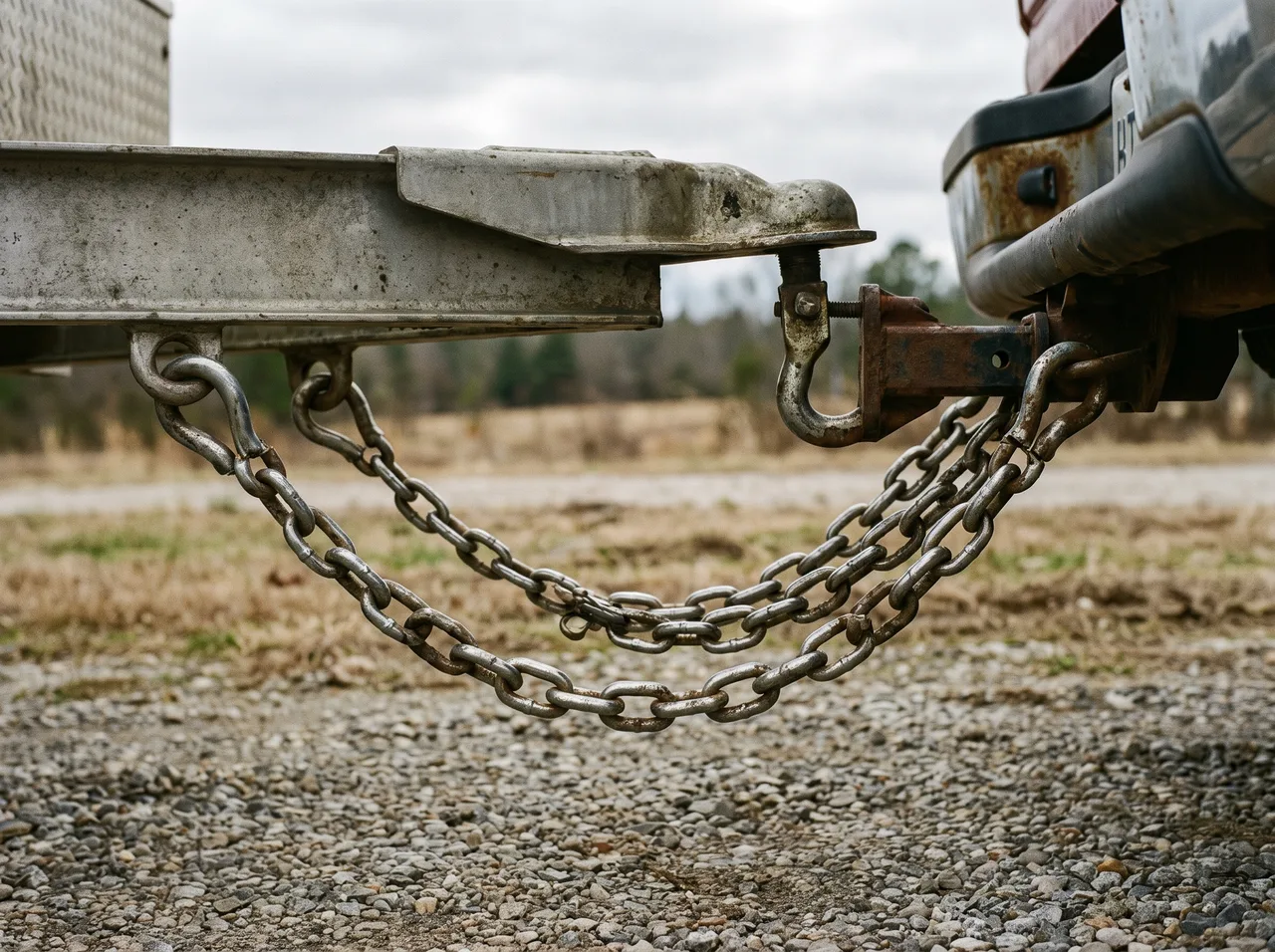
- Coupler seated, latched and pinned. A coupler that looks closed but is not latched will lift off the ball at the first bump.
- Safety chains crossed underneath the coupler. Crossed so they cradle the tongue if the coupler releases, rather than letting it dig into the road.
- Breakaway cable to the vehicle, not to the hitch. Attached to the hitch, it leaves with the trailer and does nothing.
- Electrical connector in and lights confirmed. Have someone stand behind while you work through brake lights, indicators and running lights. Do not assume.
- Load secured and distributed. Heavy items low and over or slightly ahead of the trailer axle, not stacked at the tail where they make sway worse.
- Tires cold-checked, spares included. As above.
What actually changes on the road
Once the numbers agree and the hook-up is right, the driving adjustments are few and mostly about space and patience:
- Everything needs more distance. You accelerate slower, you stop later, and the gap you would normally leave is no longer enough. Give yourself room and let people past.
- Turns need a wider arc. The trailer tracks inside your line, so it will cut the corner you just took. Swing wider than feels necessary, especially at curbs and fuel pumps.
- Sway gets more likely as speed rises. Moderate speed is the cheapest and most reliable protection a beginner has, and it costs nothing but time.
- Reversing is inverted. Small inputs, a hand at the bottom of the wheel so it moves the way the trailer will, and a spotter. Practice in an empty parking lot before you need it at a campsite with an audience.
- Wind and trucks matter more. Expect to be pushed when a large vehicle passes, and hold a steady line rather than correcting sharply.
On sway specifically: the correct corrective action depends on what equipment you have, so take it from your tow vehicle's manual and your hitch instructions rather than from a stranger on the internet. Prevention is the part fully in your control, and it is loading and speed.
If the trailer is rented
A rented trailer changes the picture in your favour, because the platform and the owner both have published obligations.
On RVezy, whose process we have documented, the rules are explicit: guests renting drivable RVs complete a short road test, and for towables the guidance is to talk with the host to make sure you have the proper equipment to tow the trailer safely, and to practice taking the RV down before the rental begins.
RVezy also states its departure and return inspections should take approximately an hour each, which is exactly the window in which to ask every question on this page.
Use that hour. Ask the owner for the loaded weight, the tongue weight they run, the hitch rating and the tire pressures, and have them watch you couple up once. An owner who has handed over the same trailer fifty times is the best towing tutor you will get, and it is free.
If you are still choosing, our RV rental cost guide covers what a trailer week actually costs, our RVezy review covers the platform honestly including its weaknesses, and Outdoorsy vs RVshare compares the alternatives. A delivered and sited trailer, where the owner tows it for you, is also a completely legitimate way to skip this entire page on your first trip.
If the renting is really a rehearsal for owning, our guide to buying a used camper covers what to inspect before you hand over money, including the resealing schedule the manufacturer publishes.
See delivered and towable RVs on RVezy
Common questions
How do you tow a trailer safely for the first time?
Start with paperwork rather than technique. Find your tow vehicle’s tow rating and combined weight rating in its owner’s manual, find the gross vehicle weight rating on the certification label in the driver’s door opening, find the trailer’s own weight rating on its sticker, and check the rating stamped on the hitch itself.
Only then load, check tires and lights, and drive. Nearly every beginner towing failure traces back to a number nobody looked up.
What tire pressure should a trailer run?
The pressure printed on the vehicle’s label, not the number molded into the tire sidewall. NHTSA is explicit about this: locate the recommended pressure on the Tire and Loading Information label on the driver’s side door edge or post, or in the owner’s manual, and remember that the correct pressure is what the vehicle manufacturer listed, not what is listed on the tire itself.
Check when the tires are cold, meaning they have not been driven on for at least three hours, and include the spare.
What is tongue weight and why does it matter?
Tongue weight is the share of the trailer’s weight that presses down on the hitch ball rather than resting on the trailer’s own axles. Too little makes the trailer prone to sway, because the load behind the axle acts like a lever. Too much lifts weight off the tow vehicle’s front wheels, which blunts steering and braking.
The correct figure for your setup depends on the hitch type and is given in your tow vehicle’s manual and the hitch instructions, so take it from there rather than from a generic percentage.
What should I check before every tow?
Coupler latched and pinned, safety chains crossed under the coupler, breakaway cable attached to the vehicle rather than the hitch, electrical plug connected, and then a walk round with someone confirming brake lights, indicators and running lights. Check tire pressures cold, including the spare, and confirm the load is secured and distributed rather than stacked at the back. This takes a few minutes and prevents most of what goes wrong.
What is different about driving with a trailer?
Everything takes longer and needs more space. Braking distance grows, acceleration slows, and turns need a wider arc because the trailer cuts the corner inside your path.
Reversing steers backwards from your instincts, so most beginners do better with small inputs, a hand at the bottom of the wheel and someone spotting. Sway becomes more likely as speed rises, which is why moderate speeds are the simplest protection a beginner has.