LiFePO4 explained: the chemistry that took over off-grid power
We may earn a commission if you buy or book through the links on this page. How we make money
Short answer: LiFePO4 is lithium iron phosphate, a lithium-ion battery chemistry, also written LFP. One cell holds a nominal 3.2 volts, so the battery you buy as "12 volt" is really 12.8 volts: four cells in series.
It took over RV and off-grid power for four reasons that have nothing to do with capacity. You can use nearly all of it, you can leave it partly charged without damage, it returns about 92 percent of the energy you put in against roughly 80 percent for lead acid, and it does all that at a fraction of the weight.
Below is what the chemistry actually is, the four advantages with the manufacturers' own numbers attached, and three genuine limits, one of which costs real money. Every figure was read from Victron Energy's, Battle Born's and Trojan's own published documents on August 2, 2026, and each is named in the text. We rank no battery here and sell none. Method: how we evaluate.
What is LiFePO4?
LiFePO4 is the chemical formula for lithium iron phosphate, one chemistry within the lithium-ion family rather than an alternative to it. The shorthand LFP means the same thing. What separates it from the lithium in a laptop or an older power station is the cathode material, and the practical consequences of that choice are longer cycle life, a flatter discharge voltage and a more thermally stable pack.
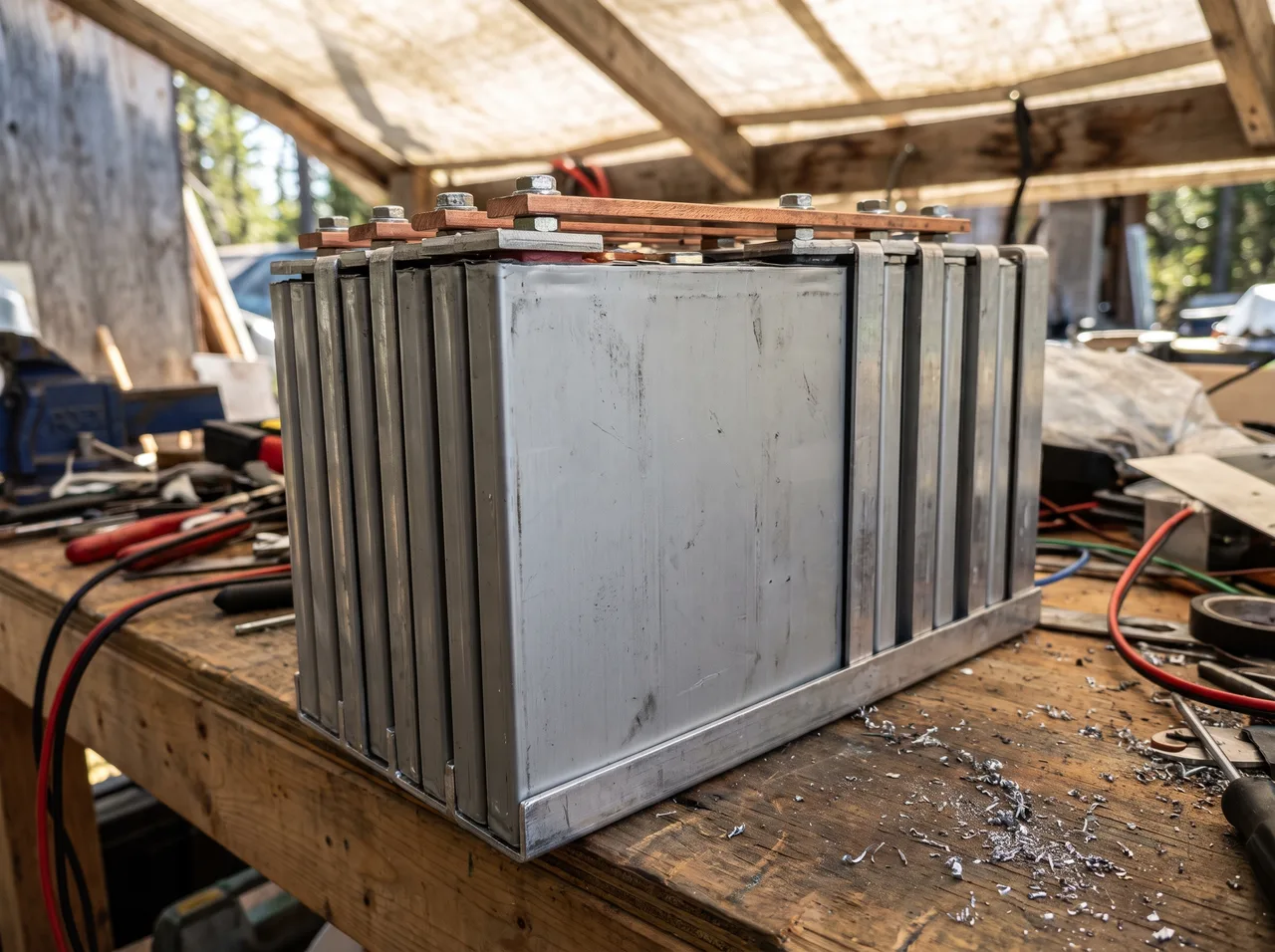
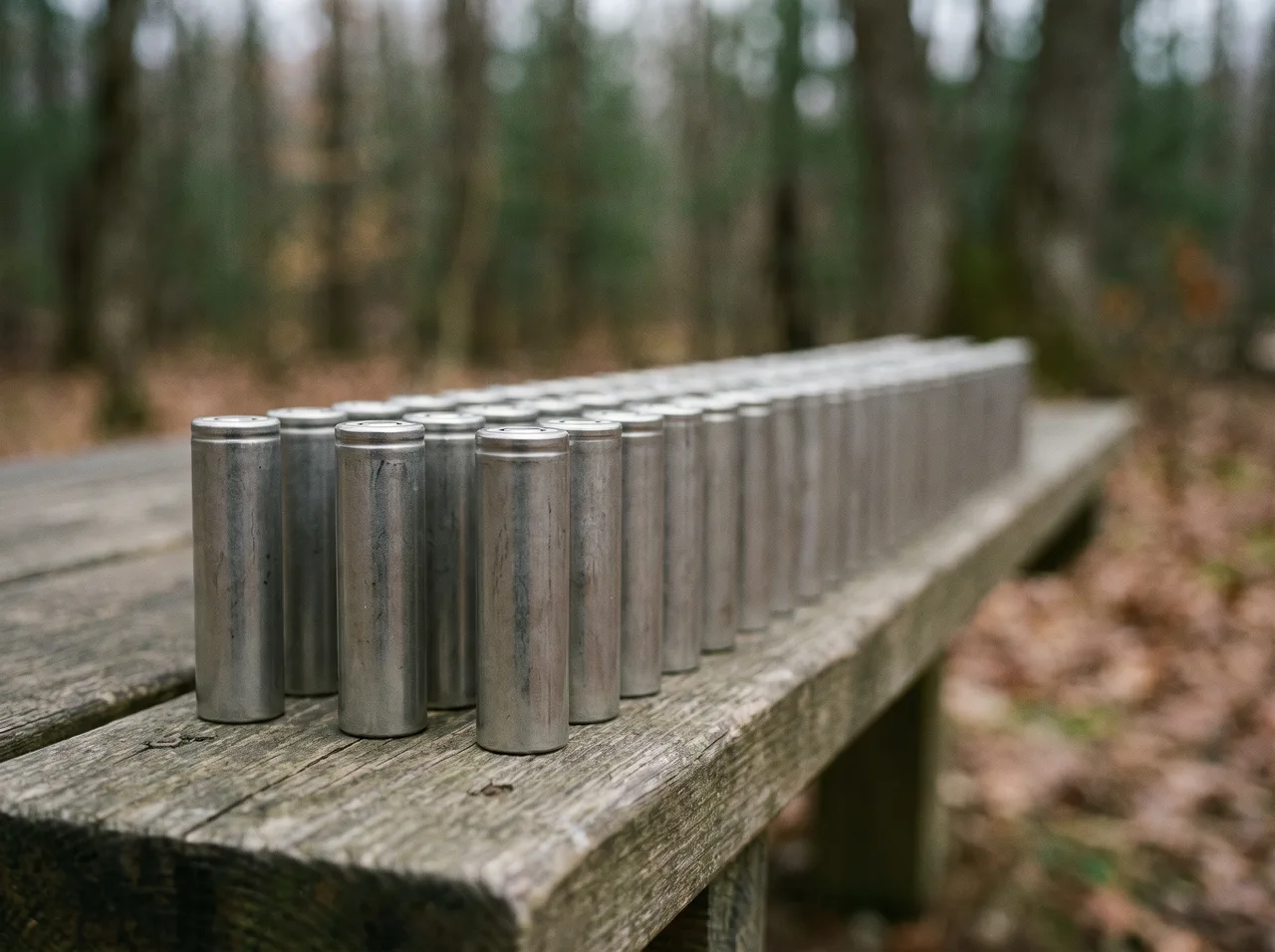
The number worth memorising is the cell voltage. Victron's own datasheet for its lithium battery range states it plainly: "A single LFP cell has a nominal voltage of 3.2 V. A 12.8 V battery consists of 4 cells connected in series and a 25.6 V battery consists of 8 cells connected in series."
That is why a LiFePO4 "12 volt" battery reads 12.8, and why a 24 volt one reads 25.6. It is not marketing rounding, it is four cells of 3.2.
The four things that won it the category
Capacity is not one of them. A 100Ah LiFePO4 battery and a 100Ah lead acid battery store a similar amount of energy on paper. Everything that matters happens around that number.
-
You can use nearly all of it. Battle Born publishes 100 percent usable depth of discharge for its 100Ah battery, and its spec table carries a row labelled "Ah PbEq" with the value "200Ah", its own lead acid equivalence.
Trojan, which manufactures flooded lead acid, recommends discharging only 20 to 50 percent of rated capacity for optimum life. How that reshapes a real bank is the subject of our guide to the best RV battery for boondocking, so we will not redo the arithmetic here.
- It gives back more of what you put in. Victron's datasheet puts the round-trip energy efficiency of an average lead acid battery at 80 percent and of an LFP battery at 92 percent. On solar that gap compounds daily, because every percentage point lost is panel time you have to make up.
- Partial charging is fine, and even preferred. Victron states an LFP battery "does not need to be fully charged" and that "service life even slightly improves in case of partial charge instead of a full charge". Anyone who has chased a lead acid bank back to 100 percent on a cloudy week will recognise how large that is.
- It is dramatically smaller and lighter. Victron claims savings of up to 70 percent in both space and weight; Battle Born advertises up to 75 percent less weight than lead acid for equivalent usable energy, at 31 lb for its 100Ah unit. On a rig with a payload rating, that is often the whole argument.
The winter problem it does not have
This one deserves its own heading because it is the failure mode that quietly kills lead acid banks in exactly our use case.

Victron's datasheet describes it directly: a lead acid battery fails prematurely due to sulfation if it operates in deficit mode for long periods, meaning it is rarely or never fully charged, or if it is left partially charged or fully discharged. The example the datasheet itself gives is a yacht or mobile home over winter.
That is not an exotic scenario, it is the default life of a recreational vehicle. The rig sits for months, the battery drifts down, nobody notices until spring.
LFP simply does not degrade that way, which is why the chemistry's advantage in a seasonal vehicle is larger than the spec sheets alone suggest. Sealing a lead acid battery does not fix this either: the sealed alternative most RVs actually use is covered in what is an AGM battery, including the cycle life it publishes at each depth of discharge.
The BMS, the part people forget
Every LiFePO4 pack needs a battery management system watching individual cell voltages and temperature, cutting off charge or discharge when a cell goes out of bounds. In a sealed portable power station this is already inside the box and you never think about it, which is most of why those products are easy to live with.
In a build-it-yourself bank the BMS is a component you have to choose: Victron ships six different BMS models for its lithium range and points buyers to a selection guide.
Series wiring is where this gets practical. Victron's own footnote recommends using as few different batteries in series as the application allows, noting that a 48 volt system is best built from two 24 volt batteries, and that while four 12 volt batteries in series will work, it "will require more periodic balancing time".
If you are planning a bigger bank, that sentence is worth reading twice before you buy four of anything.
Three real limits
What LFP genuinely gives you
- Nearly all of the rated capacity is usable, not roughly half
- 92 percent round-trip efficiency against about 80 for lead acid
- Thousands of cycles: Battle Born publishes 3,000 to 5,000 on its 100Ah unit, with a 10-year warranty
- No sulfation penalty for sitting partly charged between trips
- Up to 70 percent less space and weight per Victron, 31 lb for a 100Ah Battle Born
What it costs you
- Purchase price. Victron says it outright: LFP batteries are expensive compared to lead acid. Battle Born listed its 100Ah unit at $799 on sale against $949 regular on September 24, 2026
- Cold charging. Both makers sell heated versions for this; Victron states its self-heating model charges down to minus 30 Celsius, and Battle Born's heated 100Ah kit listed at $999 on sale against $1,149 regular
- Series balancing. Many batteries in series need more periodic attention, per Victron's own guidance
- It needs a BMS, and in a DIY bank that is a decision rather than a given
Note who is making the price admission. Victron sells lithium and still calls it expensive, which is the kind of statement worth trusting precisely because it costs the speaker something.
Where you actually meet it
Most people never buy a bare LiFePO4 cell. They buy a sealed box with the cells, the BMS, an inverter and a charge controller already inside, which the market calls a solar generator or a portable power station.
What that box is, and what each component does, is covered in what a solar generator actually is.
The chemistry on this page is the reason those products are rated in thousands of cycles rather than hundreds: the Grid Doctor 3300 we cover carries a 2,048Wh LiFePO4 pack with a manufacturer rating of 3,500 or more cycles to 80 percent, where older NMC-based units are typically rated for roughly 500 to 1,000.
If you want to know what a given pack will actually run rather than what it is made of, our what will it run calculator does that arithmetic against real appliance draws, and are solar generators worth it handles the money question. For the ranked picks themselves, start at the solar generator verdicts.
See the LiFePO4 system we benchmark against
Common questions
What does LiFePO4 mean?
LiFePO4 is the chemical formula for lithium iron phosphate, a type of lithium-ion battery chemistry. It is also written LFP.
A single LiFePO4 cell has a nominal voltage of 3.2 volts, so the batteries sold as 12 volt are really 12.8 volts, built from four cells wired in series, and a 25.6 volt battery uses eight. That is why a LiFePO4 battery reads slightly higher than the lead acid battery it replaces.
Is LiFePO4 better than lead acid?
For off-grid and RV use, on most axes, yes. Victron publishes round-trip energy efficiency of 92 percent for LFP against 80 percent for the average lead acid battery, and states an LFP battery does not need to be fully charged, with service life even slightly improving on partial charges.
Lead acid fails early from sulfation if it sits partly charged, which is exactly what happens to an RV over winter. The honest exception is purchase price, where lead acid still wins outright.
How long do LiFePO4 batteries last?
Manufacturers publish cycle counts in the thousands rather than the hundreds. Battle Born rates its 100Ah LiFePO4 battery at 3,000 to 5,000 cycles and backs it with a 10-year warranty.
For comparison, our own coverage of the Grid Doctor 3300 power station cites a manufacturer rating of 3,500 or more cycles to 80 percent. Older lithium chemistries such as NMC are typically rated for roughly 500 to 1,000 cycles.
Do LiFePO4 batteries need a BMS?
Yes, and it is not optional. A battery management system monitors cell voltages and temperature and protects the pack from overcharge, over-discharge and unsafe temperatures.
In a sealed power station the BMS is already inside the box. In a build-your-own bank it is a component you select, and Victron notes that wiring four 12 volt batteries in series works but requires more periodic balancing than using batteries matched to the system voltage.
What are the downsides of LiFePO4?
Three real ones. Price, which Victron states plainly by calling LFP expensive compared to lead acid.
Charging in the cold, which is why both Battle Born and Victron sell heated versions, with Victron stating its self-heating model charges down to minus 30 Celsius. And series balancing, where mismatched or many-in-series batteries need more maintenance attention than a single battery does.