Dual fuel inverter generator: the rating on the box is a gasoline number
We may earn a commission if you buy or book through the links on this page. How we make money
Short answer: a dual fuel inverter generator runs on gasoline or propane and conditions its output electronically, and every headline wattage you see for one was measured on gasoline, at sea level.
Run it on propane and the manufacturer's own table takes about 10 percent off the running watts. Camp at elevation and the same manufacturer's manual takes roughly 3.5 percent more per 1,000 feet. Those two derates stack, and they are both published by the people who built the machine.
Then the campground decides the rest: Glacier and Mount Rainier each allow generators for six hours a day, none of them overnight.
Everything below comes from Champion's and Westinghouse's own published specifications and Champion's operator manual, plus the CPSC generator safety sheet and two National Park Service campground regulation sheets, read on August 7, 2026 and named in the text. Where a figure is our arithmetic on their numbers rather than something they printed, we say so. Method: how we evaluate.
- What the two words actually mean
- What propane costs, in the makers' own numbers
- The second derate, from the same manual
- The "RV ready" outlet is a plug shape
- The six hour day
- Where propane genuinely struggles
- The real argument for the second fuel
- The exhaust rule that names RVs
- Where this guide stops
- Common questions
What the two words actually mean
The name bolts together two unrelated features, and people shopping for one often want only a single half of it.
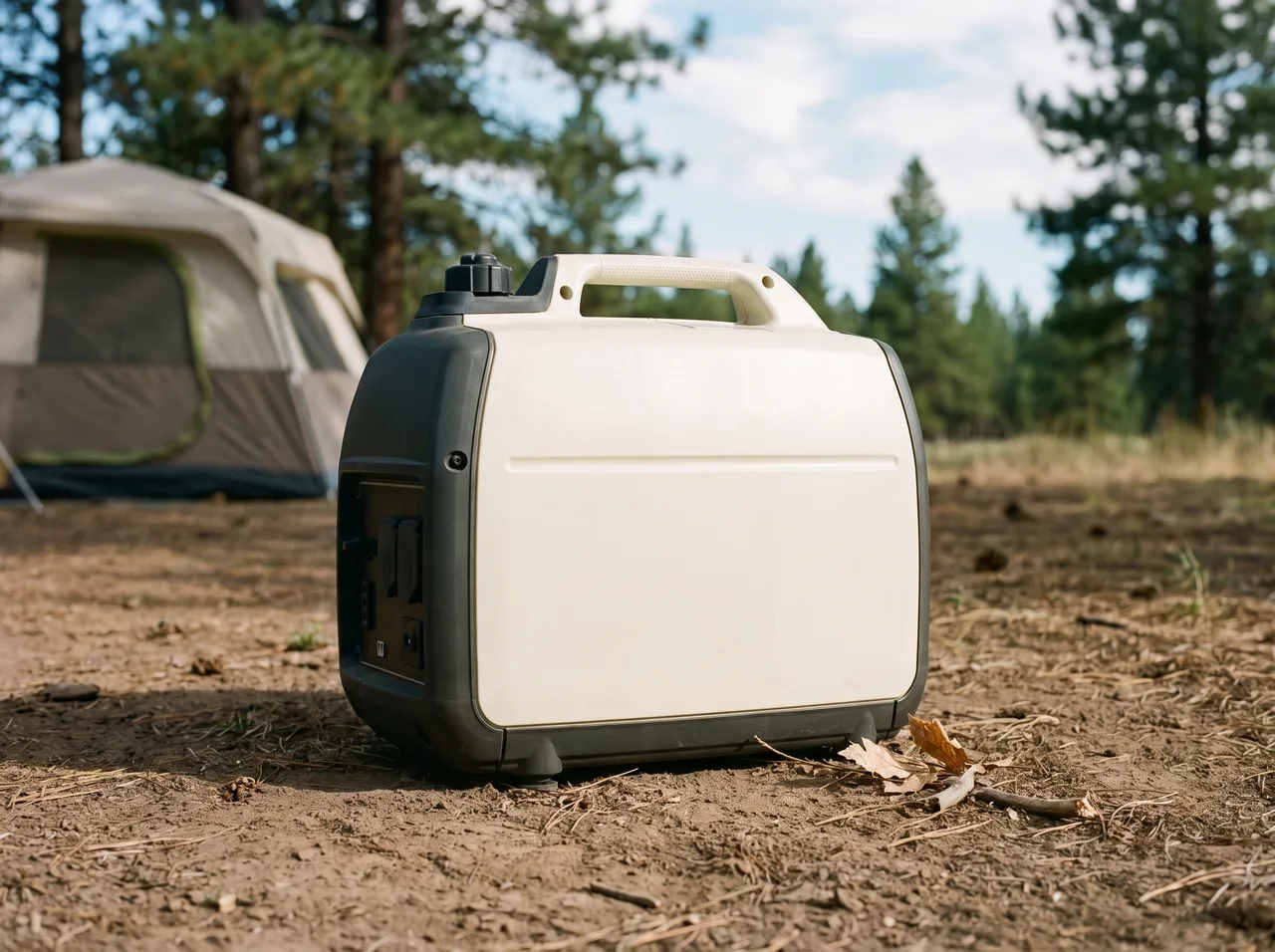
Dual fuel is about the engine's diet. The same engine will burn gasoline from its own tank or propane vapour drawn from an external LPG cylinder through a hose, selected on a dial. Champion's 4500 watt manual lists a dedicated LPG inlet on the control panel and separate starting procedures for each fuel.
Inverter is about what happens to the electricity afterwards. Rather than the alternator output going straight to the sockets, it is rectified and rebuilt electronically. Two consequences matter.
The output is clean enough for electronics, and both makers publish that as a number: Champion states less than 3 percent total harmonic distortion, Westinghouse states 3 percent or less on the iGen5000DF.
And because the engine no longer has to hold one fixed speed to hold the frequency, it can idle down under light load. On the Champion that is a button Champion describes as enabling "automatic idle control".
Neither word implies the other. You can buy an inverter generator with no propane option, and a dual fuel machine that is not an inverter. A dual fuel inverter generator is simply the box that has both.
What propane costs, in the makers' own numbers
The second fuel is not free, and the manufacturers are open about the price. They print the gasoline rating and the propane rating side by side, and the propane one is always lower.
| Model | Running watts, gasoline | Running watts, propane | Difference (our arithmetic) |
|---|---|---|---|
| Champion 2400 W (201271) | 1,800 | 1,620 | 10.0 percent lower |
| Champion 2500 W (201530) | 1,850 | 1,665 | 10.0 percent lower |
| Champion 4500 W (201531) | 3,250 | 2,925 | 10.0 percent lower |
| Westinghouse iGen5000DF | 3,900 | 3,500 | 10.3 percent lower |
Champion lands on exactly 10 percent three times out of three, which suggests a house rule rather than three separate measurements.
There is also a real difference in how the two brands publish. Champion holds its starting watts identical on both fuels, listing 4500 starting watts for the 4500 watt model whether it is burning gasoline or propane. Westinghouse trims the peak as well, from 5000 watts on gasoline to 4500 on propane.
If your load has a hard starting surge, that difference in disclosure is worth reading carefully on the specific unit in front of you.
Runtime goes the other way, and this is the part that sells propane. On the 4500 watt Champion, a 1.54 gallon tank of gasoline gives a published 10 hours at quarter load. Propane gives 25 hours. On the 2400 watt model it is 11 hours against 34.
Champion's spec page for the 2500 watt model states that its propane runtime is based on a 20 pound propane tank, which is the ordinary exchange cylinder, so the comparison is one small gasoline tank against one barbecue bottle.
The second derate, from the same manual
Buried in the maintenance section of Champion's operator manual, well past the point most buyers read, is a sentence that matters more to campers than to anyone else: "Engine power and generator output will be reduced approximately 3 1/2% for every 1000 ft. of elevation above sea level."
Champion explains why: air is thinner, so the air mass and air-fuel ratio drop and the engine makes less power. It also notes that high altitude brings increased exhaust emissions, harder starting, higher fuel consumption and spark plug fouling, and that a high altitude carburetor main jet is available for the problems other than the power loss itself.
Nothing in that sentence cancels the propane derate. They apply to the same engine at the same time. Below is what Champion's two published figures for the 4500 watt model become when its own altitude rule is applied to them. These rows are our arithmetic on Champion's numbers, not figures Champion published, and the manual says approximately, so treat them as a planning estimate rather than a measurement.
| Elevation | Gasoline, est. running watts | Propane, est. running watts |
|---|---|---|
| Sea level (published) | 3,250 | 2,925 |
| 2,000 ft | about 3,020 | about 2,720 |
| 4,000 ft | about 2,795 | about 2,515 |
| 6,000 ft | about 2,570 | about 2,310 |
| 8,000 ft | about 2,340 | about 2,105 |
A machine sold as 4500 watts, run on propane at a western mountain campground, is planning territory for something closer to 2,100 watts. That is not a defect and nobody is hiding it. It is two published derates doing exactly what their own documents say they do.
The "RV ready" outlet is a plug shape
Most of these machines advertise an RV ready socket, and both units we checked have one. Champion lists receptacle B on the 4500 watt model as "120V AC, 27.1A RV (NEMA TT-30R)". Westinghouse lists "1 120V TT-30R" on the iGen5000DF. That is the same 30 amp connector your shore power cord already uses, which is genuinely convenient: no adapter, no dogbone.
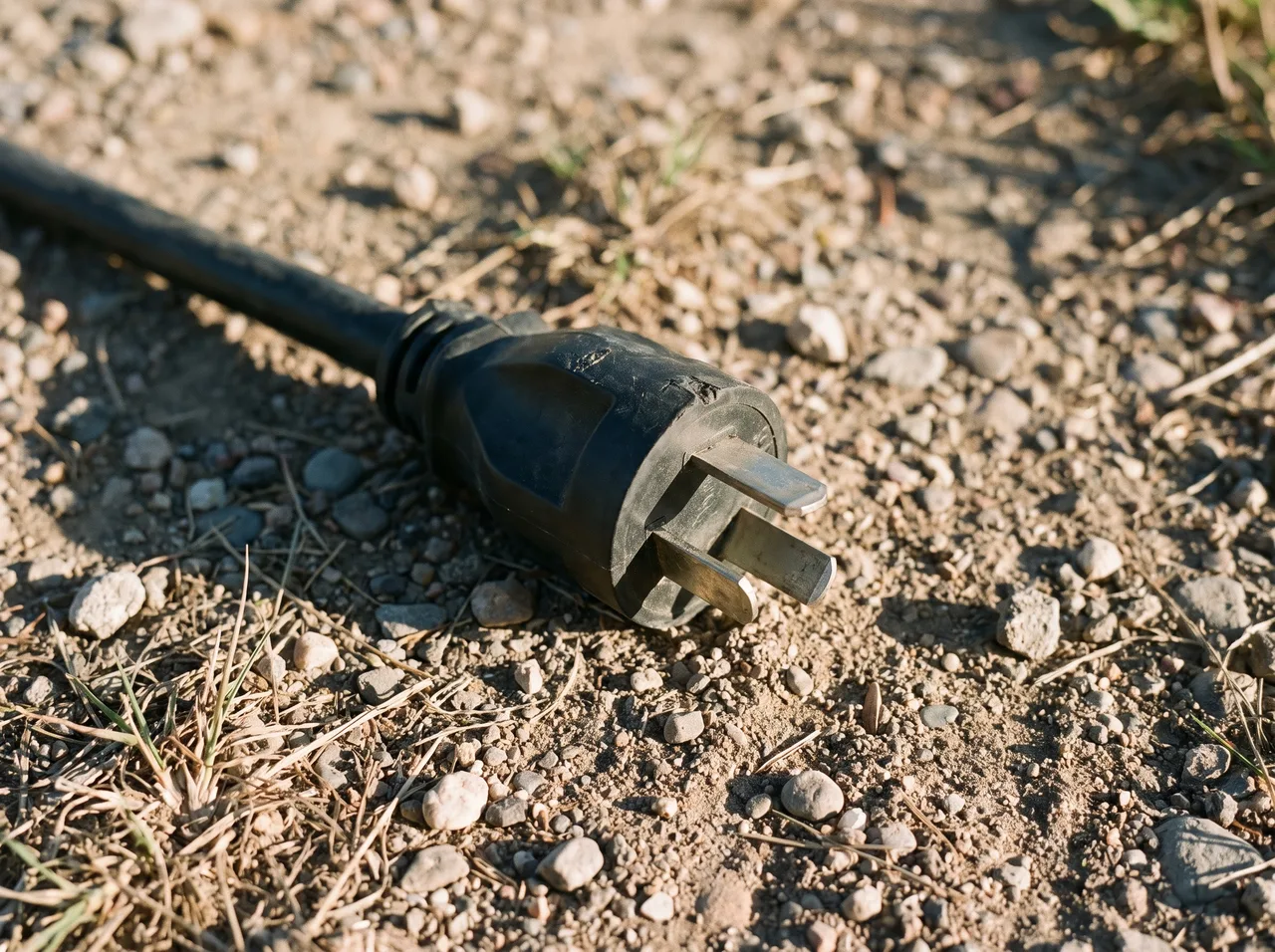
It is worth reading the amp figure next to it rather than the connector name. Champion's own specification sheet gives AC amps at 120 volts, running, as 27.1, which is 3,250 watts divided by 120 volts.
The socket is a 30 amp socket. The machine behind it delivers about 27 amps on gasoline at sea level.
Apply the propane rating instead and 2,925 watts is roughly 24 amps, and the 8,000 foot estimate above works out near 18 amps. Those last two are our arithmetic on Champion's published watt figures.
None of that makes the outlet less useful. It means the plug fitting your 30 amp cord is not a promise of a 30 amp service, and if you are working out what that leaves for actual appliances, our watts to amps converter does the conversion in both directions, and the what will it run calculator handles the load side.
One more line from Champion's specification table that surprises people wiring anything permanent: grounding type is listed as neutral floating, meaning the neutral circuit is not electrically connected to the generator frame. Champion's own instruction for the ground terminal is to consult an electrician for local grounding regulations, and that is our answer too.
The six hour day
Here is the constraint that decides more RV power questions than any specification, and it is not in any manual. It is in the campground regulations.
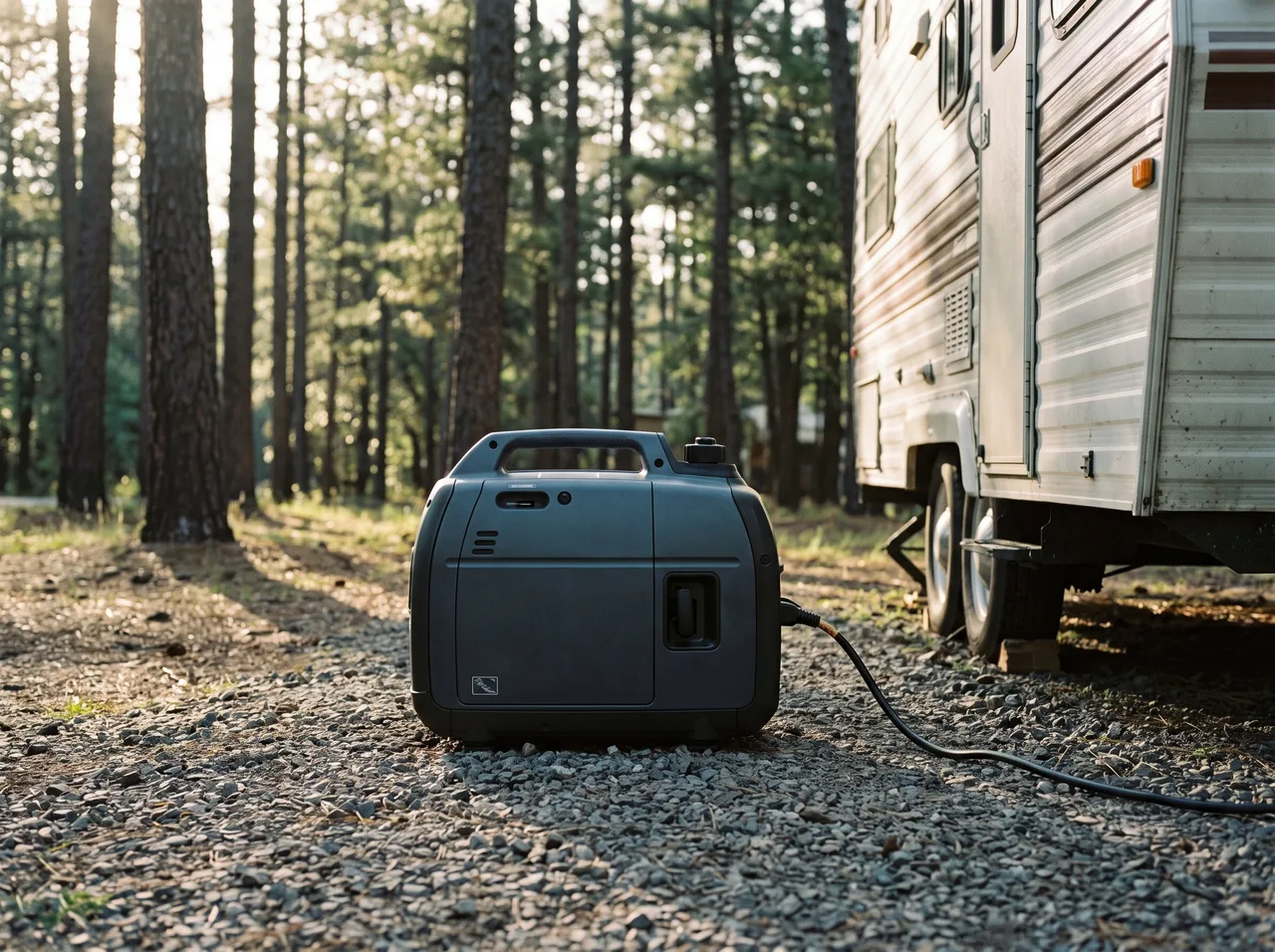
Glacier National Park's camping regulations state that "Generator use in campgrounds is permitted only during the hours: 8-10 am, 12 noon-2 pm, and 5-7 pm." Quiet hours there run from 10 pm to 6 am. Mount Rainier National Park publishes the identical three windows: "Generators may be used only between 8 a.m.-10 a.m., 12 p.m.-2 p.m., and 5 p.m.-7 p.m." with quiet hours from 9 pm to 7 am.
Both parks also go further than restricting hours. Mount Rainier states that "Loop E in Cougar Rock and Ohanapecosh campgrounds are closed to generator use."
Glacier lists an outright ban: "Generator use is prohibited at ALL TIMES in the following campgrounds: St. Mary A Loop, Fish Creek C Loop, Many Glacier sites 48-59, 71, and 88-102, Rising Sun sites 49-84, Sprague Creek all sites, Two Medicine sites 1-36, Cutbank all sites".
Six hours of the twenty four, in two hour blocks, and none of them at night. Whatever runs your fridge overnight, keeps a CPAP going, or holds the furnace fan through a cold morning is not the generator, because at that hour the generator is not allowed to be running.
This is the honest reason so many RVers end up owning both: the engine handles the heavy daytime surges inside the legal windows, and a battery covers the eighteen hours when nothing is permitted to make noise.
If that battery half is the part you have not solved, our power station versus generator comparison covers the trade in both directions without pushing a winner, and the solar generator guides cover sizing the quiet side.
See what a solar generator covers overnight
We earn a commission if you buy through that link, which never changes what we write. Our affiliate disclosure sets out the arrangement.
⚠️ Park rules change. The Glacier and Mount Rainier sheets quoted above are the regulation documents the National Park Service currently publishes, but they carry 2017 and December 2018 revision marks. Check the current page for your specific campground before you rely on the hours, and expect state parks, national forests and private campgrounds to set their own.
Where propane genuinely struggles
Propane has one failure mode that catches people out in exactly the conditions campers meet, and Champion documents it plainly in the manual rather than leaving it to forums.
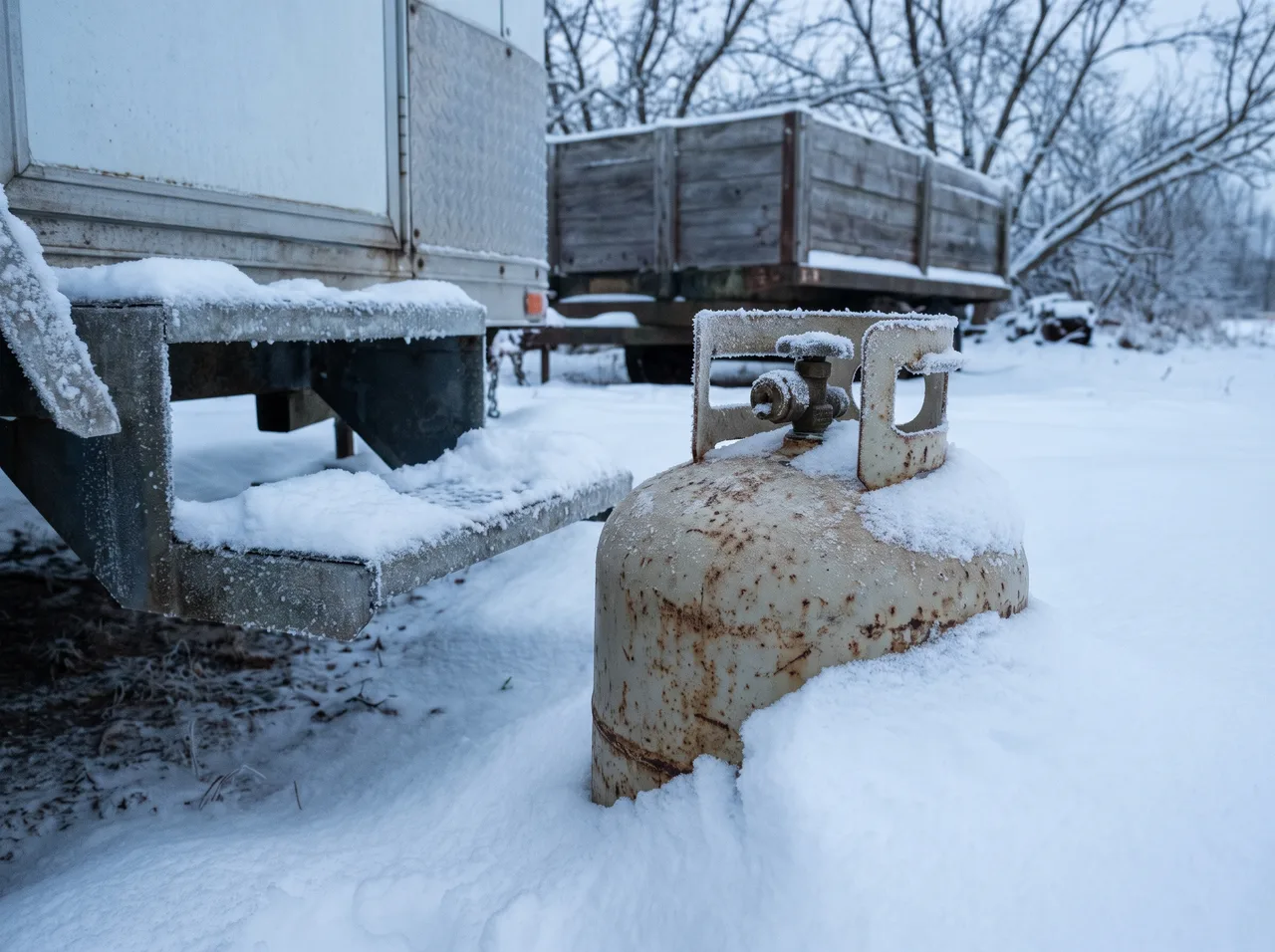
Champion says that "Accumulation of frost on LPG cylinder and regulators is common during operation and normally is not an indication of a problem." The liquid is absorbing heat as it turns to vapour, so the bottle gets cold.
Then comes the part that matters: "In unusual situations this frost may eventually restrict the flow of LPG to the generator resulting in deteriorating performance. For example, if the cylinder temperature is reduced to a very low level then the rate at which the LPG vaporizes is also reduced and may not provide sufficient flow to the engine."
Champion then draws the distinction that saves an unnecessary service call: "This is not an indication of a problem with the generator but only a problem with the flow of LPG from the cylinder."
In other words, a machine that sags under load on a cold morning may be perfectly healthy and simply out of vapour supply. Champion notes the amount of frost is affected by the size of the cylinder among other conditions, so the smallest bottle is the one most likely to run into it.
A smaller quirk from the same manual's troubleshooting table is worth knowing before it alarms you: if the generator will not stop, the listed cause is that the propane valve is still open.
The real argument for the second fuel
Given that propane costs you 10 percent of your output and can throttle itself in the cold, why buy a dual fuel inverter generator at all? The strongest answer is not about running it. It is about the eleven months it sits.
Champion's storage instruction for gasoline is a warning: "If the generator has been improperly stored for a period longer than 30 days with ethanol blended gasoline in the gasoline tank and/or carburetor, all fuel must be drained and the carburetor must be thoroughly cleaned of ethanol build up. This process involves technically advanced tasks." Champion directs owners to its technical support line for that job.
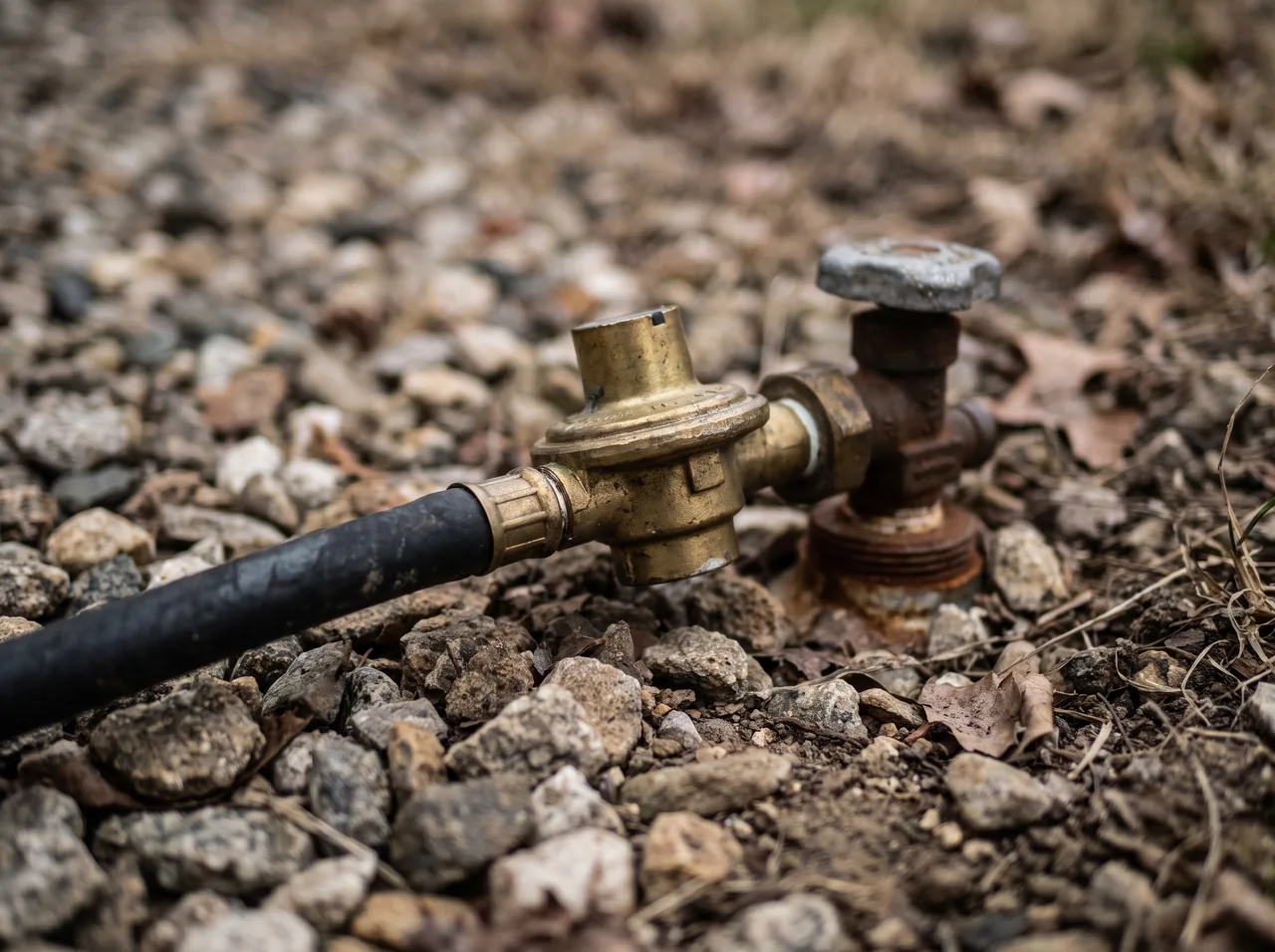
Its instruction for the other fuel is three sentences of housekeeping: "Always disconnect the LPG hose from the generator and shut off the LPG tank for proper storage", plug the outlet, and always keep cylinders away from heat.
That asymmetry is the case for dual fuel in one line. An owner who runs propane by default has nothing in the carburetor to go stale, which suits the way most RVs are actually used: hard for a few weeks, parked for the rest of the year.
The same logic runs through our guide to winterizing a camper, where most of the damage also happens to a rig that is standing still.
The exhaust rule that names RVs
Everything above is about watts. This section is the one that is actually dangerous to get wrong, and neither the safety regulator nor the manufacturer leaves any room in it.
The Consumer Product Safety Commission states that "More than 80 consumers die each year from CO poisoning caused by portable generators" and that "Using a generator indoors CAN KILL YOU IN MINUTES."
Its instruction is "NEVER use inside a home or garage, EVEN IF doors and windows are open", and to operate outside only, at least 20 feet from the house, with the exhaust directed away from the building. Opening things up is specifically not offered as a workaround.
Champion's manual applies that to our readers by name. It says do not operate the generator inside any building including garages, basements, crawlspaces and sheds, "enclosure or compartment, including the generator compartment of a recreational vehicle". A portable unit does not become an onboard unit because there is a locker that fits it.
On the safety feature itself, both sources are worth reading together. CPSC advises buyers to "ask retailers for a portable generator with a safety feature to shut off automatically when high CO concentrations are present", and several Champion models carry one, branded CO Shield, which Champion says shuts off the engine if it detects unsafe elevated CO levels.
In the same breath Champion writes the limit of its own feature: "CO Shield is not a substitute for an indoor carbon monoxide alarm or for safe operation." An automatic shutoff is a last line, not a permission slip.
Where this guide stops
We have not ranked these machines or named a best one, and there is no buying table on this page. Two reasons, both worth stating plainly.
The first is that the honest comparison needs figures we have not verified ourselves. We can quote what Champion and Westinghouse publish about their own units because those are their documents. Durability over years, real world noise against the rated dBA, and dealer service are a different kind of claim, and we are not going to manufacture confidence we do not have.
The second is the air conditioner question, which is the one most people arrive with. The starting surge of your rooftop unit is printed on its own data plate, it varies by model and by whether a soft start is fitted, and an article that guesses it for you is worse than no article.
Take that number, compare it against the rating for the fuel you will actually burn at the elevation you will actually camp at, and remember Champion sells a kit to run two inverters in parallel if one is short.
The same principle runs through our towing guide: the numbers that govern your rig are already on your rig.
More of these are in our guides section, and if the quiet half of the problem is what you are really solving, boondocking is where the two halves meet.
Common questions
What is a dual fuel inverter generator?
It is one machine that answers two separate questions. Dual fuel means the engine runs on either gasoline or propane, switched at a dial, with a hose to an LPG cylinder.
Inverter means the output is conditioned electronically rather than coming straight off the engine, so the engine speed can follow the load instead of holding a fixed speed, and both Champion and Westinghouse publish clean power figures of 3 percent total harmonic distortion or less.
How much power do I lose running my generator on propane?
On Champion units, exactly 10 percent of running watts, and Champion prints both numbers itself. Its 2400 watt model is rated 1800 running watts on gasoline and 1620 on propane, the 2500 watt model 1850 and 1665, the 4500 watt model 3250 and 2925. Westinghouse publishes a similar gap on the iGen5000DF, 3900 running watts on gasoline against 3500 on propane, and it also trims the peak figure.
Is a dual fuel inverter generator good for RV camping?
It is good at what it does, but check the campground before you size anything. Glacier National Park permits generator use only from 8 to 10 am, 12 noon to 2 pm and 5 to 7 pm, and Mount Rainier publishes the same three windows. Both also name campgrounds and loops where generators are banned outright. That is six legal hours a day, none of them overnight.
Can I run my RV air conditioner on a dual fuel inverter generator?
That depends on numbers we cannot look up for you, because the ones that matter are on your own air conditioner data plate rather than in any article. Compare its starting draw against the generator rating for the fuel you will actually burn, at the elevation you will actually camp at, not the headline number on the box. Champion also sells a kit to parallel two inverters for more output.
Does propane go bad in storage like gasoline?
This is the strongest argument for the second fuel. Champion warns that a generator stored more than 30 days with ethanol blended gasoline in the tank or carburetor needs all fuel drained and the carburetor thoroughly cleaned, a job it calls technically advanced. Its propane storage instruction is to disconnect the hose, shut off the cylinder and keep cylinders away from heat.