RV water heater: which tank you have changes the yearly job
We may earn a commission if you buy or book through the links on this page. How we make money
Short answer: the most common advice about an RV water heater, change the anode rod every year, is correct for one tank type and actively harmful for the other.
Suburban builds a porcelain lined steel tank and says operating it without the anode voids the tank warranty. Dometic builds an aluminum tank and says "Dometic & Atwood Brand Water Heaters DO NOT use Anode Rods!", adding that fitting an aftermarket one can damage the tank.
So the first job is not maintenance. It is reading the brand on the access door.
Everything below comes from Suburban's and Dometic's own published documents plus Jayco's owner manual, read on August 6, 2026, and named in the text. This is deliberately not a repair guide: where the manufacturer says stop and call a service center, we stop too. Method: how we evaluate.
Find out which tank you have first
Two designs dominate, and they are not variations on a theme. They are opposite answers to the same problem, which is that hot water corrodes metal.
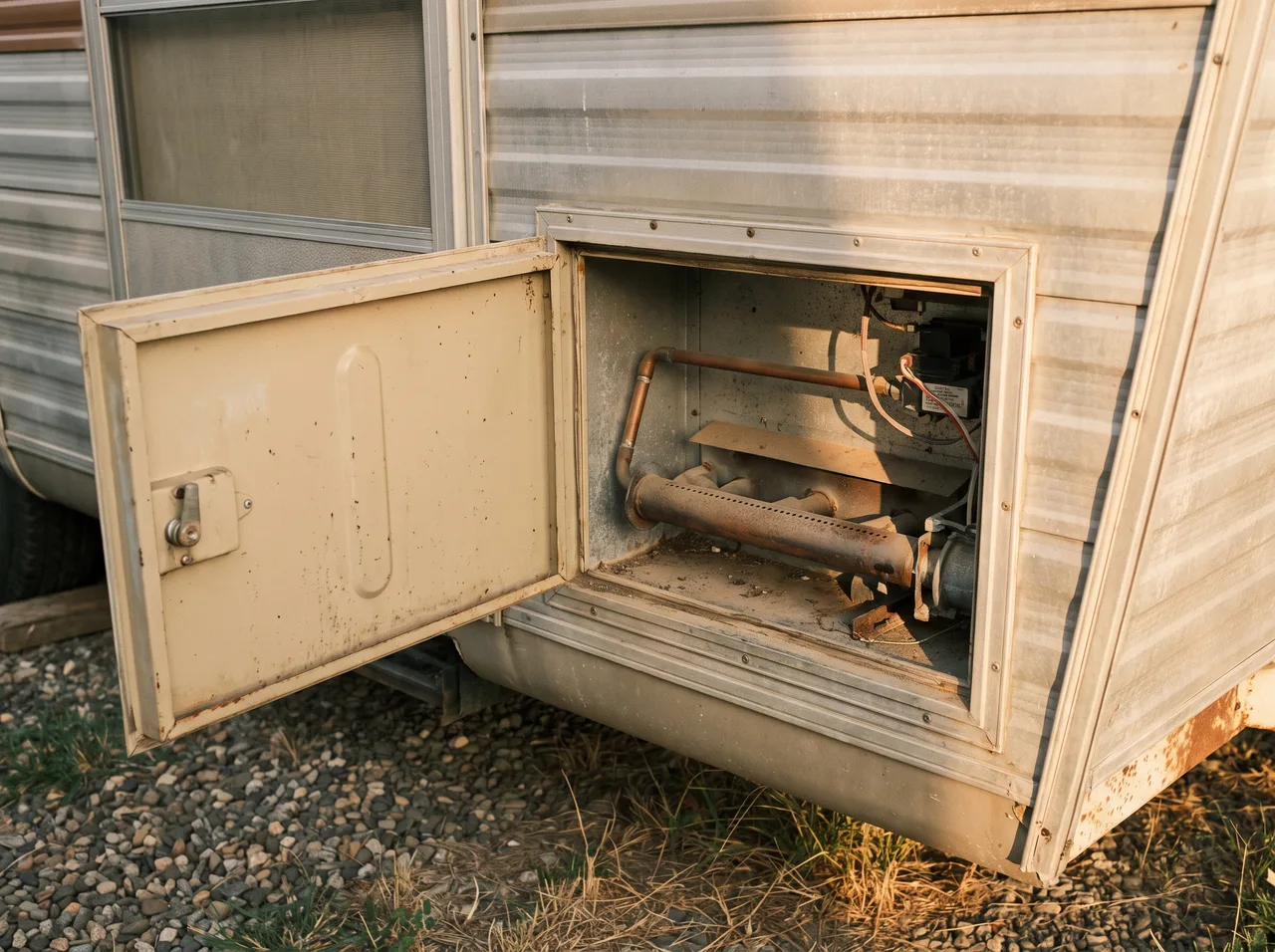
Suburban solves it the way your house does. Its published product sheet describes a durable porcelain lined steel tank built like a residential tank water heater, with a "sacrificial, replaceable anode rod" that "protects against tank corrosion and doubles as a drain". The rod is designed to be eaten instead of the tank.
Dometic, which now also covers the Atwood name, solves it with materials. Dometic states that its "Water Heater tanks are constructed of a high strength aluminum", and then says plainly: "Dometic & Atwood Brand Water Heaters DO NOT use Anode Rods!" It goes further, warning "DO NOT USE Aftermarket Anode Rods, doing so can damage the tank" and "DO NOT alter water heater, it will void warranty."
Read those two together and the stakes are clear. On a Suburban, skipping the rod voids the tank warranty. On a Dometic or Atwood, adding one can damage the tank and voids the warranty.
There is no advice that is safe for both, which is why the brand printed on your RV water heater's outside access door is the actual first step, and why we are not going to give you a single yearly ritual to follow.
The anode rod, and the tank that must never have one
If you do have a Suburban, its guidance is specific. Suburban says the tank "is protected by a magnesium or aluminum anode to prolong the life of the tank by absorbing the corrosive action of hot water", that the rod deteriorates under normal use, and that "we recommend it be replaced yearly".
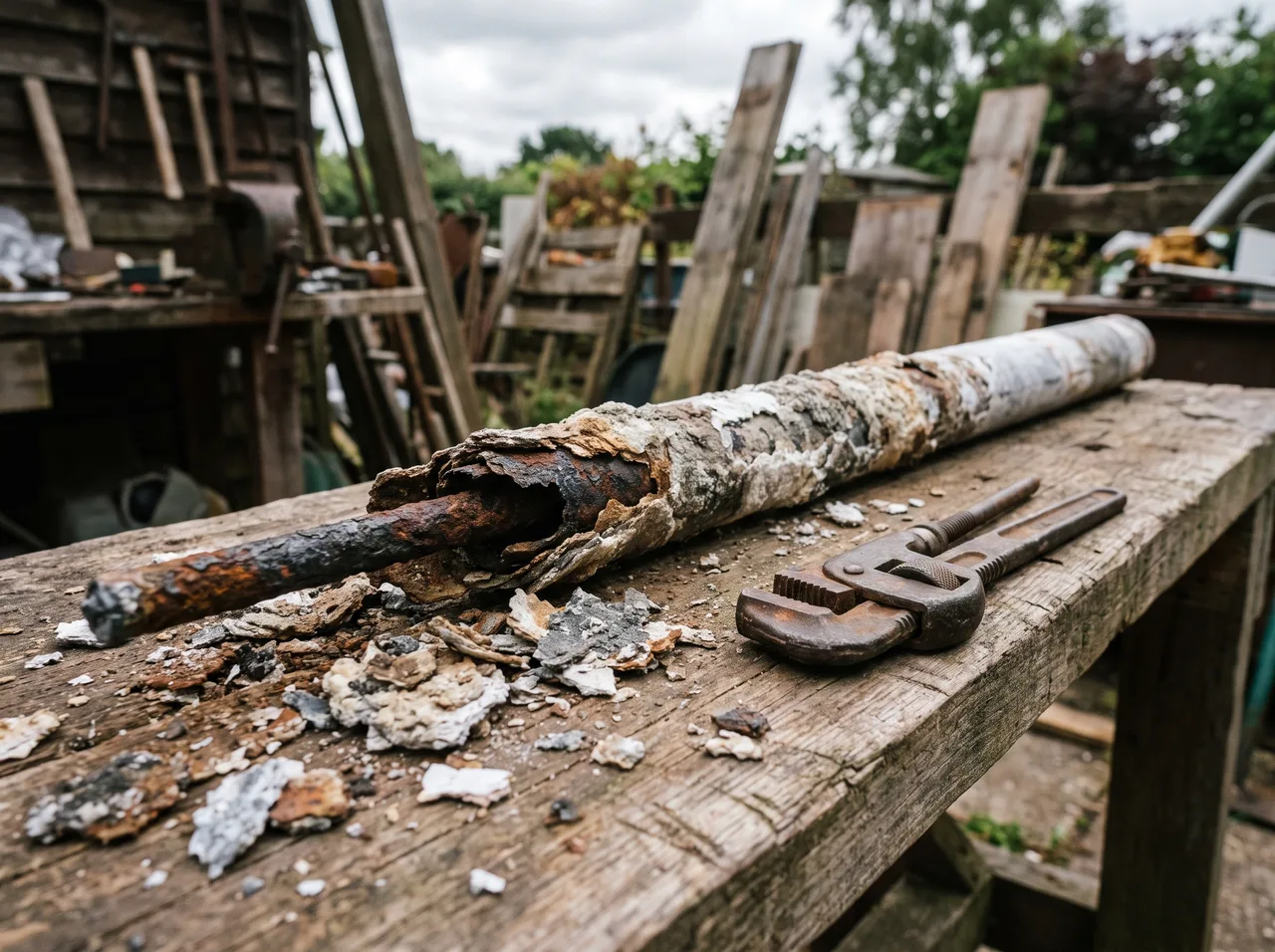
It also gives a condition trigger rather than only a calendar one: replacement is recommended "when consumption or weight loss is greater than 75%". Water with high levels of iron or sulfate speeds that up, so Suburban notes more frequent replacement may be required.
Two details from the same document save people money. First, the rod is the drain: Suburban says the tank is drained by removing the anode rod using a 1-1/16 socket, so you are already holding the thing you were going to inspect.
Second, on refitting, Suburban says a pipe thread sealant approved for potable water must be applied to the threads to prevent a leak, and that doing so properly "will not interfere with the anode's tank protection".
Then there is the warning that catches people who are trying to upgrade rather than neglect. Suburban states: "Do not replace the anode rod with any non-Suburban accessory part, such as an 'add-on' electric heating element. Items such as these are not approved to be installed in Suburban products. They could create an unsafe condition and will also void all warranties."
Screw-in electric elements that occupy the anode port are widely sold. Suburban's position on them, in its own operation guide, is unambiguous.
These are Suburban's figures for its own porcelain steel tank line, not a rule for every RV water heater on the market. Your unit's own manual is the one that governs it.
Gas, electric, and what each actually delivers
Most tank units run on propane, on a 120 volt element, or on either. Jayco's manual is a useful reminder that these are genuinely separate systems: its procedures repeatedly tell owners to switch off both the electric and the LP gas switches, because turning one off proves nothing about the other.
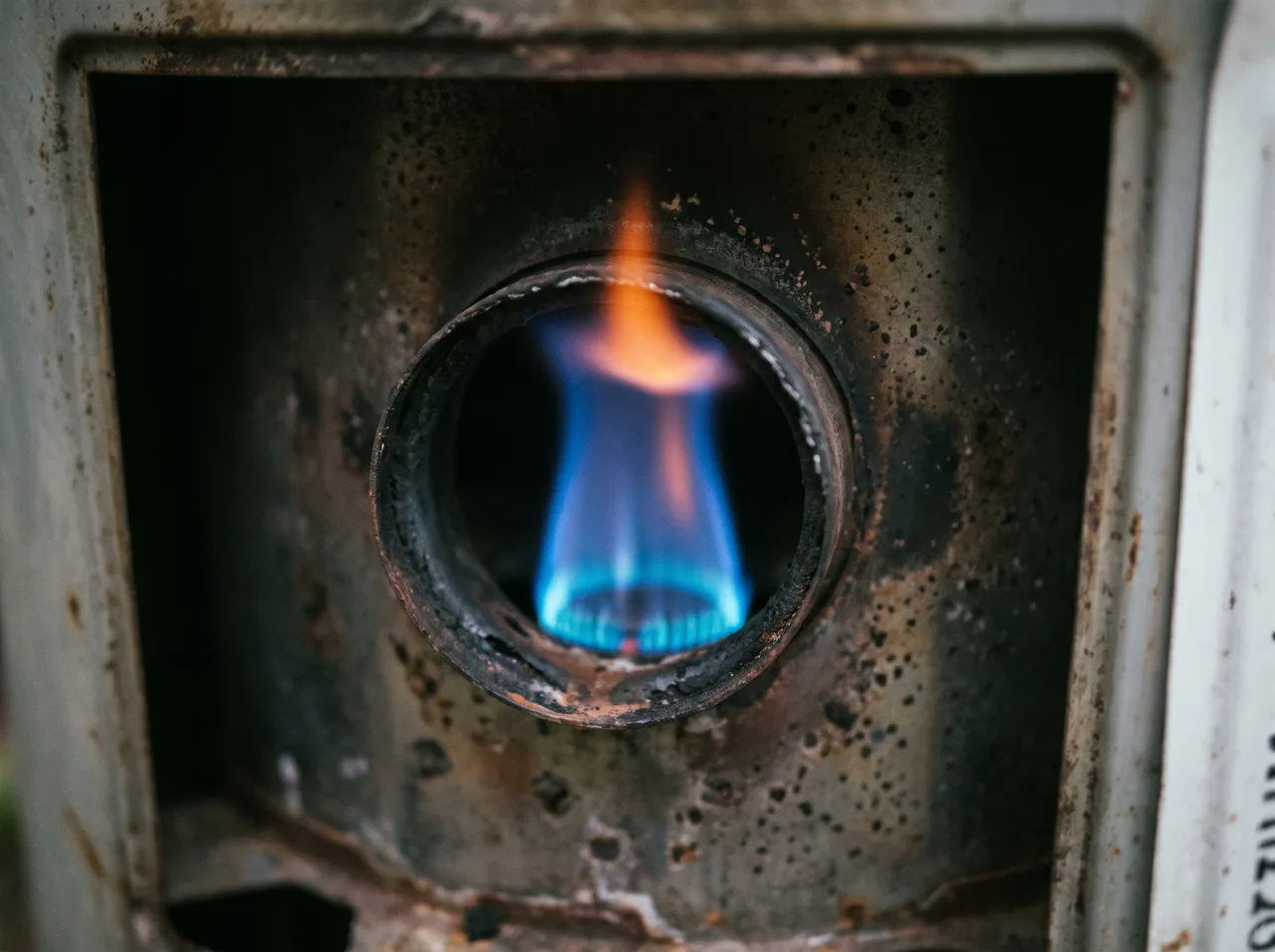
Suburban publishes the numbers that settle the gas versus electric argument, for its porcelain steel tank line:
| Tank size | Gas input | Recovery, gas only | Electric element | Recovery, electric only |
|---|---|---|---|---|
| 4 gallon | 9,000 BTU/h | 7.6 gallons per hour | 1,440 W optional | 6.1 gallons per hour |
| 6 gallon | 12,000 BTU/h | 10.1 gallons per hour | 1,440 W optional | 6.1 gallons per hour |
| 10 gallon | 12,000 BTU/h | 10.1 gallons per hour | 1,440 W optional | 6.1 gallons per hour |
| 12 gallon | 12,000 BTU/h | 10.1 gallons per hour | 1,440 W optional | 6.1 gallons per hour |
| 16 gallon | 12,000 BTU/h | 10.1 gallons per hour | 1,440 W optional | 6.1 gallons per hour |
Read the last two columns together. On the 6 gallon and larger models the gas burner recovers 10.1 gallons per hour and the electric element recovers 6.1, so electric is around 40 percent slower at reheating while doing the same job.
That is the real trade-off, not the fuel cost. Running both at once, on units that allow it, is why a full tank of hot water reappears faster on a hookup than it does anywhere else.
One more piece of vocabulary, since it appears on switch plates. Suburban's product sheet describes Direct Spark Ignition, or DSI, as ignition that "directly lights the main burner, avoiding the need for a pilot". If your rig has DSI there is no pilot light to relight, and anybody telling you to go looking for one is describing an older appliance.
The 1,440 watt question, off grid
This is where an RV water heater collides with the rest of this site. That element draws 1,440 watts on Suburban's published figure, and it draws it continuously while it is heating. Doing the arithmetic on Suburban's own number, an hour of element time is about 1.44 kilowatt hours, which is more energy than many portable power stations hold in total.
So the honest answer to "can I run my water heater off a solar generator" is that you almost certainly can start it, and you almost certainly should not.
Propane does this particular job for a fraction of the stored energy, which is exactly why nearly every rig heats water with gas when it is away from a hookup and saves the battery for things propane cannot do.
If you want to check that reasoning against your own kit rather than take our word for it, our what will it run calculator takes a wattage and tells you how long a given battery lasts, and our solar generator verdicts cover the units themselves.
The same logic in reverse is why a portable power station suits a gas furnace: there, the propane does the heating and the battery only runs a fan.
When it will not light
Suburban publishes a specific sequence, and knowing it prevents the most common false alarm. If the burner does not light, the system "will automatically attempt ignition two more times before going into lock-out". In lock-out, the red reset light on the switch plate stays on.
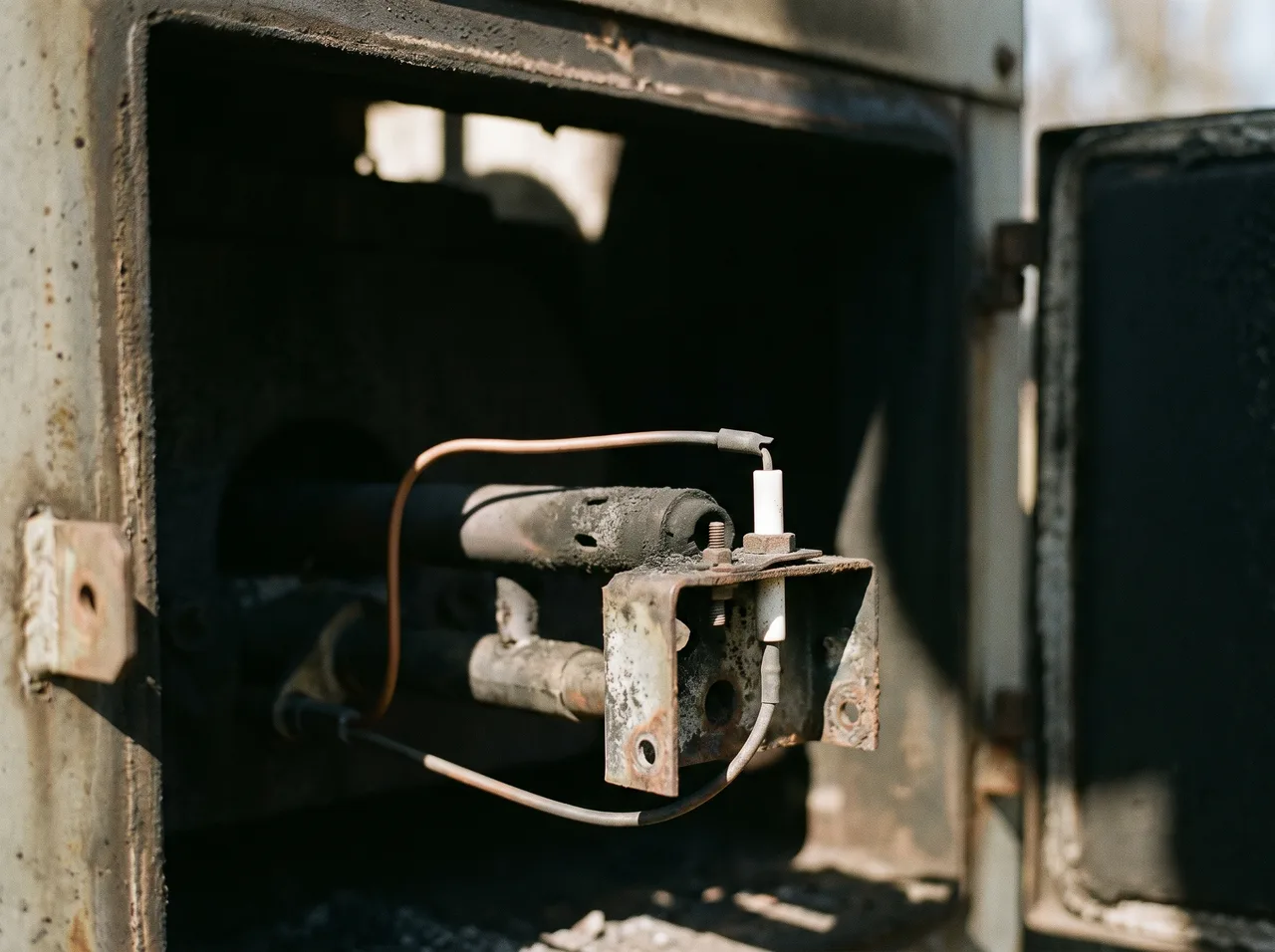
To reset, Suburban says to put the gas rocker switch to OFF, wait five seconds, then return it to ON. Each ignition cycle includes a 15 second purge before the spark cycle.
The false alarm is the first start of the season. Suburban notes that the first start-up "may require several ignition cycles before all the air is purged from the gas lines", so a heater that locks out twice after a winter of sitting is behaving normally, not failing.
After that, the manufacturer itself draws the line, and it is worth quoting because it is not our caution, it is theirs: "If burner fails to light, call a Suburban authorized service center or a local RV service agency." That is the end of the published owner procedure. Everything past it involves a gas valve, a control board or a burner assembly.
Rotten egg water and sediment
Suburban treats the rotten egg smell as a water problem rather than a fault, stating that odor from the hot water system "is not a service problem" and that many water supplies contain enough sulfur to produce it. Its published description is blunt and reassuring at once: the smell is "not harmful - only unpleasant to smell".
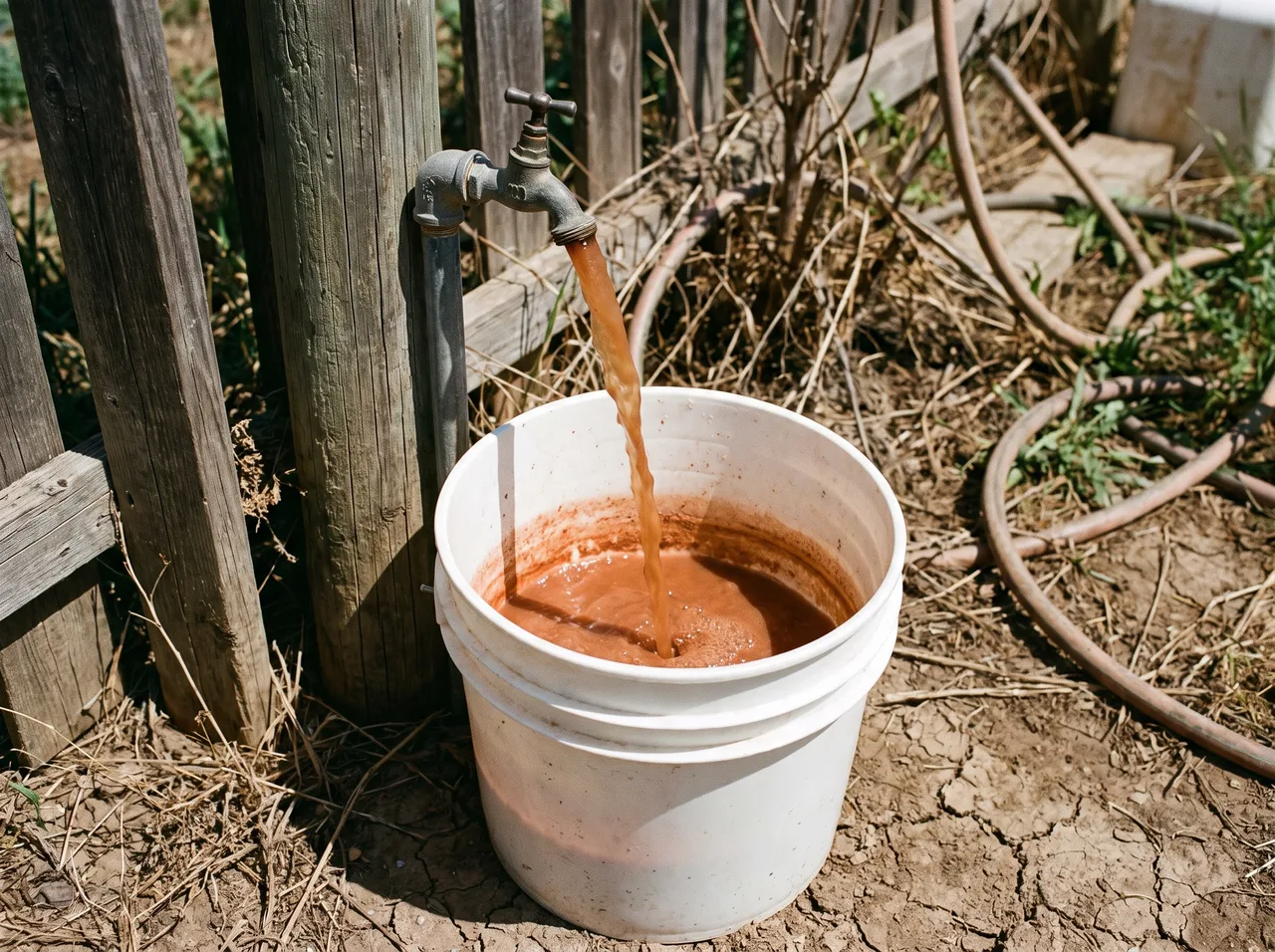
The fix Suburban publishes is chlorination: add about six ounces of household liquid bleach for each 10 gallons in the water tank, run it through the system opening each faucet until you smell chlorine, let it sit, then remove the chlorine by flushing with fresh water, which may take several attempts.
If the smell survives that, Suburban's next step is to replace the anode rod as necessary, which is another reason the rod is worth inspecting on a steel tank.
Jayco publishes a fuller sanitising procedure for the whole fresh water system, and notably has owners set the water heater to bypass throughout it, so sanitiser never enters the tank at all.
Sediment is the quieter version of the same story. Suburban explains that sediment on the bottom of the tank "forms a layer of insulation between the gas burner and the water", which slows heat transfer and overheats the tank bottom, and that "overheating weakens the steel and damages the glass lining, shortening the tank life".
A heater that has become slow to recover is not necessarily broken. It may be insulated from the inside.
Draining, bypass and time spent sitting
Three rules here come straight from the manuals, and each one exists because somebody expensively discovered it.
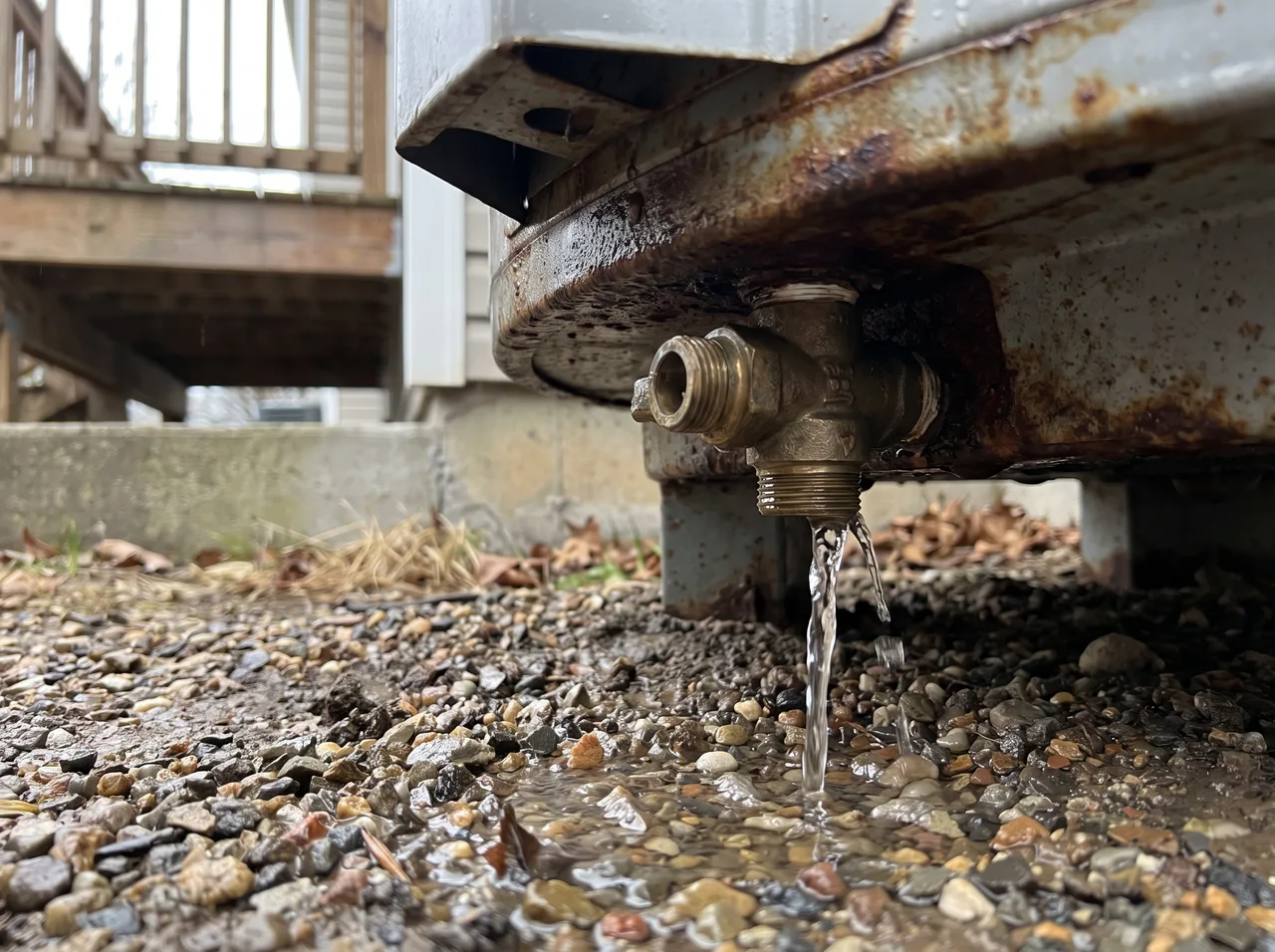
- Never fire it dry. Suburban states it is imperative the tank be filled with water before operating, that running it without water may damage the tank or controls, and that "this type of damage is not covered by the limited warranty".
- Never drain it hot or pressurised. Jayco's instruction is unambiguous: "Do not drain the water heater while it is hot or under pressure!"
- Keep antifreeze out of it. For storage the tank gets drained and bypassed rather than filled with antifreeze, and Jayco adds the sting: "Repairs due to freezing are not covered by warranty."
The full seasonal procedure, including where the bypass valves sit and the drain that has to be closed again before antifreeze will move, lives on our guide to how to winterize a camper, and we are not going to repeat it here.
There is one line in Suburban's guide that is easy to skim past and worth sitting with: "To extend anode life, drain water from tank whenever RV is not being used. Avoid any extended time of non-use with water in tank."
Sitting is not neutral. A rig parked with a full tank is quietly consuming the part that protects it, which is the same pattern as sealants weathering and batteries self-discharging while nothing appears to happen.
That is one of the honest arguments for not letting a rig sit for most of the year. Our guide to how to rent out your RV covers what putting the idle months to work actually involves, including the case against it, and if you are on the other side of that trade the RV rental cost guide is the place to start.
See what an idle RV could earn
We earn a commission if you list through that link, which never changes what we write. Our affiliate disclosure sets out the arrangement.
Where this guide stops
We do not publish repair instructions for propane appliances or 120 volt circuits, and we are not going to start with this one. The reason is not legal caution, it is that the failure modes are the kind where being nearly right is worse than doing nothing.
Two stop signs come from the manufacturer rather than from us. Suburban says that if the burner fails to light after the published reset, call an authorized service center or a local RV service agency.
And on soot, its instruction has no diagnostic step at all: if soot is present anywhere on the water heater, immediately shut the unit down and contact your dealer or a qualified service person, because soot is a sign of incomplete combustion and must be corrected before operating the heater. That is the whole procedure, and it is the right one.
What is genuinely yours on a steel tank is inspection and the anode. What is yours on an aluminum tank is inspection and leaving the anode port alone. If you are weighing up a rig where none of this was ever done, our guide to buying a used camper covers how to read a maintenance history you were not present for. More of these are in our guides section.
Common questions
How often should I replace the anode rod in my RV water heater?
Only if you have a steel tank, and Suburban recommends yearly for its own units.
Suburban states that the tank is protected by a magnesium or aluminum anode, that under normal use the rod will deteriorate, and that it therefore recommends the rod be replaced yearly. It gives a condition-based trigger too: replacement is recommended when consumption or weight loss is greater than 75 percent.
If your heater is a Dometic or Atwood unit, the answer is never, because those tanks do not take an anode rod at all.
Does my RV water heater have an anode rod?
It depends entirely on the tank material, which is why generic advice is dangerous here. Suburban uses a porcelain lined steel tank and every Suburban water heater is equipped with a replaceable anode rod that doubles as the drain.
Dometic states the opposite for its own brands: Dometic water heater tanks are constructed of a high strength aluminum, and Dometic and Atwood brand water heaters do not use anode rods. Check the brand on the door before buying any part.
Why does my RV water heater smell like rotten eggs?
Suburban addresses this directly and says odor from the hot water system is not a service problem, because many water supplies contain enough sulfur to produce an odor that smells like rotten eggs. It is described as unpleasant rather than harmful.
Suburban’s published fix is chlorination, adding about six ounces of household liquid bleach for each 10 gallons in the water tank, running it through the system until you smell chlorine, then flushing thoroughly with fresh water afterwards. If the smell persists after flushing, Suburban says to replace the anode rod as necessary.
Should I run my RV water heater on gas or electric?
Gas is faster and electric is quieter, and off grid it is not really a contest.
On Suburban’s published figures for its porcelain steel tank line, the gas burner recovers 10.1 gallons per hour on the 6, 10, 12 and 16 gallon models, while the optional 1,440 watt electric element recovers 6.1 gallons per hour.
So electric is slower and, at 1,440 watts, it is also one of the largest continuous loads in the rig. On shore power that does not matter. On batteries it matters enormously.
What do I do if my RV water heater will not light?
Try the published reset once, then stop.
Suburban’s sequence is that if the burner does not light the system automatically attempts ignition two more times before going into lock-out, and you reset it by switching the gas rocker to OFF, waiting five seconds and returning it to ON. It also notes that a first start-up may need several ignition cycles to purge air from the gas lines.
After that, Suburban’s own instruction is to call a Suburban authorized service center or a local RV service agency, and that is where this guide stops too.