Class B RV: the letter is a build spec, not a size
We may earn a commission if you buy or book through the links on this page. How we make money
Short answer: a class b rv is a motorhome built entirely inside a factory van body, which is why it is also called a camper van. The letter describes how it was made, not how big it is.
Thor Motor Coach publishes its Class B Sequence 20L at 20 feet 11 inches and its Class C Quantum LC19 at 20 feet 5 inches: the Class C is six inches shorter and still rated 2,150 pounds heavier.
What you actually give up in a class b motorhome is not floor length, it is tank balance and electrical headroom, and both are printed on the spec sheet before you ever walk into a dealership.
Every figure below comes from Thor Motor Coach's own published floorplan specifications and lineup pages, plus the RV Industry Association's own definition, all read on August 9, 2026 and named in the text. Where a number is our arithmetic on their published figures rather than something they printed, the page says so in that sentence. Method: how we evaluate.
Nobody official defines the size
Start with the thing every buying guide skips. The industry's own trade body does not publish a length for any motorhome class.
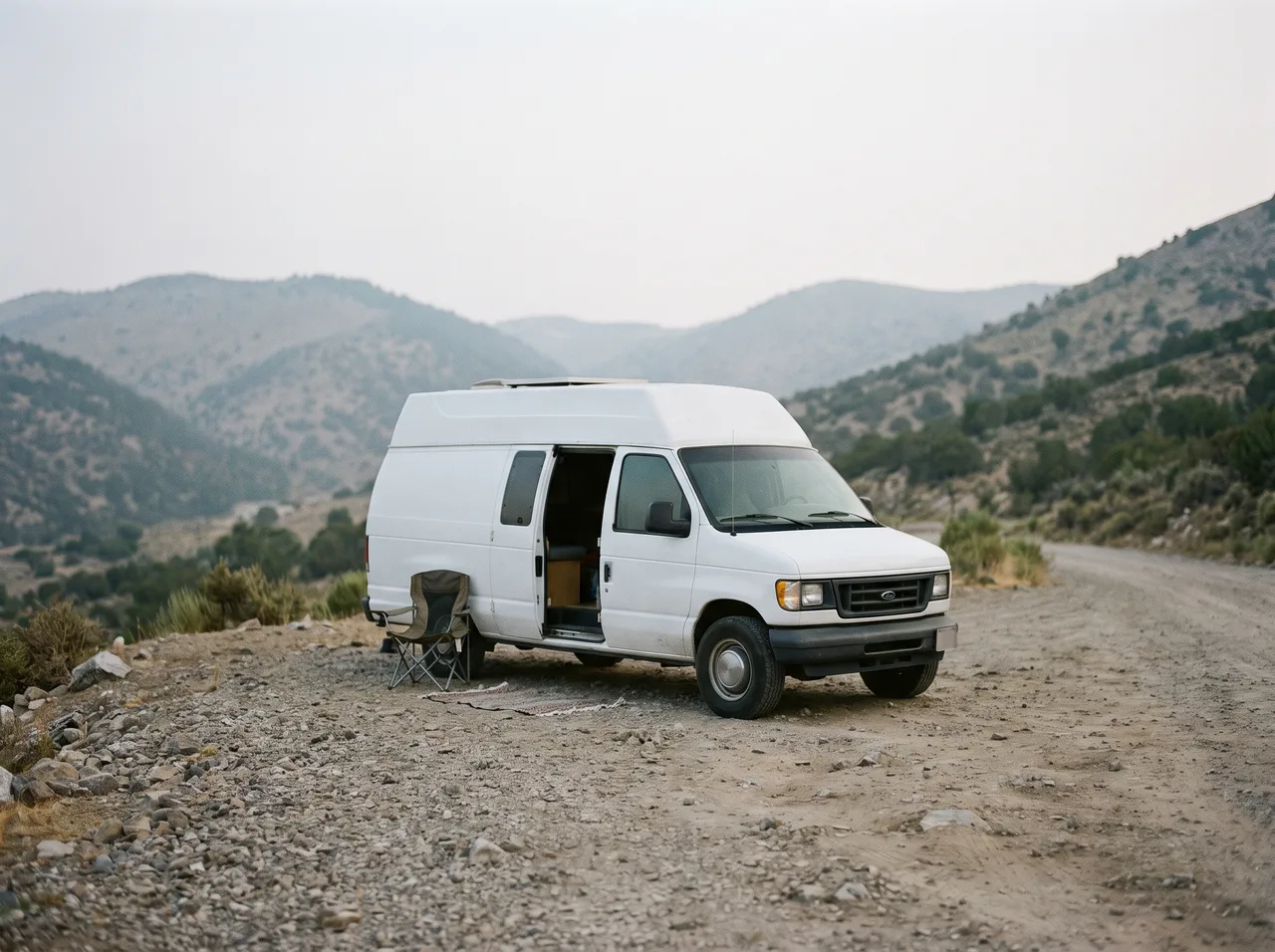
The RV Industry Association defines a motorhome as "a recreation vehicle unit built on a self-propelled motor vehicle chassis" and names the three product types as Type A, Type B and Type C.
On the page where it does that, it publishes no individual definition for any of the three, and no dimension for any of them. So when an article tells you a class b rv is 17 to 25 feet, that range is a description of what happens to be on sale, not a rule anybody enforces.
The definition that does exist and does bite comes from the manufacturers, and it is about construction. Thor Motor Coach states it plainly: "A traditional Class B contains all of the motorhome's features within the van body, without any other walls, floors, or roofs added in the manufacturing process."
A Class C, by their same wording, has "a distinctive cab-over design, built with a cut-away chassis and an attached cab section."
Read those two sentences next to each other and the whole classification falls out. A class b motorhome is a finished van that was converted. A Class C is a cab with a house built onto it. Everything else, the length, the weight, the tank sizes, follows from that one decision.
The alphabet is not a size ladder
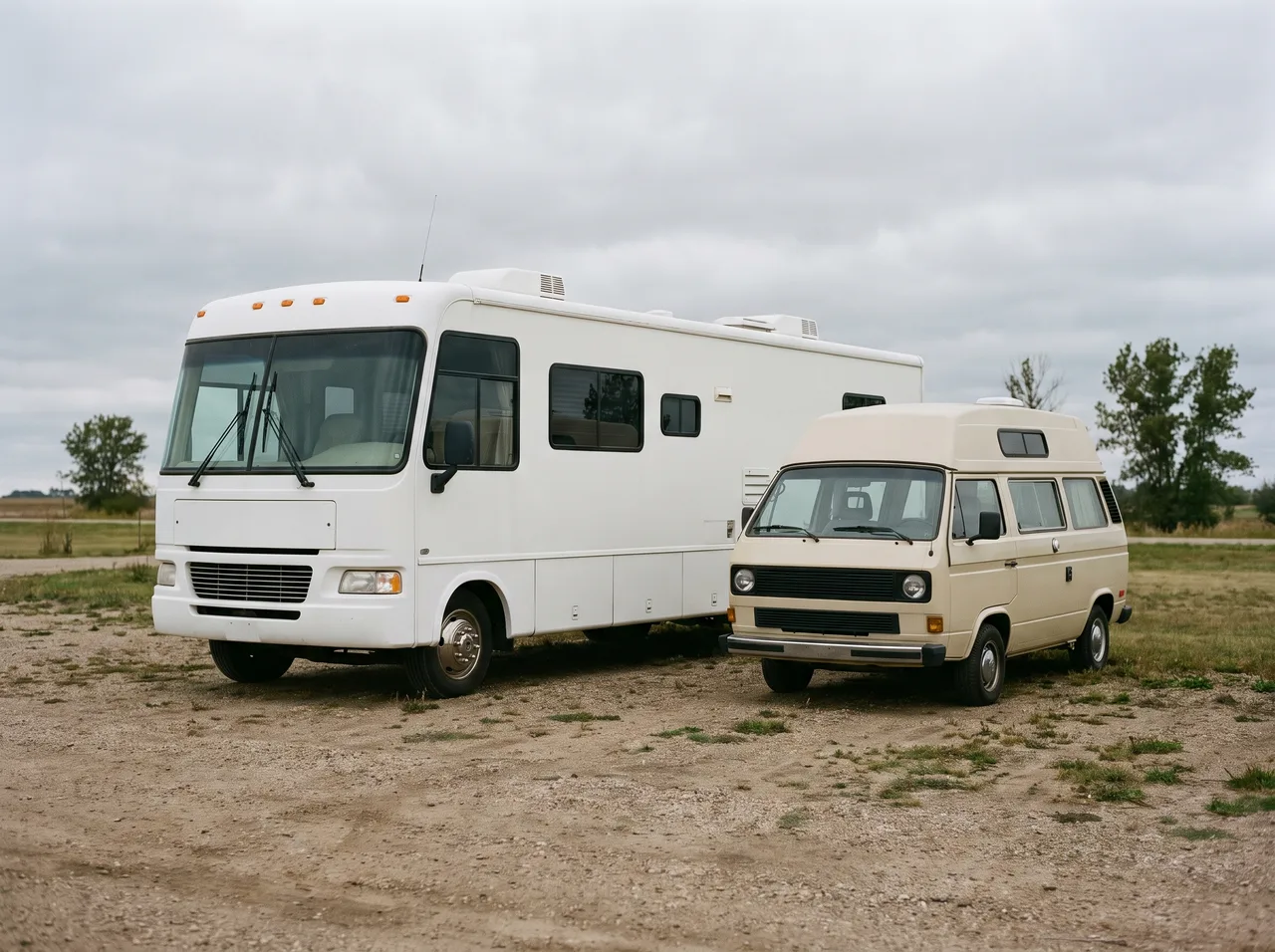
Because the letters are usually presented as small, medium and large, most people assume a Class C is simply a bigger Class B. One manufacturer's own catalogue disproves it.
| Published spec | Sequence 20L (Class B) | Quantum LC19 (Class C) |
|---|---|---|
| Overall length | 20 ft 11 in | 20 ft 5 in |
| Exterior height | 9 ft 6 in | 10 ft 8 in |
| Exterior width | 6 ft 9 in | 7 ft 10 in |
| GVWR | 9,350 lb | 11,500 lb |
| Fresh water | 27 gal | 20.5 gal |
| Gray water | 13 gal | 17 gal |
| Black water | 13.5 gal | 16 gal |
| Fuel | 24 gal | 40 gal |
| Sleeping capacity | 2 | 3 |
| Chassis | Ram ProMaster 3500 XT window van | Ford E-Series, 7.3L V8 |
The Class C is the shorter vehicle. It is six inches shorter and carries 2,150 pounds more GVWR, sleeps one more person and holds two thirds more fuel. Those two subtractions are our arithmetic on Thor's published figures, nothing more.
What the class b rv wins is the other two dimensions, and they are the ones that decide where you can actually take it. It is 14 inches lower and 13 inches narrower, again our arithmetic on their numbers.
Height is what stops you at a parking structure, a drive through canopy or a low forest service road, and width is what makes a standard parking bay workable. Length is the number everyone quotes and the least useful of the three.
The tank pair is unbalanced on purpose
Here is the number that decides how long you can stay out, and it is not the one printed on the brochure.
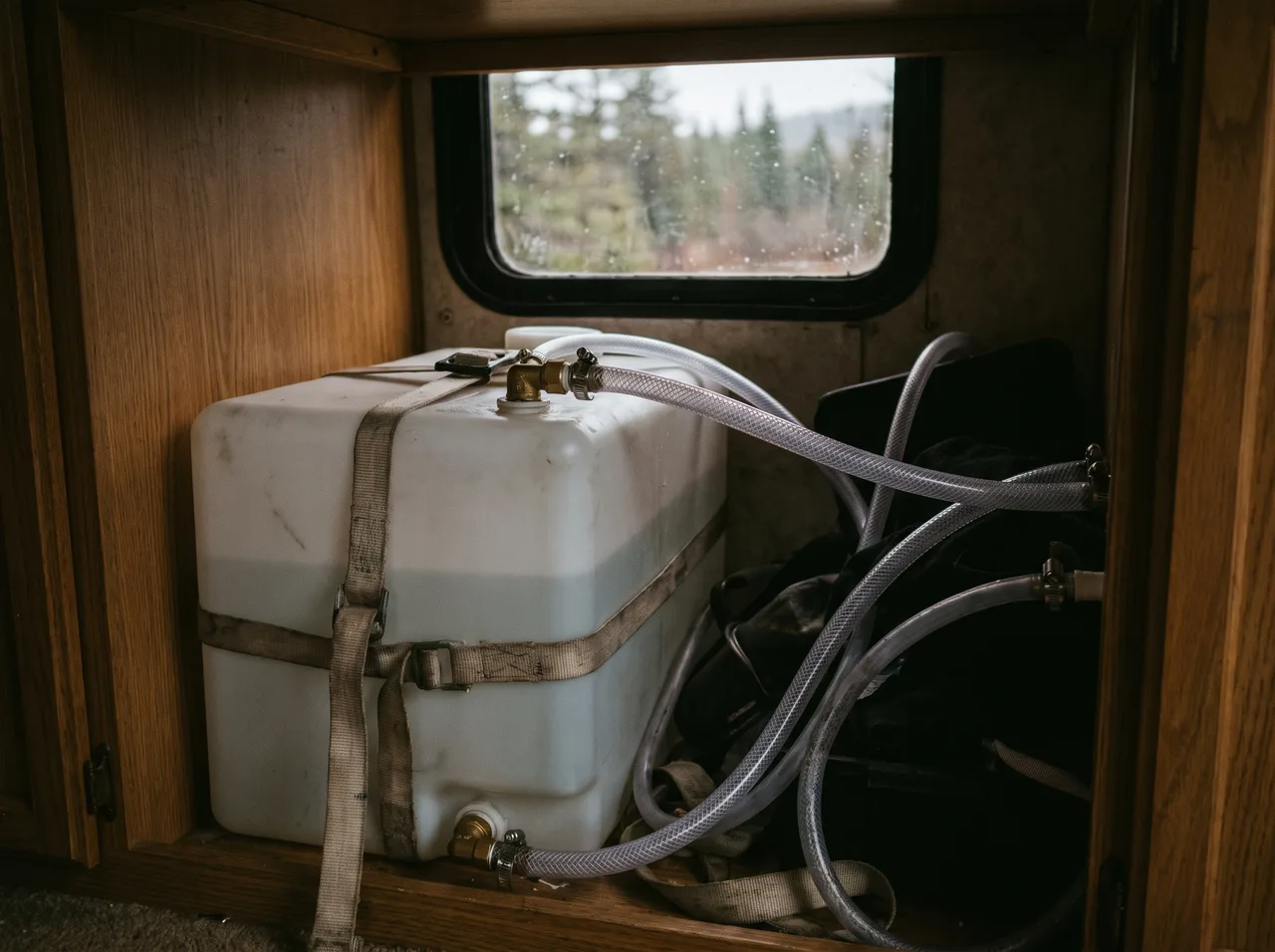
Thor rates the Sequence 20L at 27 gallons fresh and 13 gallons gray. Water you use for dishes, hand washing and showering does not disappear, it moves into the gray tank.
So on their own figures the gray tank fills at roughly half the fresh supply, and unless you are catching water in a basin and carrying it out, the smaller tank ends the trip with 14 of your 27 gallons still on board. That subtraction is ours, the two capacities are theirs.
The Class C in the same catalogue is built the other way around. The Quantum LC19 carries 20.5 gallons fresh against 17 gray, close to balanced. It holds less water and can use more of it.
This is why a spec sheet comparison that only reads the fresh capacity gets the answer backwards. When you are working out how long a rig can sit on public land without hookups, the honest number is the smaller of the two tanks. That is the arithmetic our boondocking guide is built on, and it is the single most useful thing to check before signing anything.
The electrical ceiling, in their numbers
The same spec sheet publishes the whole electrical package, and it is worth reading closely because two of the numbers argue with each other.
Thor lists the Sequence 20L with two 100 Ah Group 31 AGM batteries, a 200 watt solar charging system with a 10 amp solar charge controller (190 watts if you take the Sky Bunk option) and a 1,000 watt pure sine inverter. Three consequences follow, and all three are our arithmetic on their published figures.
-
The bank is about 2.4 kWh nominal. Two 100 Ah batteries at a nominal 12 volts is 200 amp hours, which is roughly 2,400 watt hours. Usable capacity is a fraction of that, and the fraction is a choice rather than a constant.
Victron publishes a cycle table for one of its own AGM lines showing at least 1,000 cycles at 40 percent depth of discharge against at least 300 at 100 percent, which we walk through on what is an AGM battery.
Those counts belong to that battery and are not transferable to Thor's Group 31 units, but the shape of the trade is: the deeper you go, the fewer times you get to go there. Your own battery's datasheet has your version of that table.
- The controller, not the panel, sets the harvest ceiling. A 10 amp charge controller delivering into a battery at roughly 12 to 14.4 volts passes somewhere around 120 to 145 watts. The array above it is rated 200. On a bright day with the panels square to the sun, the bottleneck is the controller.
- The inverter cannot run some standard RV loads at all. A 1,000 watt inverter is below the 1,440 watt electric element Suburban publishes for its water heaters, the figure we work through on the RV water heater page. This is not a defect, it is a design decision, but it means the shore power version of a job and the off-grid version are different jobs.
None of this makes a class b motorhome a poor off-grid vehicle. It makes it a vehicle with a published budget. If your plan involves more than that budget allows, the usual answer is to add capacity you can carry in and out rather than rewire the van, which is the case our solar generator guide works through in watt hours rather than adjectives.
Three donor vans, three different vehicles
Because a Class B is a converted van, the van underneath it is most of what you are buying. Thor builds its current Class B lineup on three:

- Ram ProMaster, under the Rize, Scope, Tellaro and Sequence.
- Ford Transit with all-wheel drive, under the Talavera and Palladium.
- Mercedes-Benz Sprinter with all-wheel drive, under the Sanctuary and Tranquility.
Two of those three lines are offered with all-wheel drive and one is not, which is a real difference on a wet forest service road and a difference nobody mentions when quoting a length range.
Service is the other one worth thinking about before purchase rather than after: the chassis goes to the chassis maker's dealer network, the house goes to the RV dealer, and those are rarely the same building.
Note also that two Thor Class B models on the same ProMaster chassis, the Sequence 20L and the Tellaro 20L, publish an identical specification set: same 20 feet 11 inches, same 9,350 pound GVWR, same 27 and 13 gallon tanks, same battery, solar and inverter package. On the numbers that decide how you can camp, they are the same vehicle with different trim.
Where the B+ came from
If the letter is a construction spec, the B+ is what happens when a builder wants Class C volume without the cabover.
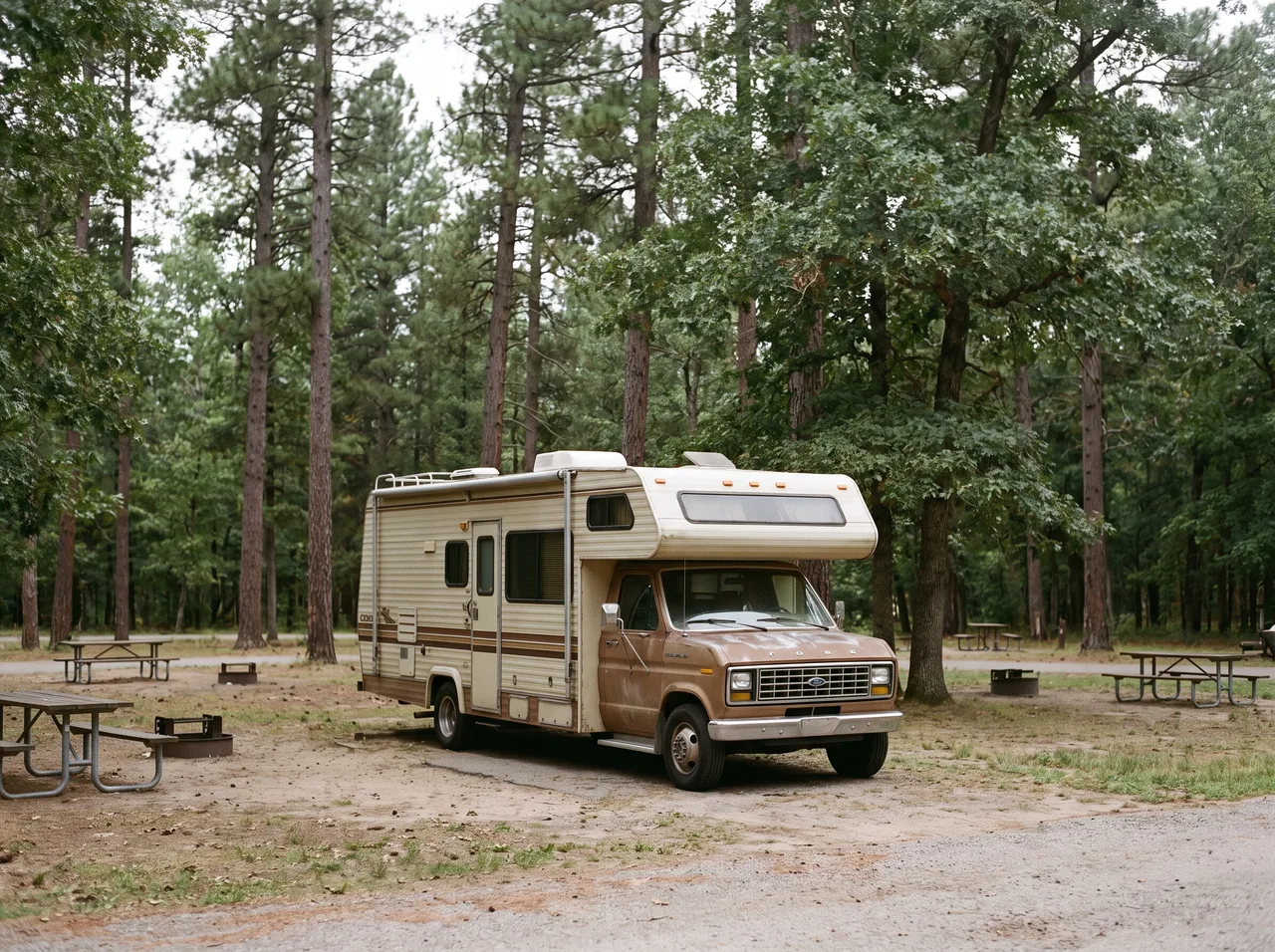
Thor describes a Class B+ as having "an attached cab, or a 'cut-away' or cab chassis, which includes the same cockpit set-up as a B Van, but the RV manufacturer adds a body to increase living space", and puts them at 23 to 25 feet against 16 to 21 feet for a traditional Class B.
Read against their Class B definition, a B+ is not a bigger Class B at all. The moment a manufacturer adds its own walls, floor or roof, the vehicle has left the Class B definition by construction.
That is a useful thing to know while shopping, because a B+ listing sitting in a Class B search result is a differently built vehicle with different service, different height and a different weight rating.
Who the shape genuinely suits
The published numbers point at a fairly narrow and fairly happy use case, and they also point at who should keep looking.
Both Class B floorplans above sleep two. Not two comfortably and a child at a pinch, two. The Class C beside them sleeps three in six inches less length, because the cabover exists precisely to add berths without adding wheelbase. If you need a third bed, the class b rv format is fighting you rather than the specific model.
What it buys in exchange is genuine: a vehicle 14 inches lower and 13 inches narrower than the Class C, on a chassis any van dealer recognises, that fits a normal parking bay and does not announce itself when parked overnight.
The cheapest way to test that trade before committing is a week in a rental. Our Cruise America review puts five fleet models side by side with their published bed sizes and tank capacities, which is the same comparison this page makes, on vehicles you can book rather than buy.
Whether that last part is legal where you stop is a separate question with a separate answer, and we cover the one place people always ask about in can you park overnight at Walmart.
The one thing no spec sheet can tell you is whether two people can live around each other inside six feet nine inches of width for a week. That is not knowable from a table, and it is the single most expensive thing to be wrong about.
Renting the format before buying it is the cheapest test available, and our RV rental cost guide sets out what a week actually runs.
See camper vans available to rent near youWhere this guide stops
Some things this page deliberately does not tell you, because we could not verify them to a primary source on August 9, 2026.
- No prices. Manufacturer list figures were visible but we could not confirm what they include, so none are printed here. A dealer quote is the only price worth acting on.
- No licence rules. The threshold your GVWR is measured against is set by your state. Read the plate on your own door jamb, then check your own state authority. A 9,350 pound Class B and an 11,500 pound Class C can land on opposite sides of the same rule.
- No fuel economy figures. Camper van mpg claims are everywhere and manufacturer published figures for these builds are not, so we leave the number out rather than repeat a range we did not read.
- One manufacturer. The comparison above is deliberately drawn from a single maker's own catalogue, because that is what makes it a fair comparison. Another builder's Class B will publish different tanks and a different power package. The method transfers, the numbers do not.
If you are moving from renting to owning, the checks that matter next are in buying a used camper, which is built on the maintenance schedule manufacturers publish rather than the model year.
Common questions
What is a class b rv?
A class b rv is a motorhome built entirely inside a factory van body. Thor Motor Coach draws the line by construction rather than size: a traditional Class B contains all of the motorhome features within the van body, without any other walls, floors, or roofs added in the manufacturing process.
That is why it is also called a camper van. The RV Industry Association defines a motorhome as a recreation vehicle unit built on a self-propelled motor vehicle chassis, and names the types A, B and C without publishing a size for any of them.
Is a class b motorhome the same as a camper van?
In everyday use, yes. A class b motorhome and a camper van describe the same vehicle, a van whose living space was built inside the original body shell.
The common donor chassis are the Ram ProMaster, the Ford Transit and the Mercedes-Benz Sprinter. Thor builds its Rize, Scope, Tellaro and Sequence on ProMaster, the Talavera and Palladium on all-wheel-drive Transit, and the Sanctuary and Tranquility on all-wheel-drive Sprinter.
Is a Class B always smaller than a Class C?
No, and one manufacturer disproves it in its own catalogue. Thor publishes its Class B Sequence 20L at 20 feet 11 inches long and its Class C Quantum LC19 at 20 feet 5 inches.
The Class C is six inches shorter and still rated 11,500 pounds against the Class B at 9,350. The letter tells you how the vehicle was built, not how long it is.
What the Class B does win on both other axes is height and width, 9 feet 6 inches by 6 feet 9 inches against 10 feet 8 inches by 7 feet 10 inches.
How long can you boondock in a class b rv?
The gray tank usually decides, not the fresh tank. Thor rates the Sequence 20L at 27 gallons fresh but only 13 gallons gray, so roughly half the water you carry has nowhere to go once you have used it for dishes or a shower.
Their Class C in the same catalogue is close to balanced at 20.5 fresh and 17 gray. Plan around the smaller of the two numbers on your own spec sheet, and treat the fresh capacity as the headline rather than the constraint.
Do I need a special license to drive a class b motorhome?
The number that decides it is the GVWR on your own door jamb, and the threshold that number is measured against is set by your state, not by the manufacturer.
Thor publishes 9,350 pounds for the Sequence 20L and 11,500 pounds for its Class C Quantum LC19, so two similar-length motorhomes can sit on opposite sides of a state line rule.
Read your GVWR plate first, then check your own state licensing authority. We do not publish a state by state table because we have not verified one.