Buying a used camper: you are paying for a maintenance history
We may earn a commission if you buy or book through the links on this page. How we make money
Short answer: when buying a used camper, the condition that decides whether you got a bargain is not the mileage or the model year. It is whether a stranger did two jobs on schedule.
Jayco's own manual tells owners to inspect all sealants a minimum of every six months and to reseal at least one time each year, and says water damage from failing to do it is not covered by its warranty.
Nobody can show you a receipt for a job that was skipped, so you look for the evidence instead.
Three checks cost nothing and can be done before any money moves: date the tires from the sidewall, run the VIN through NHTSA's free recall lookup, and walk the sealants on the roof and all four sides.
Everything below comes from Jayco's published owner's manual and NHTSA's own pages, read on August 6, 2026, and named in the text. Where we are giving you our own judgement rather than a sourced fact, we say so. Method: how we evaluate.
What you are actually buying
A used camper is not a used car with a bed in it. A car is engineered to be weathertight for its whole life by the factory. A camper is engineered to be kept weathertight by its owner, on a schedule, forever. That single difference is why two identical rigs of the same year can be worth wildly different money, and why the interior tells you so little.
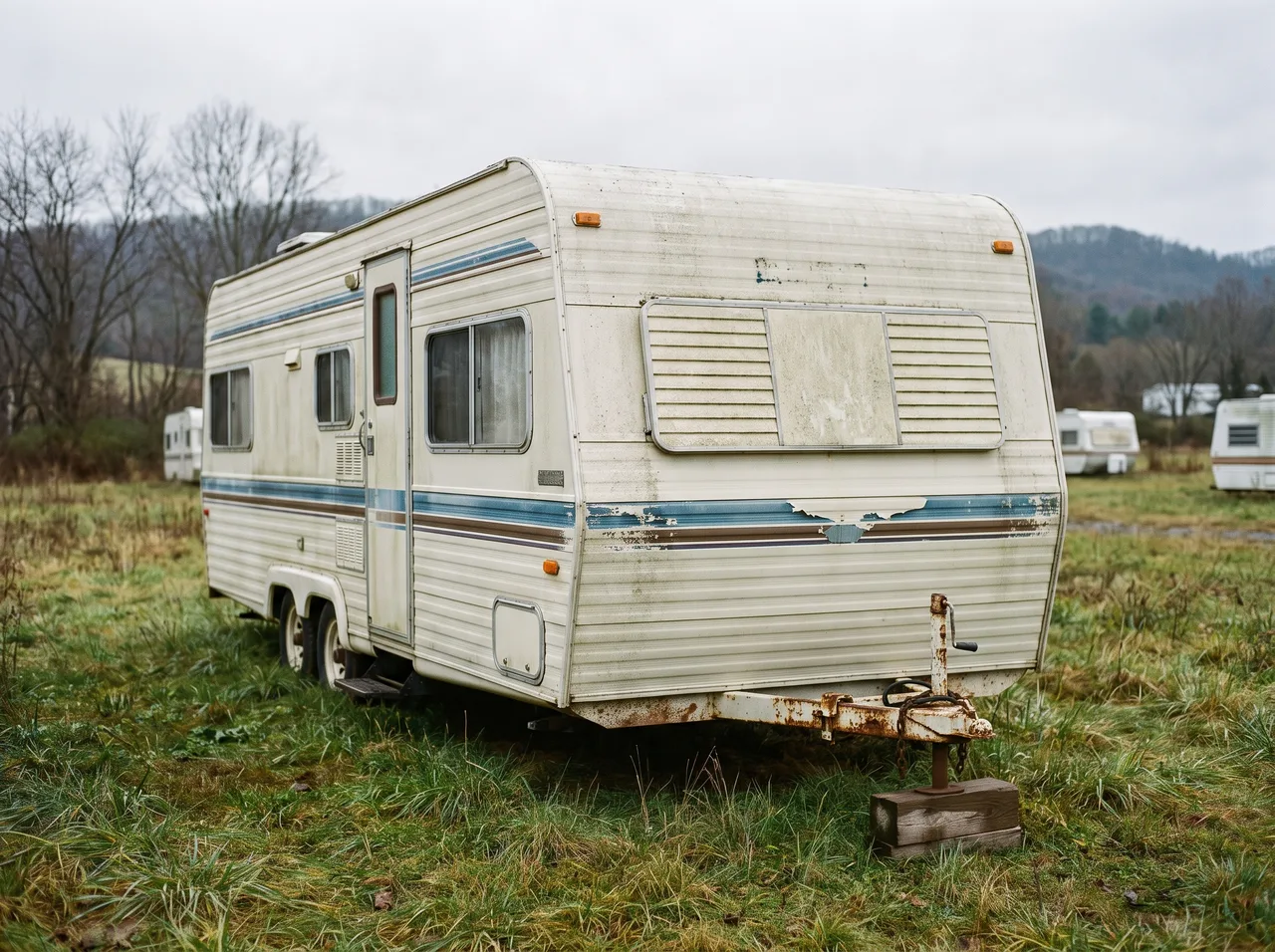
So the question to answer is not "what condition is it in today", which any seller can stage for an afternoon. It is "what was done to it twice a year, every year, by someone who is now trying to sell it to me".
The useful part is that the manufacturer publishes that schedule, which means you can check the work against the maker's own standard rather than against a hunch.
The sealant check, in the maker's own words
Jayco's 2022 Jay Flight owner's manual devotes a section to sealants, and it is the most useful page in the book for a used buyer.
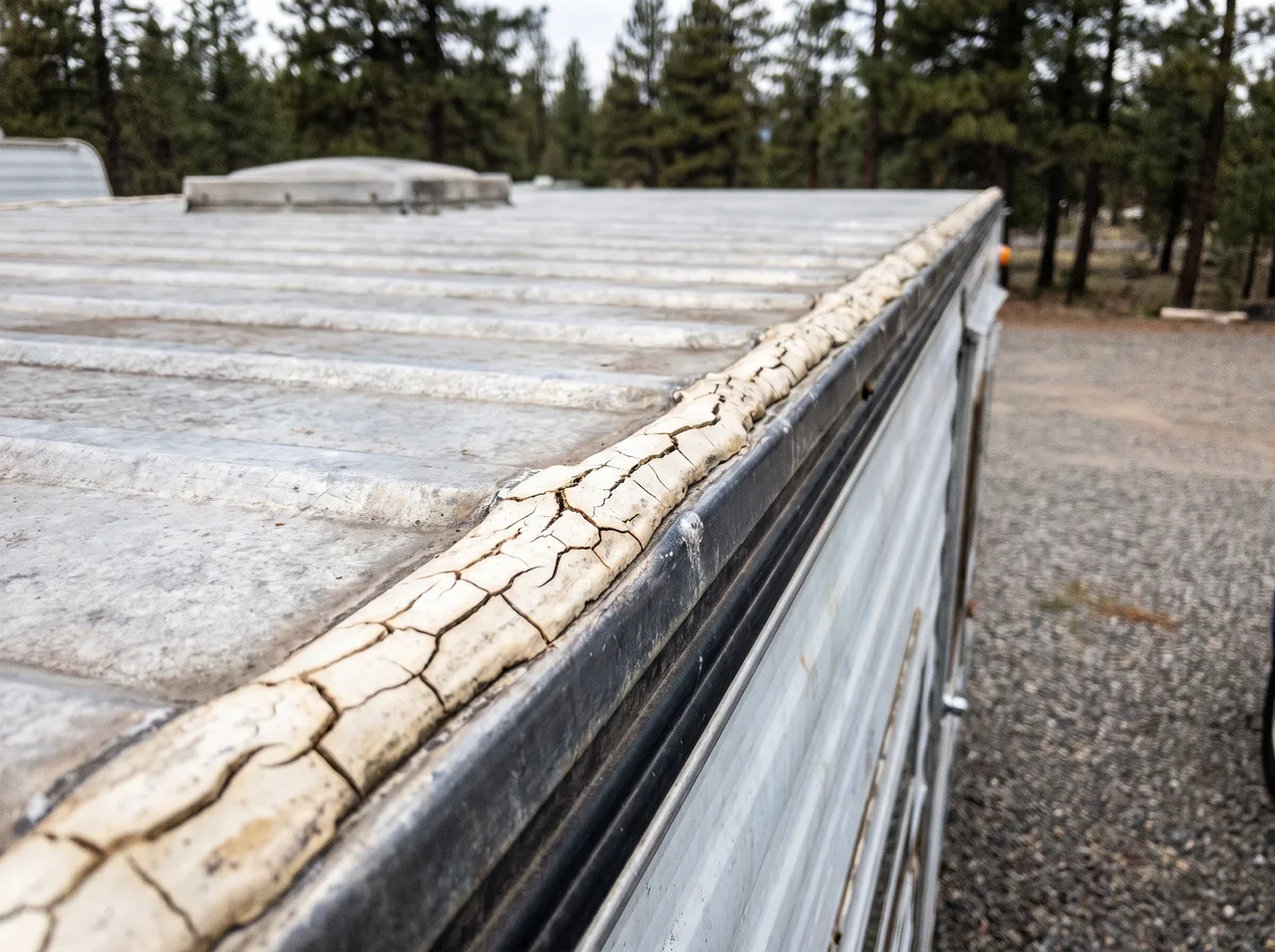
It opens by removing the excuse people reach for: "In general, sealants do not have 'set' lifetimes. Varying environmental factors affect the pliability and adhesiveness of sealants."
There is no mileage figure to hide behind. Then it gives the owner a duty, in the manual's own words, "You or your dealer must":
- "Inspect all sealants, a minimum of every six months." The manual is specific about where: the roof and all four sides of the recreation vehicle, including all mouldings, doors, vents and exterior attachments. Not just the roof.
- Replace sealant at any sign of failure. Jayco lists what counts: cracks, peeling, voids, gaps, breaks, looseness or any sign of physical deterioration.
- "Reseal at least one time each year as preventative maintenance." That is resealing on a calendar, not resealing when a leak appears.
- Match the sealant type. The manual says always use the same type of sealant that was removed, and lists several in use on one rig including butyl and putty, black butyl-encapsulated foam, silicone, roof sealant and foam.
Then it states the consequence without softening it: "Failure to properly maintain or reseal your recreation vehicle may result in serious water damage to the roof and other parts of the recreation vehicle. This damage is not covered by the Towable Limited Warranty."
It adds that if you notice water inside, you should immediately have the dealer find the source, because failing to correct a leak may cause serious damage that may not be warrantable.
Two honest caveats. These are Jayco's figures from one 2022 towable manual, and other manufacturers publish their own intervals, so the rig in front of you may have a different number in its book. And a mismatched blob of the wrong sealant is not automatically a disaster, it is a signal about who was doing the work. Read it as evidence, not as a verdict.
One practical note from the same manual: on these rigs the roof has decking under the membrane specifically so it can be walked on, which the manual permits "(with caution)", and the roof ladder carries a maximum of 300 pounds including whatever you are holding. If the seller refuses any look at the roof at all, you have learned something without climbing anything.
The tires are older than the tread suggests
This is the check most used buyers skip, and NHTSA has already written the warning for exactly this vehicle.
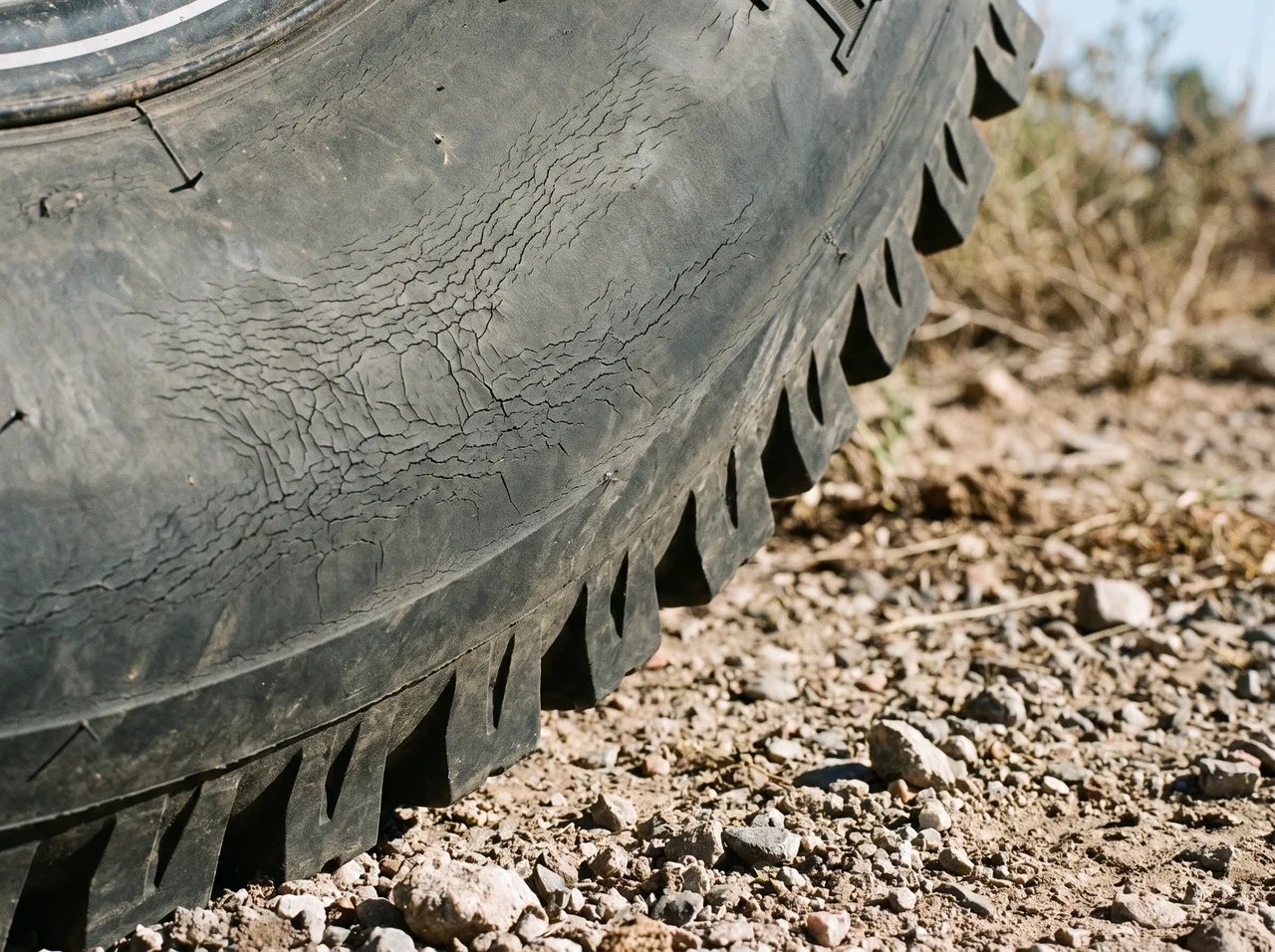
In its tire aging guidance it says most drivers wear their treads out and replace tires before aging becomes an issue, then names who does not: owners who "own or use recreational vehicles, 15-passenger vans, collector cars, any other vehicles you don't drive regularly", or anyone whose annual mileage is low.
A camper is the textbook case. It sits for months, then does a long hot highway run fully loaded.
The line worth memorising is this one: "You cannot detect tire aging simply by looking at your tires." Deep tread on a used camper is not reassurance. It can simply mean the rubber got old before it got worn, which is the failure mode that strands people.
So date them instead of judging them. NHTSA says the last four digits of the DOT Tire Identification Number on the sidewall give the week and year the tire was made, and gives the example that a TIN reading 0308 means the third week of 2008.
It also adds a detail that catches people out: "Look on both sides of the tire. The TIN may not be on both sides."
On the age question itself NHTSA reports that "Some vehicle and tire manufacturers recommend replacing tires that are six to 10 years old, regardless of treadwear", and directs owners to their own vehicle manufacturer's replacement timeframe.
Note it is a range from manufacturers rather than a federal rule, and we are not going to sharpen it into one.
Check the spare while you are down there. NHTSA points out that spares are prone to aging because they seldom get replaced, and says a full-size spare should not be used as a replacement for worn tires except in emergencies.
On pressure, the number you want is the vehicle's, not the tire's: NHTSA is explicit that the correct pressure is what the vehicle manufacturer has listed, not what is listed on the tire itself, and that a cold reading means the vehicle has not been driven for at least three hours.
Our own view, clearly labelled as ours: budget for a full set on any rig whose tires date past that six year mark, and treat the seller's "they have loads of tread" as the non-answer it is.
The free VIN check, and its published limits
NHTSA runs a free recall lookup by VIN or licence plate, and campers are genuinely in it.
To be sure of that rather than assume it, we pulled a real campaign from NHTSA's own recall data: 21V425000, filed by Jayco, listed under the component "EQUIPMENT:RECREATIONAL VEHICLE/TRAILER:LPG SYSTEMS", covering a list of 2017 to 2021 travel trailers and fifth wheels built with a particular two-stage propane regulator.
Recreational vehicles, propane systems, real campaign numbers.
A clean result reads "0 unrepaired recalls associated with this VIN". Before you treat that as a clean bill of health, read what NHTSA says the search will not show:
| NHTSA's stated limit | Why it bites a used camper buyer |
|---|---|
| Recalls that were already repaired are not shown | You cannot tell "never had a recall" from "had one and it was fixed", so ask for the paperwork |
| Some recently announced recalls, because not all VINs are identified yet and are added continuously | The newest campaign is the one least likely to appear, so NHTSA advises checking regularly rather than once |
| Safety recalls more than 15 years old, except where a manufacturer offers more coverage | Plenty of used campers on sale are older than 15 years, so the tool simply goes quiet on them |
| Recalls conducted by small vehicle manufacturers and specialty applications | A meaningful part of the RV world is small-volume builders, which is exactly where this gap sits |
There is one more wrinkle that belongs to used buyers specifically. NHTSA describes the notification path as manufacturers notifying registered owners by first class mail within 60 days of a recall decision.
A letter about a rig you now own went to somebody else, at an address you have never seen, possibly years ago. Nobody forwards it. That is the strongest argument for running the VIN yourself on the day you look, and again after you buy.
The upside is that the remedy costs nothing: NHTSA's guidance to owners is to contact a local dealership to fix the recalled part for free.
The walk-round, in order
The order below is ours, not a manufacturer's procedure, and it is arranged to spend your free checks before you get emotionally attached to a floorplan.
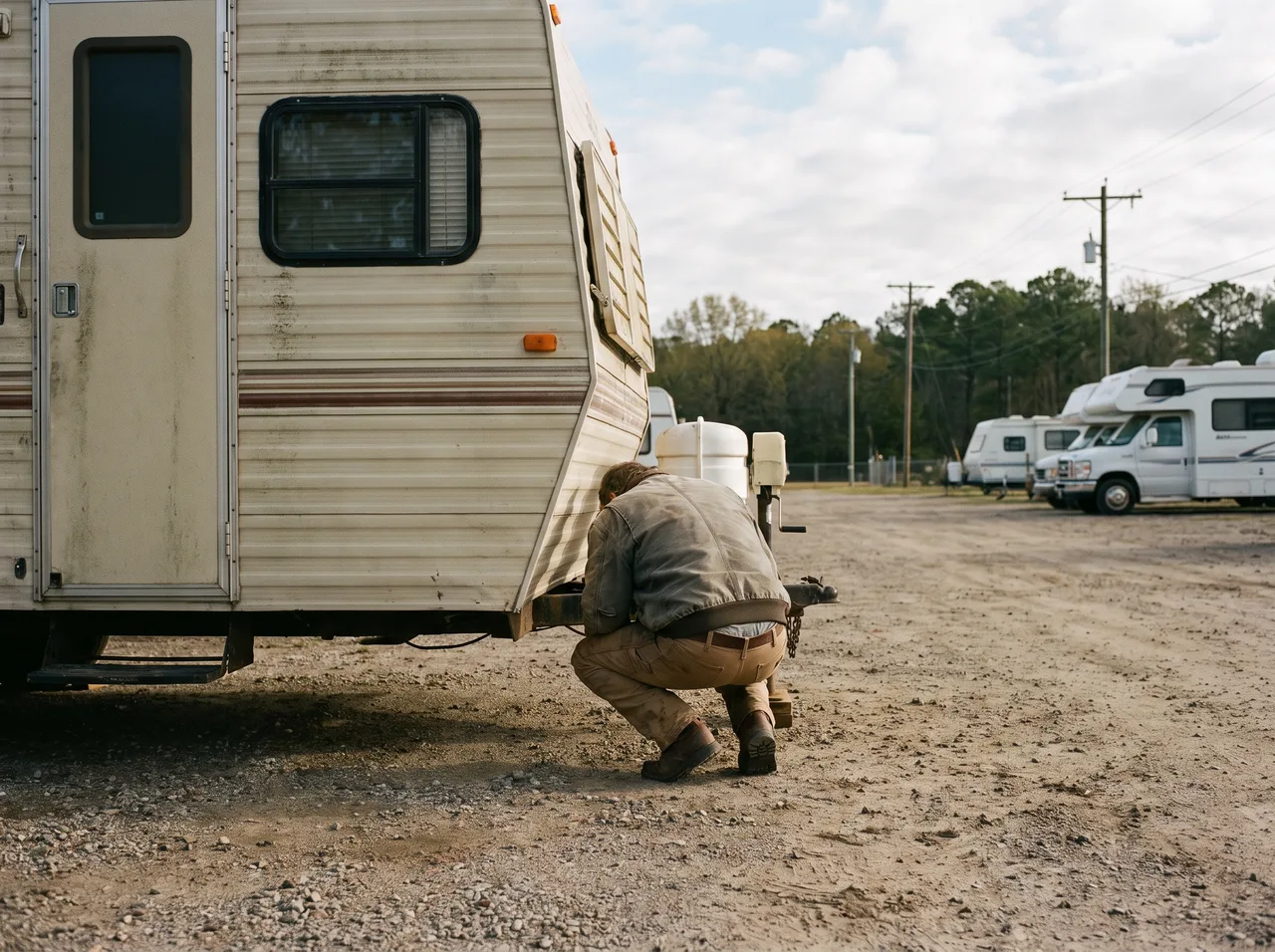
- Sealants first, outside, before you go in. Roof if you are allowed up, then all four sides, mouldings, doors, vents and every exterior attachment, using Jayco's list of failure signs.
- Date every tire, including the spare. Both sidewalls. Write the four digits down rather than trusting your memory of them later.
- VIN into the NHTSA lookup on your phone, standing there. Then ask about anything it returns, and ask for repair paperwork on anything it does not.
- Now go inside, and go to the edges. Ceilings at the corners, around every roof opening, under and behind everything at floor level. Soft, stained, bulging or freshly painted are all worth a question. Jayco's own instruction to owners who see water inside is to have the source found immediately, which tells you how it is treated when it is caught late.
- Smell it with the windows shut. Free, and the one test a seller cannot stage after the fact.
- Ask what maintenance record exists. Not "was it looked after" but "when was it last resealed, and by whom". A seller who can answer that has told you the most valuable thing on this page.
- Then the systems. Wheel bearings deserve a mention: Jayco notes that convenient lubrication fittings on its axles must not replace periodic inspection and maintenance of the bearings. If the answer to "when were the bearings last serviced" is a blank look, price that in.
- Ask which water heater it has, and whether the anode was ever changed. On a steel tank that is a yearly job with a warranty attached, and on an aluminium tank it must never have been done at all. Our RV water heater guide covers which is which and what a wrong answer tells you about the rest of the maintenance.
- Bring in a professional for anything involving propane, 120 volt wiring or a suspected structural leak. We do not publish repair instructions for those, and buying advice that tells you to test them yourself is doing you no favours.
If the rig has house batteries, ask what they are and how they were stored, because that answer quietly reprices the deal. Our guides to what is an AGM battery and LiFePO4 cover why a bank that spent winters sitting partly charged may be worth nothing at all, and if you are planning to add power rather than inherit it, our solar generator verdicts are the other route.
Rent the layout before you buy it
Here is the part most buying guides skip because it delays the purchase. The expensive mistake made when buying a used camper is usually not a bad unit.
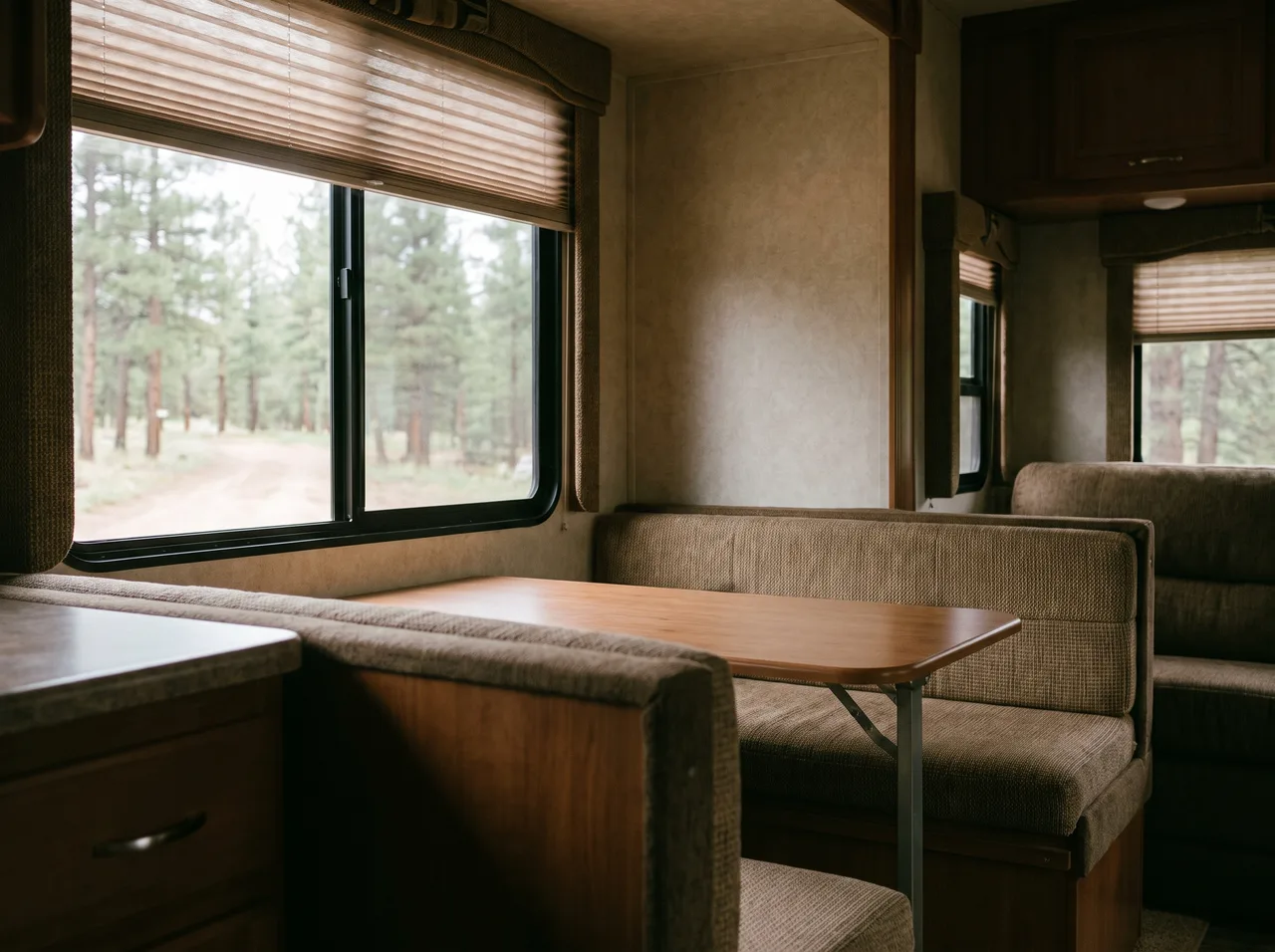
It is the right unit in the wrong shape: a length you do not enjoy towing, a bed you have to climb over someone to reach, a bathroom that works in a showroom and not at 6am, a weight that turns out to be at the edge of what your vehicle should pull.
None of that is visible on a walk-round, and none of it is fixable after the money moves. A weekend in the same class of rig answers all of it, and unlike an inspection fee you get a trip out of it.
If towing is the part that worries you, that is worth rehearsing in something that is not yet yours too, and how to tow a trailer safely covers the beginner sequence.
For what a weekend actually costs, our RV rental cost guide has the breakdown, and RV rental insurance explains the part of the quote that surprises people.
Try the layout for a weekend first
We earn a commission if you book through that link, which never changes what we write. Our affiliate disclosure sets out the whole arrangement.
When to walk away
Our judgement, not a manufacturer's: walk when the evidence about maintenance is missing rather than merely bad.
A documented repair is a known quantity and can be priced. An owner who cannot say when the roof was last resealed, on a rig where the manufacturer asks for that yearly, is selling you an unknown number of years of unseen water.
Walk when a soft floor or a stained ceiling corner is waved away, when the seller will not let anyone look at the roof, and when the tires are the original set on a rig old enough to have needed two sets.
Walk toward, rather than away, when the seller hands you a folder. Somebody who kept receipts for a job nobody checks is telling you exactly how the rest of it was treated. That is worth paying more for, and it is the one thing on this page that a lower asking price cannot compensate for.
If the rig is going to sit for part of the year once it is yours, the same maintenance logic starts applying to you immediately, and how to winterize a camper is the next thing to read. More of these are in our guides section.
Common questions
What should I check first when buying a used camper?
Check the sealants before anything inside the camper charms you.
Jayco tells owners in its 2022 Jay Flight manual to inspect all sealants a minimum of every six months and to reseal at least one time each year as preventative maintenance, covering the roof and all four sides including mouldings, doors, vents and exterior attachments.
That is the job a used camper either had done or did not, and Jayco is blunt about the consequence: failure to properly maintain or reseal may result in serious water damage, and that damage is not covered by its Towable Limited Warranty.
How do I tell how old the tires are on a used camper?
Read the DOT Tire Identification Number on the sidewall. NHTSA states that the last four digits of the TIN indicate the week and year the tire was made, so a TIN reading 0308 means the tire was made in the third week of 2008.
NHTSA also warns to look on both sides of the tire because the TIN may not be on both sides.
This matters more on a camper than on a car: NHTSA lists recreational vehicles among the vehicles at risk of tire aging, and says plainly that you cannot detect tire aging simply by looking at your tires.
Is a used camper with low miles or low use a good sign?
Not automatically, and on tires it is the opposite.
NHTSA explains that most drivers wear their treads out and replace tires before aging becomes an issue, but that owners of recreational vehicles and other vehicles they do not drive regularly, or anyone with low annual mileage, could be at risk.
A camper that sat for years has aged rubber with plenty of tread left, plus sealants that were weathering the whole time. Low use tells you about the odometer, not about the condition.
Can I check a used camper for recalls for free?
Yes. NHTSA runs a free VIN lookup and RVs are genuinely in that database.
One published campaign, 21V425000 from Jayco, covers listed 2017 to 2021 travel trailers and fifth wheels fitted with a particular two-stage propane regulator.
Read NHTSA’s own limits before you treat a clean result as proof: the lookup hides recalls that were already repaired, does not show every recently announced campaign because VINs are added continuously, excludes safety recalls more than 15 years old, and excludes recalls conducted by small vehicle manufacturers.
Should I rent the same type of camper before buying one?
It is the cheapest test available for the decision most owners get wrong, which is layout and size rather than brand.
A weekend in the class you are considering tells you whether the bed is reachable at 2am, whether the bathroom works for the person who complains about it, and whether you actually want to tow that length.
None of that shows up on a walk-round, and unlike an inspection fee it also gets you a trip.